
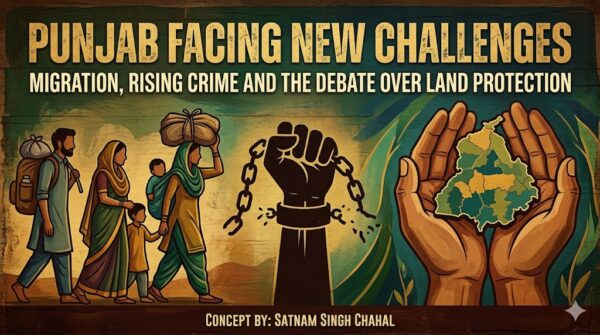
 Punjab has always been known for its welcoming nature, hardworking people, rich agricultural heritage and spirit of brotherhood. For decades, the state opened its doors to people from different parts of India who came in search of employment, safety and a better future. Migrant workers have undoubtedly contributed to Punjab’s economy, especially in agriculture, construction, factories, transport and small industries. However, in recent years, serious concerns have started emerging regarding unchecked migration, rising crime, illegal settlements and the lack of long-term policy planning for Punjab’s demographic, social and economic future.
The debate is no longer only about migration. It is increasingly becoming a discussion about law and order, identity, land ownership, employment opportunities, population pressure and the future stability of Punjab. Many people in the state believe that while other Indian states have legal protections to preserve their land, culture and local identity, Punjab remains completely open without any safeguards.
Across India, several states have special constitutional or legal protections regarding land ownership. In many of these states, outsiders cannot freely purchase agricultural land or permanently settle without restrictions. States such as Himachal Pradesh, Jammu & Kashmir (with modified protections still influencing land matters), Nagaland, Mizoram, Arunachal Pradesh, Sikkim, and several tribal regions in the Northeast have mechanisms designed to protect local populations, culture, resources and land rights. These protections were created because policymakers understood that uncontrolled outside settlement could eventually impact local identity, natural resources and political balance.
In contrast, Punjab has virtually no such protections. Anyone from any part of India can come, buy property, settle permanently and expand economic or commercial activities without major restrictions. While openness can strengthen economic growth, many people now question whether Punjab’s political leadership has seriously considered the long-term consequences of completely unrestricted migration and settlement.
One of the major concerns being raised by citizens is the increasing pressure on Punjab’s already fragile resources. Punjab is facing severe groundwater depletion, shrinking agricultural income, unemployment among local youth, industrial slowdown and a growing drug crisis. Despite these challenges, the state continues to witness large-scale inward migration. Critics argue that governments have focused more on short-term economic needs rather than preparing a sustainable demographic and economic policy for future generations.
The issue becomes more sensitive when rising crime rates are discussed. Citizens across various districts frequently express concerns regarding thefts, gang activities, illegal occupations, drug trafficking networks, human smuggling operations and organized criminal groups. It would be unfair and irresponsible to blame all migrants for crime, because the majority come to Punjab honestly to work and support their families. However, there is growing concern that criminal elements from different regions may also exploit Punjab’s open system, weak verification processes and political corruption to establish illegal networks.
Punjab’s border location further increases security concerns. The state already faces challenges related to cross-border smuggling, illegal weapons, narcotics trafficking and organized gangs. If proper background verification and monitoring systems are not strengthened, there is fear that anti-social or criminal elements could misuse Punjab as a safe operational zone. Citizens increasingly ask why stronger identity verification systems, tenant registrations and labour monitoring mechanisms are not being implemented effectively.
Another major issue is the economic impact on local workers. Many Punjabi labourers and lower-income families believe they are facing wage competition due to the availability of cheaper labour. Contractors and businesses often prefer low-cost workers, which affects local employment opportunities. At a time when many Punjabi youths are migrating abroad due to unemployment and lack of opportunities, concerns are growing about whether Punjab’s own workforce is being neglected.
Social and cultural concerns are also becoming part of the public debate. Punjab has a unique linguistic, cultural and historical identity rooted in Punjabi language, Sikh heritage and regional traditions. Some intellectuals and social activists fear that rapid demographic changes without proper integration policies may gradually weaken Punjab’s cultural fabric. They argue that preserving Punjabi language, local traditions and regional balance should also remain a priority for policymakers.
The political class in Punjab has often avoided serious discussion on these matters because migration is a highly sensitive topic. Many leaders fear accusations of discrimination or political backlash. However, avoiding discussion does not solve problems. A mature democracy must be able to discuss migration, law and order, demographic pressure and land protection policies responsibly and constitutionally without spreading hatred or targeting innocent communities.
The real issue is not ordinary poor workers who come to Punjab to earn an honest living. The real issue is the absence of long-term governance, population planning, proper law enforcement and strong verification systems. Punjab needs balanced policies that protect both human dignity and the interests of the state.
Experts believe Punjab requires several urgent reforms. First, there should be a comprehensive migrant registration and verification system to improve security and accountability. Second, stricter action must be taken against illegal settlements, organized crime networks and human trafficking gangs operating in the state. Third, the government should introduce stronger labour regulations to protect local employment opportunities while ensuring fair treatment for migrant workers. Fourth, Punjab needs serious debate on land protection policies and whether certain safeguards should be considered for agricultural land and sensitive border regions.
Most importantly, Punjab needs honest leadership that prioritizes the long-term future of the state rather than short-term political gains. The challenges facing Punjab today are not isolated issues. Migration, unemployment, drugs, crime, environmental destruction and economic decline are all interconnected problems. Ignoring these concerns will only create greater social tension in the future.
Punjab has historically shown humanity and generosity to people from every corner of India. That spirit should continue. But generosity should not mean the absence of governance, planning or security. Every state has the right to protect its resources, maintain law and order, preserve its identity and ensure a stable future for coming generations.
The need of the hour is a balanced and responsible approach one that respects human rights while also addressing the genuine concerns of Punjab’s people regarding security, employment, culture and the future of the state.
“Disclaimer: The photographic elements used in the accompanying graphic are for symbolic and illustrative purposes only. The individuals depicted do not imply actual endorsement, involvement, or association with substance