
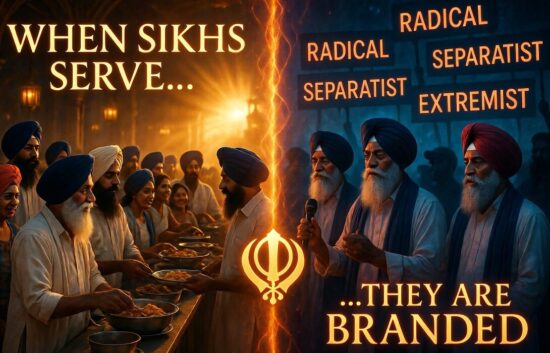
 Chandigarh: A troubling double standard continues to shadow public discourse around Sikhs. When these people come forward in support of students, they are not called Khalistanis. When these people open their gurdwaras during times of crisis, they are not called Khalistanis. When these people set up langar during times of disaster, they are not called Khalistanis. But when these same people raise their own issues, they are suddenly branded as Khalistanis. When they raise the voice of the farmers, the same label is thrown at them again.
This contradiction has deepened frustration within the Sikh community, which has long been known for seva, sacrifice, and standing with others in times of need. From natural disasters to public emergencies, gurdwaras and Sikh volunteers have repeatedly opened their doors to all, regardless of religion, region, or background. Yet the moment Sikhs demand justice, dignity, or fair treatment for themselves, sections of the political and media establishment often attempt to delegitimise their voice by attaching separatist labels.
Such labelling is not only unfair, it is also dangerous. It reduces legitimate democratic concerns to suspicion and tries to silence an entire community from participating in public debate. Farmers’ protests, student concerns, and issues related to rights, representation, and justice should be discussed on their merits, not dismissed through stereotypes.
A community that feeds the hungry, shelters the displaced, and stands with the vulnerable should not be questioned every time it asks for its own rights. If Sikhs are trusted to serve society in moments of crisis, they must also be trusted to speak for themselves in moments of grievance.
The real question is not why Sikhs raise their voice. The real question is why their service is celebrated, but their demands are so often criminalised. A democratic society must have the maturity to distinguish between humanitarian service and political dissent, and it must stop using the word Khalistani as a weapon against every Sikh concern.