
 Community and political figures in Sydney’s north-west are beginning to engage more actively in the political debate ahead of the 2027 New South Wales state election, with multiculturalism, migrant community interests and the growing influence of One Nation emerging as important issues.
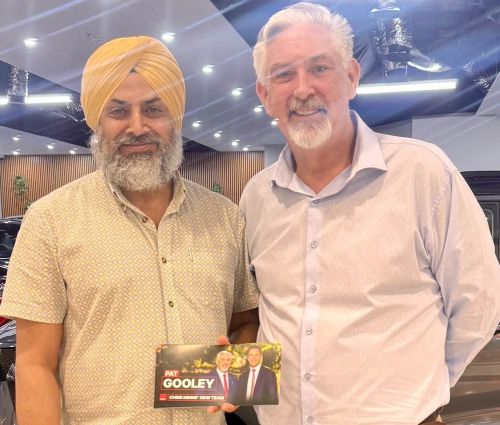
In a recent social media post, Amarinder Bajwa shared details of a meeting with Pat Gooley, the Australian Labor Party’s proposed candidate for the state electorate of Winston Hills. The meeting was also attended by Balraj Sangha and several other individuals and was held as part of engagement with the Glenwood Labor team.
Bajwa said he had met Gooley over coffee and expressed support for the Labor candidate, highlighting the importance of protecting local communities and preserving Australia’s multicultural character. He also wished success to NSW Premier Chris Minns and the Labor team in the forthcoming electoral contest.
A major issue highlighted in Bajwa’s post was the growing political influence of One Nation, which he described as a far-right political movement posing a threat to the economic interests of migrant communities and Australia’s multicultural social fabric.
His remarks reflect concerns among sections of Australia’s migrant population that political rhetoric targeting immigration and multiculturalism could create uncertainty, social divisions and a sense of insecurity among communities that have made Australia their home.
Pat Gooley brings considerable public-service experience to his political candidature. According to Premier Chris Minns’s announcement on November 5, Gooley previously served for 23 years in the NSW Police Force, including frontline duties in north-west Sydney. He is also the Secretary of the Police Association of NSW.
His professional background includes policing and community safety, and he has received recognition for his overseas humanitarian service in New Zealand following the earthquake there.
Premier Chris Minns has presented Gooley as an experienced candidate who understands public safety and the needs of local families. His campaign is expected to focus on community safety, healthcare, education and essential local services.
Winston Hills is an important electorate in Sydney’s north-west, covering communities including Glenwood, Baulkham Hills, Kings Langley, Seven Hills, Northmead, Toongabbie and surrounding suburbs. The electorate has a substantial multicultural population, including people of South Asian origin.
For migrant communities, the forthcoming election is not simply about choosing between political parties. Issues such as employment opportunities, small-business interests, education, public safety, religious freedom, equal treatment and protection against racial discrimination are also likely to influence voting decisions.
The Sikh and Punjabi communities, which have established strong roots in western Sydney, have a particular interest in maintaining an inclusive political and social environment. Their contributions to local businesses, community institutions, places of worship and public life have become an important part of the region’s development.Political parties will therefore need to demonstrate through their policies and actions that multicultural communities are valued as equal participants in Australian society.
Gooley’s selection has also generated debate within Labor’s own organisational structure. Media reports indicate that some local branch members were unhappy with Premier Minns’s decision to announce Gooley before a conventional rank-and-file preselection process had taken place. Some South Asian community representatives and local Labor members reportedly believed that potential local candidates had not been given a fair opportunity.
This internal disagreement highlights another challenge for Labor: maintaining confidence among its multicultural grassroots membership while making strategic decisions about electoral candidates.The Winston Hills contest will be an important test of how effectively political parties engage with multicultural communities in New South Wales.
While Bajwa’s public endorsement reflects support for Labor’s position on multiculturalism, the ultimate electoral outcome will depend on candidates’ ability to address local concerns and demonstrate a commitment to delivering practical results.For migrant communities, the central question is whether political parties will protect the principles of equality, inclusion and religious freedom while ensuring that economic opportunities remain accessible to everyone.
Australia’s multicultural strength has been built through the contributions of generations of migrants. Any political debate about immigration and national identity must recognise that contribution and avoid creating divisions between communities.The forthcoming NSW election will provide voters in Winston Hills with an opportunity to assess the competing political parties, their candidates and their commitment to an inclusive and prosperous society.
Editorial note: The concerns about One Nation’s political influence are attributed to Amarinder Bajwa’s public statement and represent his political assessment.