
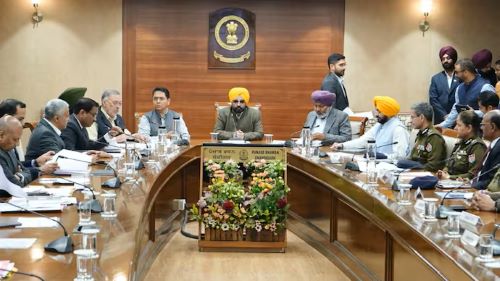
The Punjab Cabinet’s decision to regularise more than 65,000 outsourced and casual employees and eventually end the contract system is being hailed as a historic move. For thousands of workers who have spent years serving various departments without job security, the decision brings hope, stability, and dignity. The government’s intention to eliminate middlemen and establish a direct employer-employee relationship deserves appreciation.
However, beyond the celebrations, an important question must be asked: Where will the money come from?
Punjab is already facing a serious financial challenge. Over the years, the state’s debt has continued to rise, placing a significant burden on public finances. Every government inherits financial commitments, but the responsibility of governance lies not only in making announcements but also in ensuring that adequate resources exist to implement them sustainably.
Regularising more than 65,000 employees will increase expenditure on salaries, allowances, pensions, and other benefits. These are recurring expenses that will continue year after year. If such commitments are financed primarily through additional borrowing, the debt burden on the state will only grow further.
Taking loans to complete projects or fulfil commitments is not, by itself, an achievement. Any government can borrow money and spend it. The real test of leadership is creating new sources of revenue that allow development and welfare measures to be financed without pushing the state deeper into debt.
Therefore, the true credit for this decision will belong to the government if it can simultaneously strengthen Punjab’s economy, attract investment, generate employment, improve tax collection, and create sustainable revenue streams. Financial discipline and economic growth must go hand in hand with welfare measures.
There is no doubt that employees deserve security and fair treatment. The decision to regularize them is a positive and humane step. Yet, the long-term success of this policy will depend on whether the government can balance employee welfare with fiscal responsibility.
History will not remember this decision merely because it was announced. It will remember it as a genuine achievement if Punjab can honor this commitment while strengthening its financial position rather than increasing its dependence on debt