
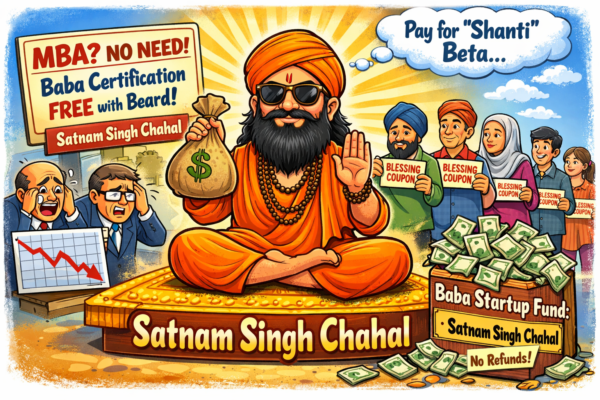
 In a healthy democracy, elected representatives are expected to remain connected with the people who voted them into office. Their primary responsibility is to understand public concerns, address local issues, and work toward improving the lives of their constituents. However, a disturbing trend has emerged in recent years: many political leaders seem more interested in seeking the blessings and endorsement of self-styled godmen and so-called babas than engaging directly with ordinary citizens.
Instead of spending time in villages, towns, and urban neighbourhoods listening to the concerns of farmers, workers, youth, women, and senior citizens, some politicians are frequently seen visiting controversial religious figures. These visits are often publicised through social media and news channels, creating the impression that political success depends more on the support of influential babas than on the trust and confidence of the electorate.
The problem becomes even more serious when these so-called spiritual leaders have questionable backgrounds or have been accused of unlawful activities. By associating with such individuals, political leaders risk sending the wrong message to society. It can create a perception that power and influence matter more than integrity and accountability. Public representatives should be cautious about whom they choose to endorse or associate with, as their actions often influence public opinion.
Many citizens feel neglected when their elected representatives become inaccessible after elections. Roads remain unrepaired, unemployment continues to rise, healthcare facilities remain inadequate, and local grievances go unheard. Yet, politicians often find time to attend gatherings organized by influential religious figures. Such behavior can weaken public trust in democratic institutions and make voters feel that their voices are no longer a priority.
Religious faith is a personal matter, and every individual, including politicians, has the right to practice and follow their beliefs. However, there is a clear difference between personal spirituality and political dependence on religious personalities for electoral gain. Democracy functions best when leaders seek guidance from the people they serve rather than relying on unelected and unaccountable individuals who claim spiritual authority.
Political leaders must remember that their true strength comes from the people. The mandate they receive is not granted by babas, but by citizens who stand in long lines to cast their votes. Respecting that mandate requires constant engagement with the public, transparency in governance, and a sincere commitment to addressing the issues that affect everyday lives.
The future of democracy depends on strengthening the bond between elected representatives and the electorate. Instead of seeking photo opportunities with controversial godmen, political leaders should spend more time among the people, listening to their concerns and delivering on their promises. Ultimately, the path to public trust and political success lies not through the doors of self-styled babas but through genuine service to the citizens who placed their faith in their leaders.