
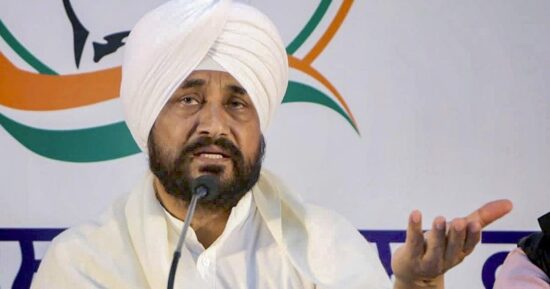
 The Indian National Congress announced, on 1 July 2026, a long-awaited organisational reshuffle for Punjab ahead of the 2027 Assembly election. Amarinder Singh Raja Warring was retained as president of the Punjab Pradesh Congress Committee; Partap Singh Bajwa continued as Leader of the Congress Legislature Party; and former Chief Minister Charanjit Singh Channi, now the party’s Member of Parliament from Jalandhar, was named Chairman of the Campaign Committee. On paper, it is a considered package. In the perception of a large section of the party’s cadre, a snub.
Two days later, at Channi’s residence in Morinda, in his home Assembly segment of Chamkaur Sahib, the resentment came out into the open. Nearly two dozen former and sitting legislators, several former ministers, and hundreds of workers gathered in what commentators are already describing as the first organised display of dissent within the Punjab Congress in this election cycle. Balkaur Singh, father of the slain singer Sidhu Moosewala, was among those present, itself a signal of how far beyond conventional party structures the sentiment now extends. The gathering constituted a committee to carry its grievances to the high command and, tellingly, authorised Channi himself to decide the future course of action on its behalf. A seven-day ultimatum has been issued. Channi has, so far, said nothing in public (video clip).
II. A HIGH COMMAND THAT WILL NOT BLINK
It would be a misreading of the last several weeks to imagine that the Warring–Channi decision was arrived at casually, and can therefore be casually reversed. Mallikarjun Kharge and Rahul Gandhi met Punjab leaders on discipline and factionalism as far back as 29 May; an observer committee took feedback from Members of Parliament, MLAs and district presidents between 16 and 18 June; Rahul Gandhi held a further round of one-on-one meetings with senior Punjab leaders on 21 June; and K.C. Venugopal signed off on the final organisational architecture on 25 June. That is not the timetable of an impulsive decision. It is the timetable of one the central leadership has already invested weeks of political capital in defending. A week’s ultimatum from Morinda is unlikely to move it. The more probable outcome is a face-saving gesture of some kind — an inducted post here, a promised concession there — rather than any real disturbance of Warring’s chair.
III. THREE NATIONAL PARTIES, NO PUNJABI SOUL
Herein lies the deeper structural point. The Congress, the Bharatiya Janata Party and the Aam Aadmi Party are, whatever their electoral fortunes in the State, not Punjab-centric parties in any organic sense. Each is governed, in the last analysis, by a high command sitting outside Punjab — in the Congress’s case by 24, Akbar Road; in the BJP’s by its central leadership; and in the Aam Aadmi Party’s, notwithstanding a Punjabi Jat Sikh Chief Minister in Bhagwant Mann, by a leadership headquartered in Delhi that has shown itself entirely capable of overruling State-unit sentiment when it chooses to. Punjab’s mainstream political space has, in other words, been without a genuinely home-grown, Punjab-first vehicle of any consequence for some years now.
IV. THE BADAL PRIVATE LIMITED, AND THE SPLINTERS THAT NEVER CAUGHT FIRE
The Shiromani Akali Dal, once that vehicle, has under Sukhbir Singh Badal come to resemble less a mass party than a closely held family enterprise — effectively, in the unkind but not inaccurate phrase now current in Punjab’s political conversation, a private limited company. Its various breakaway attempts have fared no better as an alternative. The Shiromani Akali Dal (Sanyukt), stitched together by Sukhdev Singh Dhindsa and Ranjit Singh Brahmpura from earlier splinters, has struggled for relevance. The Akali Dal (Waris Punjab De), built around the imprisoned Amritpal Singh’s camp, saw its coordination talks with the Akali Dal (Punar Surjit) collapse in May 2026 over what its own leaders called fundamental ideological differences. None of these outfits has demonstrated the organisational reach, the cadre base, or the cross-community acceptability required to occupy the space a genuine Punjab-centric party would need to fill.
V. THE CHANNI ADVANTAGE
Charanjit Singh Channi is, in this context, an unusually well-positioned nucleus. As a former Chief Minister — and Punjab’s first from the Dalit Sikh community — he carries an institutional legitimacy that no Akali splinter leader can match. His consultative, accessible style of functioning, and the personal reach he has built between his political home of Chamkaur Sahib and his present parliamentary constituency of Jalandhar, have earned him a following that cuts across the very community lines that ordinarily determine Punjab’s political arithmetic. That a Dalit Sikh leader should be genuinely acceptable to a substantial section of Jat Sikh political leadership — the community that has historically dominated both the Akali Dal and the Congress’s Punjab unit — is itself a notable asset, and one not easily replicated.
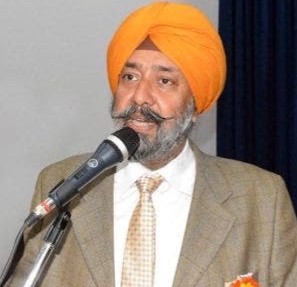
Beyond Channi’s own standing, a new formation built around him would offer a home to a constituency the Congress itself has long neglected: workers and leaders of genuine Congress orientation, deeply rooted in their constituencies, who have little realistic prospect of a ticket because the party’s nomination process remains substantially monopolised by a handful of legacy families. For this cadre, a regional party under Channi would not be a defection so much as a long-delayed opportunity.
VI. THE ARITHMETIC OF A REGIONAL ALTERNATIVE
Even a modest ten to fifteen per cent vote share — entirely plausible given Punjab’s now-familiar four- and five-cornered contests — could translate into fifteen to twenty Assembly seats in a House of 117. In a fragmented, split verdict of the kind Punjab has produced more than once this century, such a bloc would hold genuine post-poll leverage. It is difficult, on present alignments, to see such a formation gravitating back towards the Congress it had just broken from. A natural affinity with the Bharatiya Janata Party, which has been steadily building its own organisation in urban and Hindu-majority pockets of the State while remaining short of a rural Sikh base, seems the more plausible post-election arithmetic.
VII. NOT ANOTHER ONE-MAN PARTY
The obvious objection — that Punjab has seen this film before — deserves to be met head-on. Captain Amarinder Singh’s Punjab Lok Congress, launched in 2021 after his own removal as Chief Minister and his consequent estrangement from the party, was a vehicle built for one man, by one man, largely around personal grievance; it was duly and comprehensively rejected by the Punjab electorate in 2022 before merging into the BJP. What is visible at Morinda is structurally different: a spontaneous crystallisation of two dozen sitting and former legislators, several former ministers, and hundreds of grassroots workers around a nucleus — not a personality cult engineered from the top down, but a coalition of the aggrieved finding a common centre of gravity.
The pattern is a familiar one in Indian politics: whenever the Congress high command is weak at the Centre and neglects the sentiment of a State unit, a rupture follows, and the breakaway often outlasts the parent. Mamata Banerjee left in 1998 over precisely such neglect in West Bengal and built the Trinamool Congress into the party that has run the State for over a decade. Y.S. Jagan Mohan Reddy’s 2011 break, after the Congress denied him what he and his late father’s following saw as rightful succession in Andhra Pradesh, produced the YSR Congress Party, dismissed at first as sentimental, yet the ruling party there within eight years. Sharad Pawar’s exit in 1999 gave Maharashtra the Nationalist Congress Party, which has anchored State coalitions ever since. And in Tamil Nadu, G.K. Moopanar’s 1996 split over an alliance the high command imposed against local sentiment produced the Tamil Maanila Congress, whose P. Chidambaram went on to become Union Finance Minister. Punjab, today, shows every sign of the same conditions.
VIII. CROSSING THE RUBICON
There is a tide in the affairs of men, Brutus tells Cassius in Julius Caesar, which, taken at the flood, leads on to fortune. Shakespeare, across four centuries, seems gently to be counselling Channi. He stands, as this is written, at precisely such a moment. The crowd has assembled without being summoned; the grievance is real and widely shared; the rival formations have each demonstrated their own limits. If he chooses to cross the Rubicon and launch a genuinely Punjab-centric party, he would do well to claim the moral high ground unambiguously — by resigning his Jalandhar Lok Sabha seat rather than hedging his position across two mandates, and seeking a fresh one from the electorate, ideally through a bye-election held alongside the 2027 Vidhan Sabha polls themselves. A leader asking Punjab’s voters to trust him with a new party should be prepared, first, to seek their trust afresh in his own seat.
IX. THE CLEAR BENEFICIARY: A BOOST FOR THE BJP IN PUNJAB
Yet the arithmetic cuts more than one way. A Channi-led formation would not merely dent the Congress; it would gut it, stripping away precisely the Dalit and rural base that keeps the party relevant in half of Punjab’s constituencies. Worse for the Congress, it would poach the AAP’s own emerging coalition — Dalit voters disillusioned with Mann’s governance, middle-class households weary of unfulfilled promises, and a slice of Jat Sikh farmers still unattached to any single flag. The net beneficiary of a three-cornered fight turning into a four-cornered scramble is neither Congress nor AAP, but the BJP, which needs only a fractured field, not a majority coalition, to make its long-awaited breakthrough in rural Punjab.
X. A NOTE OF CAUTION
None of this is to suggest the path is easy. Regional breakaways from national parties carry real risks — of resources, of Election Commission symbol allotment, of the sheer organisational time required before 2027. The Punjab Lok Congress precedent is a caution as much as a contrast. And Channi himself has, thus far, chosen public silence over public commitment. Whether a coalition of the aggrieved can be converted into a durable electoral machine, and whether Channi is temperamentally inclined to make that wager, remain open questions.
XI. A NAME FOR THE MOMENT
A new formation of this kind will need a name that signals both its lineage and its departure. This writer would suggest the Shiromani Punjab Congress. ‘Shiromani’ — supreme, pre-eminent — carries the resonance of the Shiromani Akali Dal and of the Shiromani Gurdwara Parbandhak Committee, situating the new party within Punjab’s own institutional and Panthic vocabulary rather than borrowing a Delhi idiom. ‘Punjab’ declares, unambiguously, where its loyalty lies and where it alone will contest. ‘Congress’ retains the ideological home the cadre gathered at Morinda has not actually renounced — they remain Congressmen and women aggrieved by their high command, not converts to another creed. Together, the name would tell Punjab’s electorate exactly what the party is: a Congress of Punjab, for Punjab, answerable to no one outside it.
XII. CONCLUSION
What is beyond dispute is that the underlying conditions for a Punjab-centric party — the absence of any national party with genuine roots in the State, the reduction of the principal regional party to a family concern, and the failure of every splinter attempt to fill that vacuum — are more favourable today than at any point in recent memory. The tide is in. Whether Channi takes it at the flood, or lets it slip, will determine a great deal about the shape of Punjab’s politics in 2027 and beyond.
Chamkaur Sahib is not a name Punjab invokes lightly; it carries the memory of the supreme sacrifice made there in defence of the downtrodden, against the oppression of a brutal Mughal empire. Whether that same spirit of resolve now animates Channi and his supporters in their political battle — fought with the ballot, not the sword — Punjab will discover soon enough.