
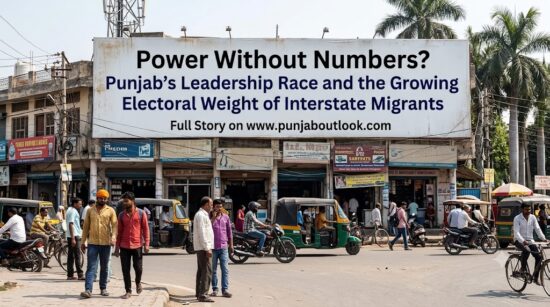
 Punjab’s political landscape is entering another period of intense competition as parties position themselves for the next electoral battle. Across the political spectrum, there appears to be no shortage of chief ministerial aspirants. Every major party has multiple leaders projecting themselves as the face of future governance, creating what many observers describe as a situation where there are “a hundred and one contenders” for the seat of power. Yet, while politicians remain focused on internal rivalries, another demographic and electoral reality is gradually reshaping the state’s politics.
The competition within political parties has become increasingly centered on personalities rather than policy. Senior leaders, former ministers, sitting legislators, and ambitious newcomers are all seeking greater influence. Internal factionalism has become a defining feature of Punjab politics, whether in the ruling party or the opposition. Leadership struggles often consume more political energy than discussions on agriculture, employment, industrial revival, education, or the growing debt burden facing the state.
At the same time, Punjab has witnessed significant interstate migration over the past several decades. Workers from states such as Bihar, Uttar Pradesh, Jharkhand, Odisha, Chhattisgarh, Rajasthan, and West Bengal have become an important part of Punjab’s economy. They contribute to agriculture, construction, manufacturing, transport, hospitality, and numerous service industries. Many have lived in Punjab for years, established families, and, where eligible under Indian law, become registered voters.
As this population grows and becomes more settled, its electoral significance has naturally increased in several urban and semi-urban constituencies. Political parties are increasingly recognizing this reality. Campaigns are no longer directed solely at traditional Punjabi voter groups; outreach to interstate migrant communities has become a visible part of election strategy in many constituencies.This changing electoral landscape means that victory in several seats may increasingly depend on broader social coalitions rather than traditional caste, regional, or party loyalties alone. Political candidates are likely to seek support from every eligible voting bloc, including long-term interstate migrant residents, making these communities an influential factor in closely contested elections.
However, it is important to distinguish between demographic influence and political dominance. The extent to which interstate migrants can determine electoral outcomes varies considerably across constituencies and depends on factors such as the number of registered voters, voter turnout, local alliances, and candidate appeal. While these communities may be decisive in some constituencies, they are unlikely to determine the outcome across Punjab as a whole without supporting evidence.Punjab today faces challenges that extend far beyond electoral arithmetic. Rising public debt, unemployment, drug abuse, declining industrial investment, environmental degradation, pressure on agriculture, and the migration of Punjabi youth abroad continue to demand sustained political attention. The leadership contest within political parties will ultimately be judged not by who secures power, but by who presents credible solutions to these long-standing issues.
As Punjab moves toward the next election, political parties may continue to witness intense competition among aspiring leaders. But electoral success will increasingly depend on understanding the state’s evolving demographic profile and addressing the concerns of all eligible citizens, including long-term interstate migrant residents who have become part of Punjab’s social and economic fabric.The race for power may be crowded, but in a democracy, elections are decided not by the number of aspirants, but by the confidence of voters. Punjab’s political future will therefore be shaped by broad public support, effective governance, and the ability of leaders to unite diverse communities behind a common vision for the state’s development.
Disclaimer: This article and accompanying images are for informational and illustrative purposes only. Some visuals may be AI-generated or digitally enhanced and may not depict actual events or persons. Views expressed are based on publicly available information and analysis.
Share via: