
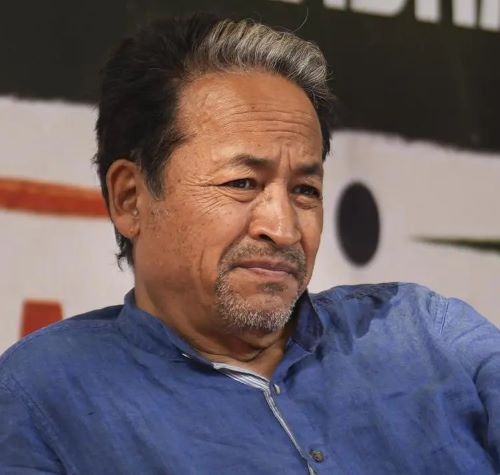
 By the late 2010s, Sonam Wangchuk had already earned international recognition as an engineer, educator, and environmental innovator. However, following the constitutional changes relating to Jammu and Kashmir in August 2019, he gradually emerged as one of the most prominent public voices advocating for the future of Ladakh. While he continued his work in education and climate innovation, he also began speaking more frequently on issues concerning environmental protection, democratic participation, employment opportunities, and the preservation of Ladakh’s unique cultural identity.
The reorganisation of the former State of Jammu and Kashmir into the Union Territories of Jammu & Kashmir and Ladakh was welcomed by some sections of Ladakh’s population, who believed it would lead to faster development and greater administrative attention. At the same time, several community leaders, environmental groups, and civil society organizations raised concerns that the new administrative arrangement required stronger constitutional safeguards to protect the region’s fragile ecology, tribal communities, land ownership, and employment opportunities. Sonam Wangchuk became one of the leading public figures articulating these concerns.
Among the principal demands supported by Wangchuk has been the inclusion of Ladakh under the Sixth Schedule of the Constitution of India, which provides special administrative protections for certain tribal areas in the northeastern states. Supporters of this demand argue that such constitutional safeguards would help preserve Ladakh’s traditional culture, regulate land ownership, protect local resources, and ensure that development remains environmentally sustainable. Successive governments have considered these demands, but no final constitutional change has yet been implemented.
Wangchuk has consistently emphasized that his campaign is not directed against development itself. Instead, he argues that development in ecologically sensitive mountain regions should be carefully planned. He has warned that uncontrolled tourism, excessive commercial construction, indiscriminate mining, and large-scale industrial activity could permanently damage the Himalayan ecosystem. According to him, economic growth should proceed in harmony with environmental conservation rather than at its expense.
Climate change has remained central to Wangchuk’s public advocacy. He frequently reminds policymakers that the Himalayas are often described as the “Third Pole” because of their vast reserves of ice and snow. These glaciers feed major rivers that support hundreds of millions of people across South Asia. Any significant ecological imbalance in the Himalayan region, he argues, will have consequences extending far beyond Ladakh itself. Protecting the mountains, therefore, is not merely a regional issue but a national and global responsibility.
One of Wangchuk’s most distinctive methods of activism has been his commitment to peaceful and non-violent protest. Inspired by democratic traditions and the philosophy of Mahatma Gandhi, he has repeatedly chosen fasting, public dialogue, awareness campaigns, and symbolic marches to highlight environmental and constitutional concerns. These methods have attracted significant public attention while maintaining a focus on peaceful civic engagement.
In 2024, Wangchuk undertook a prolonged climate fast that drew widespread national and international attention. During the fast, he appealed to citizens across India to recognize the importance of protecting fragile mountain ecosystems from the effects of climate change and unregulated development. Scientists, environmental activists, students, and members of civil society expressed support for many of the environmental issues he raised, while political leaders from different parties offered varying responses to his broader constitutional demands.
His campaigns have often included long marches, public meetings, lectures, and interactions with students. Rather than limiting his message to Ladakh, Wangchuk has sought to educate people across India about the importance of glaciers, water security, renewable energy, and sustainable development. Through these efforts, he has become one of the country’s most recognizable advocates for climate awareness.
At the same time, Wangchuk’s activism has not been free from criticism. Some political commentators have argued that certain constitutional or administrative demands require broader national security considerations, given Ladakh’s strategic location along India’s international borders with China and Pakistan. Others have questioned the practicality of some proposals or expressed concern that prolonged protests could affect governance and development. Wangchuk has consistently responded that democratic debate and peaceful protest are legitimate means of expressing public concerns within a constitutional framework.
Another aspect of Wangchuk’s public life has been his willingness to engage with people across political and ideological lines. Although different political parties have, at various times, expressed appreciation for his work in education and environmental conservation, he has generally maintained that his primary commitment is to the people and ecology of Ladakh rather than to partisan politics. This non-partisan approach has allowed him to attract support from diverse sections of society, even when opinions differ on specific policy questions.
Internationally, Wangchuk has become an influential voice on sustainable mountain development. He has delivered lectures at universities, environmental forums, scientific conferences, and international gatherings, sharing Ladakh’s experiences in water conservation, renewable energy, climate adaptation, and community-based development. His innovations, particularly the Ice Stupa project, have been cited as examples of low-cost climate adaptation technologies that can benefit mountain communities around the world.
The recognition Wangchuk has received over the years reflects the diversity of his contributions. In 2018, he was awarded the Ramon Magsaysay Award, one of Asia’s highest civilian honors, for his work in education and community-based innovation. He has also received the Rolex Award for Enterprise, the Global Award for Sustainable Architecture, and several other national and international distinctions acknowledging his contributions to engineering, education, and environmental sustainability.
Popular culture also played a role in introducing Wangchuk to millions of people. Elements of his life and educational philosophy inspired the fictional character Phunsukh Wangdu in the highly successful Hindi film 3 Idiots. Although the film was not a biography, many viewers became interested in Wangchuk’s real-life achievements after learning about the inspiration behind the character. This unexpected cultural connection significantly increased public awareness of his work.
Today, Sonam Wangchuk occupies a unique place in Indian public life. He is simultaneously regarded as an engineer, educator, inventor, environmentalist, climate campaigner, social reformer, and public intellectual. Few individuals have successfully combined scientific innovation with grassroots activism in the way he has done. His work demonstrates that technological progress and environmental responsibility need not be opposing forces but can reinforce one another.
His journey also highlights the growing importance of citizen participation in democratic societies. Whether one agrees with all of his policy positions or not, Wangchuk’s commitment to peaceful dialogue, scientific reasoning, and public engagement has contributed meaningfully to national discussions on education, climate change, sustainable development, and the future of India’s Himalayan regions.
As climate change continues to reshape mountain ecosystems across the world, the ideas promoted by Sonam Wangchuk are likely to remain relevant for many years to come. His belief that development should respect nature, empower local communities, and prepare future generations for emerging challenges has made him one of the most influential public voices to emerge from Ladakh in contemporary India.
The story of Sonam Wangchuk is still being written. His innovations continue to evolve, his educational experiments continue to inspire, and his advocacy continues to influence debates about the relationship between development, democracy, and environmental stewardship. Whether remembered primarily as an inventor, an education reformer, or a climate activist, his legacy will undoubtedly remain closely associated with the pursuit of sustainable progress rooted in both science and humanity.