
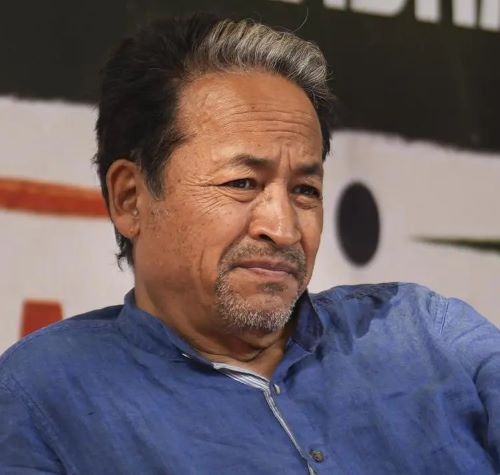
 When Sonam Wangchuk returned to Ladakh after completing his engineering education, he was deeply disturbed by the condition of the region’s education system. Every year, hundreds of students were being declared failures in government examinations. Many young people lost confidence in themselves, abandoned their studies, or believed they were incapable of succeeding. Wangchuk refused to accept that an entire generation of students could simply be “weak.” Instead, he questioned whether the education system itself was failing the students.
After studying the situation in detail, Wangchuk reached an important conclusion. The problem was not the intelligence of the children but the design of the education system. Most textbooks were written for students living in urban areas and plains, while children in Ladakh came from remote mountain villages with different languages, lifestyles, and environmental conditions. Teachers often relied on rote memorization, and students were expected to reproduce textbook answers without understanding the concepts. This approach discouraged creativity and critical thinking.
In 1988, Sonam Wangchuk and a group of young volunteers established the Students’ Educational and Cultural Movement of Ladakh (SECMOL). Their objective was simple but ambitious—to create an education system that respected local culture while preparing students for modern challenges. The organization initially operated with very limited financial resources but possessed enormous enthusiasm and community support.
SECMOL soon became much more than an educational institution. It evolved into a movement dedicated to changing the philosophy of learning. Instead of viewing education merely as preparation for examinations, SECMOL emphasized practical knowledge, leadership, teamwork, environmental responsibility, and self-confidence. Students were encouraged to discover their talents through experience rather than through memorization alone.
One of the most remarkable aspects of SECMOL was its trust in young people. Students who had been labeled “failures” by conventional schools were given real responsibilities. They managed campus operations, organized activities, participated in construction projects, maintained solar power systems, cultivated agricultural fields, prepared meals, and even took part in decision-making processes. This environment transformed their confidence and demonstrated that many students simply needed an opportunity to succeed outside traditional classrooms.
The SECMOL campus itself became a classroom without walls. Students learned mathematics by designing buildings, physics through renewable energy systems, biology through farming, and economics by managing resources. Every activity was connected with learning. Instead of separating theory from practice, Wangchuk integrated both into everyday life.
Environmental sustainability became another cornerstone of the SECMOL model. Long before climate change became a major international concern, the campus demonstrated how education could coexist with nature. Buildings were constructed using locally available mud, stone, and traditional techniques that kept rooms warm during freezing winters while requiring minimal external heating. Solar energy powered much of the campus, reducing dependence on conventional electricity and fossil fuels.
The success of SECMOL attracted educators, government officials, researchers, and journalists from across India and abroad. Visitors were often surprised to discover that many students who had previously failed school examinations became confident leaders, skilled technicians, entrepreneurs, and socially responsible citizens after joining the program. Their achievements challenged the widespread belief that examination scores alone determine a person’s potential.
Recognizing the need for broader reforms, Wangchuk collaborated with government agencies, teachers, village communities, and education experts to launch Operation New Hope in 1994. The initiative sought to improve government schools throughout Ladakh by introducing practical reforms rather than merely criticizing existing systems.
Operation New Hope focused on several key areas. Teachers received specialized training to improve classroom methods. Textbooks were adapted to include local geography, history, language, and culture so that children could relate more easily to what they were studying. Village communities became active partners in monitoring school performance, while parents were encouraged to participate in their children’s education. The reforms also emphasized understanding concepts instead of memorizing answers.
The results were encouraging. Examination pass rates improved significantly in many government schools, while student participation increased. More importantly, education became relevant to the lives of Ladakhi children. Instead of feeling disconnected from their textbooks, students could now see the relationship between classroom learning and the world around them.
Wangchuk repeatedly argued that education should help solve local problems. For example, students in Ladakh should learn about water conservation, renewable energy, mountain agriculture, sustainable tourism, and disaster management because these subjects directly affect their communities. According to him, an education system that ignores local realities cannot fully prepare students for the future.
His philosophy has often been summarized in one simple principle: education should create problem-solvers rather than problem-makers. Instead of producing graduates who depend entirely on government jobs, schools should encourage innovation, entrepreneurship, and community service. This belief continues to influence educational discussions in India and internationally.
The SECMOL model has since inspired educators from many countries facing similar challenges in remote and underdeveloped regions. Researchers have studied its methods as an example of how community participation, practical learning, and environmental sustainability can strengthen public education without requiring enormous financial investments.
Over the years, thousands of students have passed through SECMOL’s programs. Many have become teachers, engineers, entrepreneurs, environmental activists, government officers, and social workers. Their achievements reflect Wangchuk’s conviction that every child possesses talent if given the right environment to learn and grow.
The educational revolution initiated by Sonam Wangchuk did not depend on expensive technology or massive infrastructure projects. Instead, it relied on trust in students, respect for local culture, scientific thinking, and active community involvement. This combination transformed SECMOL into one of the world’s most admired alternative education models and established Wangchuk as one of India’s leading education reformers.
By proving that meaningful education can emerge from even the most remote mountain communities, Sonam Wangchuk demonstrated that genuine reform begins not with changing students but with changing the system that teaches them.