
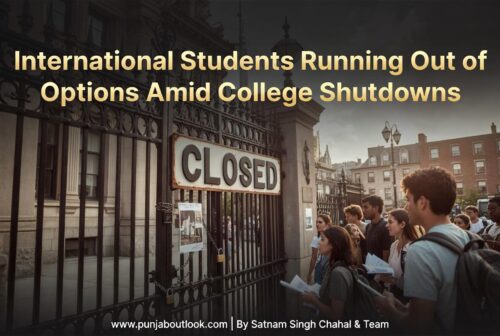
 Hundreds of international students in Quebec suddenly found their academic plans and immigration pathways disrupted in mid-July 2026 when the provincial Education Ministry refused to renew operating permits for several private colleges. Collège supérieur de Montréal and Collège supérieur de Sherbrooke, which share administration, were among at least four private institutions forced to suspend teaching activities “until further notice.” Nearly 900 students, almost all international, were affected, with roughly 528 at the Montreal campus and 296 in Sherbrooke.
Many of these students were only days or weeks away from completing programs in fields such as accounting, secretariat work, computer support, and graphic design. Some had already begun their required internships or final stages of coursework. The abrupt closure left diplomas unfinished, study permits at risk of expiry, and long-term immigration goals in Quebec in serious doubt.
Students reported receiving little advance notice; one communication arrived late on a Friday near the end of the examination period. The Education Ministry stated that the non-renewal decisions followed an analysis under the Private Education Act and that it had contacted students about the cost, which is measured in interrupted educations, financial losses, and postponed dreams of building careers and communities in Canada or the United States.www.punjaboutlook.com continues to monitor developments affecting the Punjabi and wider Indian diaspora student communities. Independent, fact-based reporting remains essential as these stories unfold.
. Officials also indicated that the Ministry of Immigration, Francisation and Integration would introduce facilitating measures and that students would need to submit new temporary selection applications for studies. However, students and advocates described the practical options as limited. Suggested transfer institutions sometimes required waiting until October, while many permits were due to expire far sooner—in some cases within 15 to 20 days. Without completed credentials, pathways to post-graduation work permits and eventual permanent residence become far more difficult.
Protests followed quickly. Students gathered outside the Montreal college and marched toward immigration offices, demanding clarity, continuity of studies, and protection of their legal status. Opposition parties criticized the government for leaving students in a lurch without sufficient concrete support. College administrators expressed strong disagreement with the ministry’s decision, describing the stated grounds as inaccurate, and announced plans to challenge the non-renewal while emphasizing the direct threat to students’ educational progress, financial investments, and life plans in Quebec.
This local crisis sits against a wider backdrop of pressure on international students across North America. In the United States, sharp declines in new international enrollment—driven by tighter visa processing, travel restrictions, heightened vetting, and the recent Department of Homeland Security final rule ending “duration of status”—have created severe budget shortfalls at many colleges. International students, who often pay full tuition, have long subsidized programs and services. Their reduced numbers have already forced program eliminations, staff cuts, and in some cases contributed to institutional financial distress or closure announcements. One private arts college in California, for example, cited enrollment declines partly linked to immigration policy pressures when announcing it would wind down operations after the 2026–27 academic year.
Indian students, who form one of the largest groups of international students in both Canada and the United States, have been particularly affected by the combined effects of visa delays, reduced issuances, and uncertainty over post-study work options. Families who invested heavily in education abroad now face difficult choices: return home with incomplete credentials, seek costly last-minute transfers, or navigate complex new immigration requirements under compressed timelines.
For the students in Montreal and Sherbrooke, the immediate priority remains securing a viable path to finish their programs before permits lapse. Some may succeed in transferring, others may need to reapply for status or consider returning home temporarily. The situation underscores how dependent many international education pathways are on the continuous operation of private colleges and on predictable government processing. When institutions lose authorization or when policy shifts tighten rapidly, individual students—who have already relocated, paid tuition, and built lives around their studies—can find themselves with few remaining options.
As of late July 2026, the colleges continue to contest the decisions, students continue to seek clearer timelines from authorities, and the broader conversation about the sustainability of international student enrollment under changing immigration rules remains active on both sides of the border.
Disclaimer: This article and accompanying images are for informational and illustrative purposes only. Some visuals may be AI-generated or digitally enhanced and may not depict actual events or persons.Views expressed are based on publicly available information and analysis.