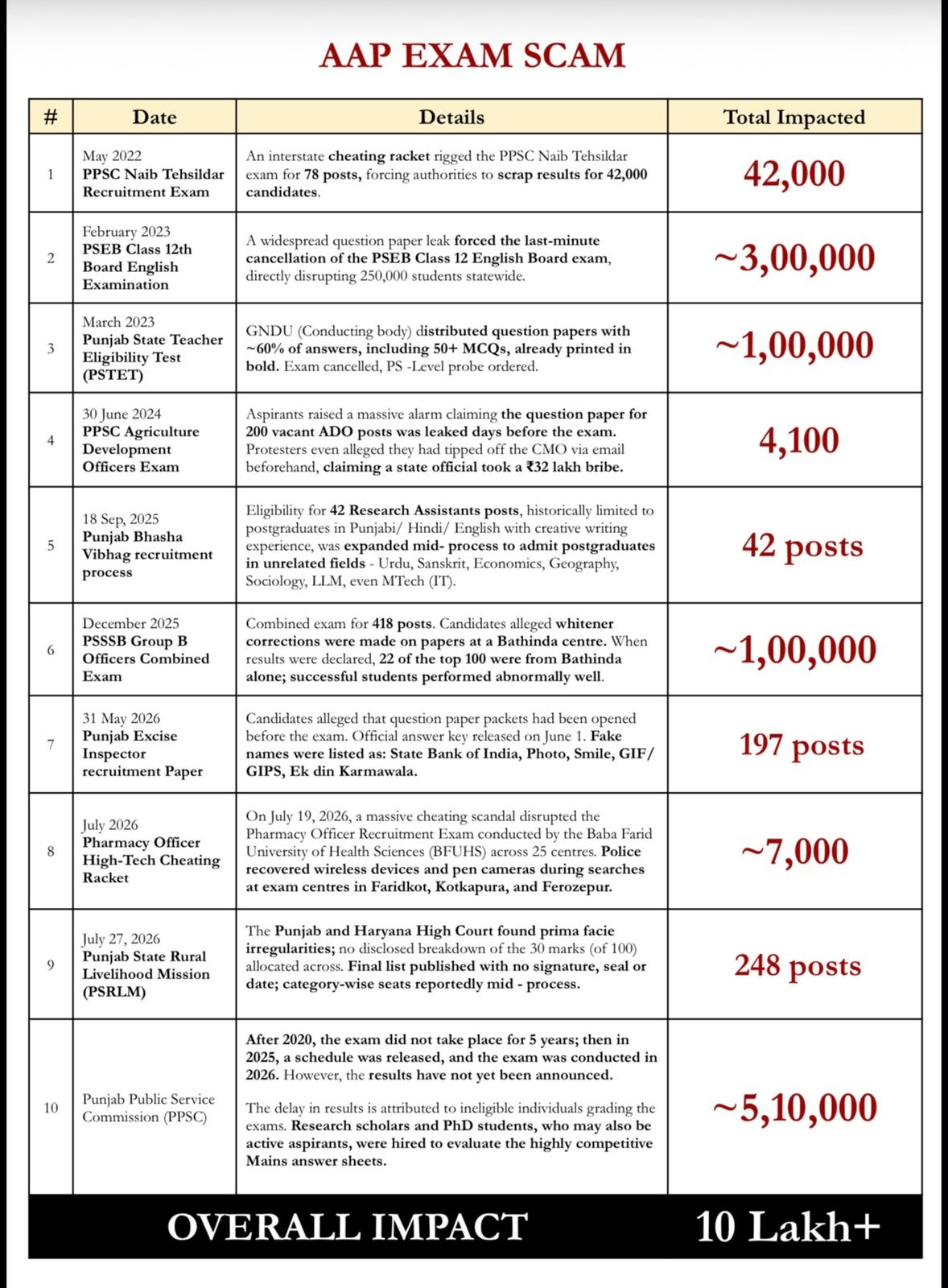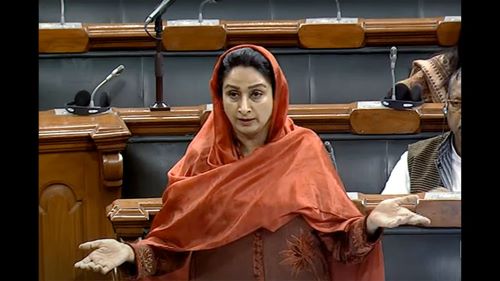
Chandigarh-Shiromani Akali Dal MP Harsimrat Kaur Badal has launched a sharp attack on the Punjab government, alleging that a series of examination and recruitment irregularities over the past four-and-a-half years have undermined the future of lakhs of students and job aspirants in the state.
In a post on social media, Badal claimed that at least 10 major examination-related scams and controversies have taken place under the AAP government, arguing that the problems extend beyond the cases already in the public domain. She alleged that fresh irregularities continue to emerge, citing the Punjab School Education Board’s Class 10 examination and the Punjab Subordinate Services Selection Board’s Clerk recruitment process as examples requiring scrutiny.
Badal accused the government of allowing a system in which “merit has been murdered”, claiming that more than 10 lakh Punjabi students have been left uncertain about their academic and employment prospects because of repeated controversies surrounding examinations, recruitment examinations and selection processes.
The Akali Dal MP’s allegations come against the backdrop of continuing political and legal battles over recruitment examinations in Punjab. Opposition parties have repeatedly questioned the conduct of examinations, cancellations, delays, paper-leak allegations, recruitment disputes and the fate of candidates who have spent years preparing for government jobs.
Badal said the issue was no longer limited to individual examinations but represented what she described as a systemic failure of the education and recruitment machinery. According to her, every cancellation, delay or alleged irregularity creates a new crisis for candidates who invest years of their lives preparing for competitive examinations.
She has therefore demanded the immediate resignation of Punjab Chief Minister Bhagwant Mann and Education Minister Harjot Singh Bains, holding the political leadership responsible for what she described as the deterioration of the examination and recruitment system.
She also demanded a CBI or other central investigation into all the alleged examination scams, arguing that an independent probe is necessary to establish responsibility and determine whether the irregularities resulted from administrative negligence, deliberate wrongdoing or failures in the examination system.
Another demand raised by Badal is the publication of a proper recruitment calendar for all pending recruitments, with the process monitored by the courts. Such a mechanism, she argued, would provide candidates with clarity about examination dates, results, appointments and other stages of recruitment.
Badal also called upon former Delhi Chief Minister Arvind Kejriwal and former Delhi Deputy Chief Minister Manish Sisodia to publicly apologise, alleging that they had made misleading claims about governance and recruitment in Punjab.
The political significance of the controversy is considerable. Government recruitment examinations are not merely administrative exercises in Punjab; for thousands of young people, they represent one of the few avenues to stable employment. When an examination is cancelled, challenged in court or delayed, candidates can lose months or years of preparation.
The central question now is whether the Punjab government will respond to Badal’s allegations with a detailed factual rebuttal and publish a comprehensive record of the examinations and recruitments that have faced allegations or legal challenges during the AAP government’s tenure.
The government also faces a larger credibility test: if the recruitment system is functioning properly, it should be able to place before the public a transparent examination-wise record of allegations, investigations, cancellations, court cases, results and appointments.
For Punjab’s students and job aspirants, the political battle is secondary. What they want is much simpler—fair examinations, timely results, transparent recruitment and appointments based strictly on merit.
Badal’s intervention has therefore put the spotlight once again on a question that has increasingly become politically sensitive in Punjab: Has the state’s recruitment system become a pathway to government employment—or a cycle of examinations, controversies, cancellations and litigation?