
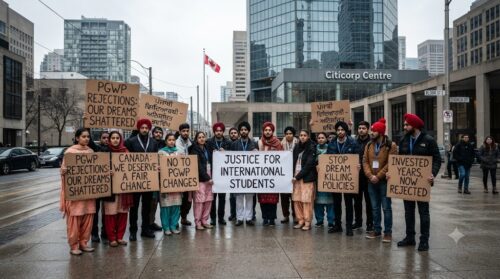
 Thousands of Punjabi families have long viewed higher education in Canada as a pathway to better opportunities, investing their life savings and making significant personal sacrifices to send their children abroad. Punjab continues to be one of the largest contributors to the Indian student population in Canada, with many students pursuing diplomas and degrees while hoping to transition into the Canadian workforce through the Post-Graduation Work Permit (PGWP) program.
However, reports of Post-Graduation Work Permit (PGWP) application rejections and evolving immigration policies have created widespread anxiety among hundreds of Indian students, many of them from Punjab. Students who planned their education and careers under earlier eligibility criteria now say they are facing uncertainty after policy changes introduced during or after their studies. Many fear that their educational investment, career aspirations, and long-term settlement plans could be jeopardized.
The financial strain of these sudden shifts extends far beyond the individual students, becoming a profound crisis for families back home. Many households in Punjab have incurred substantial debts, taken high-interest loans, or sold ancestral land and other vital assets to finance overseas education. Parents are increasingly distressed over the compounding financial and emotional burdens weighing on their children, who now face an uncertain future despite completing their rigorous academic programs in good faith.
Political leaders have begun stepping up to address the crisis. Calling for urgent attention to the matter, Punjab Congress leader Pargat Singh urged the Government of India to intervene and take up the issue directly with the Canadian government. He stressed that honest and hardworking students should not become collateral damage in changing immigration frameworks and shifting political circumstances. He further announced that he would personally raise the matter with Punjabi Members of Parliament in Canada while directing overseas party units to extend every possible assistance to affected individuals.
This evolving situation highlights the deep structural vulnerabilities international students face when sudden immigration reforms are implemented retroactively or without adequate grace periods, invalidating years of academic effort and heavy financial commitments. In response, student organizations and community advocacy groups have fiercely appealed for greater policy transparency, practical transitional measures, and fair treatment for those who enrolled under previous regulatory frameworks.
Moving forward, affected students and their families are pinning their hopes on constructive, high-level dialogues between Canadian authorities and Indian diplomatic representatives to forge a fair and compassionate resolution. For countless Punjabi youth, the final outcome will determine not only their professional trajectories, but also validate the immense hopes and sacrifices of the families who supported their journey abroad.