
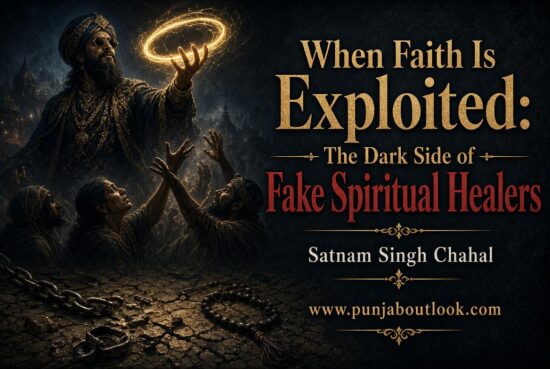
 Faith occupies a deeply respected place in the lives of millions across South Asia. Islam, Hinduism, Sikhism, Sufi traditions, shrine culture and other spiritual traditions have provided generations with faith, community, charity, moral guidance and hope. Genuine religious and spiritual teachers deserve respect for their service to society. But faith can also be exploited by individuals who misuse religious or spiritual authority for personal financial, sexual or criminal gain. This article is not a criticism of any religion or genuine spiritual tradition. It is about protecting ordinary believers from people who allegedly use claims of divine or supernatural power to exploit those who are vulnerable. When Spiritual Authority Becomes a Business. The warning signs can begin when a self-styled spiritual leader demands money in return for healing, blessings, prayers, amulets, rituals or solutions to personal problems. Vulnerable people those facing illness, bereavement, infertility, family problems, financial hardship or loneliness can become particularly susceptible to promises of miraculous solutions.
The danger increases when followers are encouraged to surrender large sums of money, property or personal decision-making authority. Families should be cautious when a spiritual leader demands unquestioning obedience, discourages contact with relatives, discourages medical treatment, or suggests that larger donations will produce greater spiritual benefits.These practices should not be confused with ordinary charitable donations, religious offerings or legitimate spiritual guidance. The issue is whether an individual is using religious authority to deceive, coerce or harm people.
Documented Criminal Cases in India: India has seen several high-profile cases in which self-styled spiritual leaders were convicted of serious crimes. Gurmeet Ram Rahim Singh, head of Dera Sacha Sauda, was convicted in 2017 of raping two female followers and sentenced to 20 years in prison. His conviction was followed by widespread violence by supporters, resulting in deaths and extensive property damage.Asaram Bapu was convicted of raping a minor and sentenced to life imprisonment. Other self-styled spiritual figures have also faced criminal investigations and allegations involving sexual abuse, unlawful confinement and financial wrongdoing.These cases should be understood as cases involving particular individuals and organisations—not as evidence against the religious traditions with which they may have associated themselves.The broader lesson is that spiritual status should never place anyone above the law. A religious title, following or claim of supernatural authority cannot provide immunity from criminal accountability.
The Vulnerable Are Often the First TargetsThe people most likely to be exploited are not necessarily naïve. They may simply be desperate.A parent searching for treatment for a sick child, a woman facing family difficulties, someone struggling with infertility, a grieving family or a financially distressed person may be willing to believe someone who promises a miracle.A genuine spiritual teacher should respond to such vulnerability with compassion. A criminal exploiter sees an opportunity.The manipulation can involve emotional dependence, pressure to donate, threats of spiritual punishment, isolation from family members or claims that questioning the leader represents disobedience to God.Families should therefore pay attention when a religious organisation or spiritual practitioner begins demanding secrecy, excessive money, property, blind obedience or isolation from loved ones.Sexual Exploitation Is the Most Disturbing Abuse of TrustThe misuse of spiritual authority can be particularly dangerous when it provides an individual with private access to vulnerable women, men or children.Several criminal cases in South Asia have demonstrated how alleged or proven offenders used claims of spiritual healing, exorcism or supernatural powers to gain access to victims.
No spiritual claim can justify sexual contact without consent, and no religious authority should be treated as a licence to abuse another human being.Children require even greater protection. Parents should never assume that a religious or spiritual environment automatically guarantees safety. Any institution caring for children should have clear safeguarding procedures, independent oversight and accountable management.
Pakistan: Documented Cases Require VigilancePakistan has its own traditions of Islamic scholarship, Sufism, shrines, pirs and spiritual healing that are deeply important to many communities. The existence of criminal cases involving particular self-styled healers should not be interpreted as an indictment of these traditions.Recent cases, however, demonstrate why vulnerable people need protection.In June 2026, Dawn reported that the National Cyber Crime Investigation Agency arrested Hafiz Ali Ahmad in Lahore. According to the agency, he operated online as a spiritual healer offering istikhara and amulets, charged money and allegedly sexually exploited and blackmailed women.
Investigators said preliminary findings indicated that around 400 people, mostly women, may have been victims. The case was registered under provisions of Pakistan’s cybercrime law. The allegations remain matters for the legal process.In another case reported by The Express Tribune in December 2024, police in Bhakkar arrested Allah Bakhsh, also known as Kala Peer. Police alleged that he had sexually exploited women while operating under the guise of spiritual remedies and had used secretly recorded material for blackmail. Police said a USB containing videos was recovered and that further investigation was underway.In May 2025, The Express Tribune reported the arrest of a man identified as Pir Khurram in Rawalpindi after a woman allegedly seeking spiritual treatment for epilepsy accused him of inappropriate conduct during a purported treatment session. Police registered a case and began an investigation.There are also older Pakistani cases in which courts have actually recorded convictions. In 2015, The Express Tribune reported that a Karachi district court sentenced Abdul Haq to 14 years in prison after convicting him of sexually assaulting a teenage girl while pretending to transfer spiritual powers.
The court found the prosecution evidence sufficient to establish guilt.These cases illustrate an important distinction: an allegation is not a conviction, an arrest is not proof of guilt, and a criminal act by an individual is not a crime committed by an entire religious tradition.What Should Families Watch For?Warning signs include demands for unusually large payments, promises of guaranteed cures, pressure to surrender property, demands for secrecy, discouragement of medical treatment, isolation from family, claims that questioning the leader is sinful, and requests for private or inappropriate physical contact.Religious or spiritual organisations that collect substantial funds should also be encouraged to maintain transparent financial records and accountable governance.People seeking treatment for medical or psychological problems should consult qualified professionals. Spiritual support and medical care do not have to be enemies; responsible religious guidance should not require people to abandon legitimate healthcare.Protecting Faith by Exposing Its Exploitation.
The fight against religious fraud is not a fight against religion.It is a fight against the exploitation of religion.Genuine spiritual traditions should not be judged by the actions of criminals who misuse religious language, clothing, titles or institutions for personal benefit. In fact, exposing such abuse can help protect the reputation of genuine religious teachers and protect believers from manipulation.The best protection is awareness: ask questions, verify claims, examine financial practices, protect children, maintain family relationships and never assume that a person claiming spiritual authority is automatically trustworthy.Faith is precious. That is precisely why it should never become a licence for exploitation.Sources for Editorial VerificationDawn “NCCIA arrests fake faith healer,” June 17, 2026. Report on the Lahore arrest of Hafiz Ali Ahmad and allegations concerning online spiritual services, sexual exploitation and blackmail.
The Express Tribune — “Faith healer held for sexual crimes,” December 27, 2024. Report on the arrest of Allah Bakhsh alias Kala Peer in Bhakkar.
The Express Tribune — “Faith healer arrested for sexual assault,” May 17, 2025. Report on the arrest of Pir Khurram in Rawalpindi following allegations made by a woman seeking spiritual treatment.
The Express Tribune — “Guilty as charged: Fake pir sentenced to 14 years in prison for raping teenage girl,” December 31, 2015. Report on the conviction and sentence of Abdul Haq in Karachi.
The Indian cases concerning Gurmeet Ram Rahim Singh and Asaram Bapu should be independently checked against court records and reputable Indian news reports before publication, particularly for sentencing, appeals and current legal status.
The Pakistan section is now much safer editorially: the Hafiz Ali Ahmad, Allah Bakhsh and Pir Khurram cases are explicitly presented as arrests/allegations, while Abdul Haq is described as convicted, because the source specifically reports a court conviction. I would recommend not publishing the original claims about Pakistan as “a recurring pattern” or saying that “investigations have revealed that many” such people are criminals without a broader documented study. The revised version avoids turning several individual cases into a sweeping claim about Pakistani religious culture.
Disclaimer: This article and accompanying images are for informational and illustrative purposes only. Some visuals may be AI-generated or digitally enhanced and may not depict actual events or persons.Views expressed are based on publicly available information and analysis