
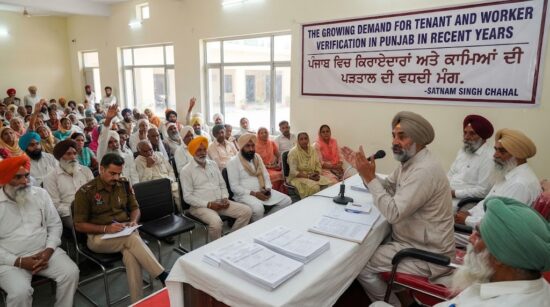
local communities, village panchayats, and civic organizations across Punjab have expressed escalating concerns regarding the influx of unregistered and unverified migrant workers. Proponents of stricter regulation argue that the lack of robust background checks and formal documentation protocols allows criminal elements to blend into local neighborhoods unnoticed. This regulatory gap, critics claim, complicates community policing, heightens safety anxieties among everyday residents, and strains public infrastructure.Conversely, economic experts, industry representatives, and agricultural unions emphasize that migrant laborers form the backbone of Punjab’s primary economic sectors, particularly since the Green Revolution. A significant shortage of local agricultural and industrial labor partially driven by the large-scale emigration of Punjabi youth abroad has made external labor essential to sustain farm outputs and factory operations. Intellectuals and civil rights groups caution against the broad stigmatization of entire migrant communities due to isolated criminal incidents, arguing that sweeping restrictions threaten social cohesion and economic stability.
Timeline of Key Developments and Flashpoints
The contemporary friction regarding migrant labor and state security has been shaped by a series of critical events over the decades, culminating in heightened regulatory demands:Mid-1960s (The Green Revolution): Large-scale seasonal migration from states like Uttar Pradesh and Bihar begins, driven by high labor demands in Punjab’s rapidly expanding agricultural sector.Late 1980s to 1990s: Amid regional militancy, migrant farmworkers occasionally become targets of insurgent violence, highlighting early vulnerabilities and security concerns surrounding external labor.2007–2009: Localized friction leads to flashpoints, including the 2007 Shingaar Cinema blast in Ludhiana during a Bhojpuri film screening, and the 2009 Ludhiana riots, which erupted following payday muggings and disputes in industrial colonies.2010s to 2020: Temporary and seasonal migration increasingly transitions into permanent settlement around urban and semi-urban industrial centers.
This shifts the public conversation toward long-term municipal planning, infrastructure strain, and the systemic absence of mandatory tenant registration.September 2025: A severe public backlash occurs following the kidnapping and murder of a five-year-old child in Hoshiarpur, allegedly committed by an unverified migrant worker. The incident triggers widespread protests and prompts over 40 village panchayats to pass resolutions demanding mandatory police verification, housing restrictions, and limits on local identification issuance.February 2026: Tensions escalate further following a targeted roadside shooting of migrant workers in rural Moga. Police subsequently arrest multiple individuals, noting that unverified social media narratives were utilized to incite the attack.Mid-2026:
Legal experts and civic bodies continue to push for the rigorous enforcement of existing frameworks, such as the Inter-State Migrant Workmen Act, via portals like the e-Labour Punjab Portal. The administrative focus shifts heavily toward balancing security verification with the prevention of unlawful discrimination.The ongoing debate highlights a critical governance challenge for Punjab: establishing transparent, efficient, and lawful verification mechanisms to ensure public safety without disrupting the human resources essential to the state’s economic survival.If you would like to refine this further, could you share the specific target audience or publication format (e.g., an op-ed, a research brief, or a policy memorandum) you intend this text for?AI can make mistakes, so double-check responses Frontline MagazinePunjab Migrant Crisis 2025: History, Hate, and Survival – FrontlineOct 2, 2025 Context: Anti-migrant sentiment and violence in Punjab following the September 2025 Hoshiarpur child rape-murder. Triggers: Economy ThePrint SubscriberWrites: Punjab at the Brink Unchecked Migration …Aug 26, 2026
During the 2010s, temporary migration increasingly became permanent settlement. Workers who had initially arrived seasonally began…ThePrint SubscriberWrites: Viral Videos, Migrant Fear, and Punjab’s May 24, 2026 One important fact is that viral videos on social media often travel faster than verified information. A single train video recordShow all further, could you share a few more details about what you need?
Community members frequently call for increased policing and rapid response measures to ensure that anyone committing a crime regardless of their background—is held accountable under the law.Systemic Tenant and Worker Verification: Many civic groups advocate for the strict enforcement of mandatory tenant and employee verification by local police. The goal is to create a transparent registry to deter criminal activity while protecting law-abiding residents.Community Dialogue: Local leaders emphasize the importance of keeping communication open between different communities to prevent rumors from escalating and to ensure that safety measures do not lead to broader social division.If you are looking to draft an article or an op-ed addressing these safety concerns, we can focus on how structured governance, proper legal registration, and stronger community policing can help restore peace and order.
Over the past year, multiple local flashpoints have driven village panchayats in districts like Hoshiarpur, Mohali, and Bathinda to pass independent resolutions demanding that unregistered workers complete background checks or face eviction.When crimes occur involving individuals who are completely unverified, local law enforcement faces significant hurdles in tracking suspects, mapping criminal histories, and securing justice for victims. For residents, this regulatory blind spot transforms quiet neighborhoods into zones of vulnerability, fracturing the baseline of trust required for community policing.The Danger of Lawlessness: Vigilantism and RetaliationWhen official administrative channels appear slow or insufficient, public anxiety frequently morphs into dangerous cycles of vigilantism. This dynamic was starkly illustrated by highly volatile incidents, such as the masked roadside shootings targeting migrant laborers in rural Moga.
Unverified social media narratives often weaponize local fear, leading to indiscriminate retaliation against law-abiding workers who have no connection to criminal elements. Community leaders and legal experts stress that allowing law and order to be dictated by public anger rather than structured institutional authority threatens to spiral Punjab into a deeper cycle of instability.Moving Forward: Systemic Solutions for PeaceTo alleviate the anxiety of the common citizen and stabilize the state’s security landscape, Punjab requires a unified, modern framework that prioritizes strict enforcement without fostering unlawful discrimination.Mandatory Digital Registration: Landlords, agricultural employers, and industrial factory owners must be legally obligated to submit written undertakings and full identification protocols via platforms like the e-Labour Punjab Portal.Strengthened Police Verification:
Streamlining biometric and identity verification at local stations ensures that an individual’s background is transparent before they occupy rented accommodations.
Active Community Policing:
Establishing neighborhood and village oversight committees can bridge the communication gap between local panchayats and state police, suppressing volatile rumors before they escalate into physical violence.By strictly enforcing mandatory legal verification, Punjab can protect its residents from criminal elements while preserving the social stability and rule of law necessary for the state’s future.Would you like to shift the focus of this article to explore specific tenant laws in Punjab, or should we expand the section on how local village panchayats are implementing these rules?The New Indian ExpressPunjab panchayats pass resolutions asking migrant labourers without documents to leave Sep 16, 2025 Panchayats in Punjab districts, including Hoshiarpur and Bathinda, passed resolutions directing undocumented migrant labourers keeping them on rent The financial incentive for local homeowners to rent out property to migrant laborers creates a significant conflict between economic self-interest and community security mandates. While village panchayats and civic groups push for strict registration to maintain law and order, many landlords prioritize steady rental income, often leading them to bypass formal background checks to save time or avoid administrative scrutiny.The Conflict of Interest for Local Landlords[Landlord Priorities: High Demand & Steady Cash Flow]
Administrative Blind Spots & Heightened Community Safety Concerns
High Demand and Steady Cash Flow: Migrant workers provide a reliable, high-demand tenant base for homeowners, particularly in semi-urban industrial hubs and rural farming clusters. Renting out rooms, outhouses, or agricultural quarters provides landlords with essential, steady secondary income.Resistance to Formal Bureaucracy: Many local homeowners resist participating in official registration channels due to a lack of awareness, fear of tax implications, or the perception that filing paperwork at a local police station is unnecessarily time-consuming.The Security Trade-off: By renting out spaces without executing proper verification, landlords inadvertently create the administrative blind spots that worry the broader community. When a crime occurs, the lack of a paper trail leaves both neighbors and law enforcement vulnerable.
Enforcing Accountability:
Legal and Civic ConsequencesTo address this gap, local authorities and village bodies in Punjab are increasingly shifting the burden of accountability directly onto the property owners:Legal Penalties for Unverified Tenancies: Under Section 188 of the Indian Penal Code (or updated regional mandates), landlords who fail to file police verification forms for their tenants can face formal legal charges, fines, or short-term imprisonment for disobeying a public servant’s order.Social and Panchayat Resolutions: In several districts, village panchayats have passed strict bylaws penalizing local landlords who harbor unverified tenants. These measures include imposing community fines on the homeowners or barring them from local cooperative benefits if they refuse to comply with village-wide security registries.
Shared Liability:
Legal advocates argue that making landlords financially or civilly liable for crimes committed on their properties by unregistered individuals is the fastest way to compel compliance. When landlords realize that ignoring verification puts their own assets and freedom at risk, administrative loopholes close quickly.Would you like to expand this into a new section of the article focusing on how local laws penalize landlords who skip verification, or would you prefer to explore the specific paperwork property owners are required to submit to the police?plz compose all in oneThe Unverified Influx: How the Breakdown of Law, Order, and Accountability is Impacting Everyday Life in PunjabThe rising societal friction in Punjab over unverified migrant labor has escalated from a localized municipal concern into a critical crisis of public safety, community trust, and state security. For the common citizen, everyday life is increasingly overshadowed by a deep sense of vulnerability. Reports of violent crimes, theft, and assault—often linked to individuals operating entirely outside the legal system—have triggered widespread public anxiety. When administrative regulatory gaps allow large populations to remain completely unmapped, the baseline of civic order fractures, pushing Punjab’s law and order situation to a volatile breaking point.The Operational Challenge
Disclaimer: This article and accompanying images are for informational and illustrative purposes only. Some visuals may be AI-generated or digitally enhanced and may not depict actual events or persons.Views expressed are based on publicly available information and analysis