
 SIRHIND: Sirhind’s truck and bus body manufacturing industry is facing a crisis that deserves far greater attention from the Punjab government. For decades, this industrial cluster has provided direct and indirect employment to thousands of people and supported an entire local economic ecosystem. Today, however, workers and entrepreneurs associated with the sector are struggling to protect their livelihoods.
The issue is bigger than the survival of individual workshops. Behind every body-building unit is a chain of economic activity involving welders, painters, mechanics, electricians, fabricators, drivers, spare-parts dealers, transporters and numerous small businesses. When such an industry comes under pressure, the consequences are felt not only by factory owners but also by ordinary working families whose household incomes depend upon it.
Former Punjab MLA Kuljit Singh Nagra has strongly raised the issue, questioning the Punjab government’s approach towards an industry that has already been generating employment for decades. His criticism points towards an uncomfortable contradiction: while governments regularly advertise employment generation and promise opportunities for Punjab’s youth, an established industrial sector employing thousands is reportedly struggling for survival.
This raises a fundamental question for the Bhagwant Mann government: is employment creation only about announcing new jobs, or does it also mean protecting the jobs that already exist?
Punjab cannot afford an approach in which every employment crisis is treated as somebody else’s problem. If an industrial cluster has developed over decades through the skills, investment and hard work of local people, the government has a responsibility to sit across the table with its stakeholders and understand why the sector is facing difficulties.
At the same time, protecting an industry cannot mean ignoring laws, safety standards, environmental requirements or other regulatory obligations. A responsible government must find a middle path—enforce the rules, but do not destroy livelihoods in the process. Legitimate regulation and industrial survival should not be treated as opposing objectives.
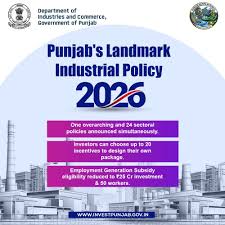
The real test of governance is often not how many advertisements a government can publish about investment and employment, but how it responds when existing businesses and workers are under pressure. Thousands of families do not live on government slogans; they live on their daily earnings.
Sirhind’s body-building industry therefore deserves an immediate structured dialogue involving the government, manufacturers, workers and relevant departments. The government should identify the actual regulatory, administrative and economic problems confronting the sector and establish a time-bound mechanism for resolving them.
Punjab has already witnessed a worrying pattern of young people looking outside the state for employment and better economic opportunities. At such a time, allowing traditional employment hubs to weaken would send precisely the wrong message to entrepreneurs and workers.
The question before Chief Minister Bhagwant Mann is therefore straightforward: if Punjab wants to create jobs, why not first protect thousands of jobs that are already being provided by its own industries?
Sirhind is not asking for charity. Its industrial workers and entrepreneurs are asking for a fair opportunity to continue working, investing and earning their livelihoods within the framework of the law.
The government needs to move beyond speeches and advertisements and demonstrate that employment means more than numbers on a government publicity campaign. Saving existing livelihoods should be as important as announcing new employment.