
 Punjab has changed governments, but the drug trade has survived them all. The Akalis went, Congress came and went, and AAP arrived promising badlav. Another election approaches, and politicians are suddenly getting “worried” again.Families have had no such interval of relief. They have spent these years arranging treatment, borrowing money, sending children abroad and sometimes burying the very future for which they had worked.
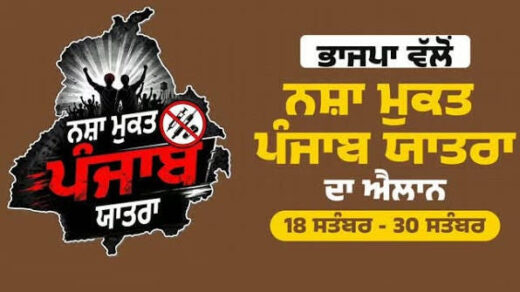
The BJP has sensed this painful pulse. Its “Nasha Mukt Yatra” occupies ground surrendered by successive governments. There is a political opportunity, certainly. But Punjab has supplied enough crowds for campaigns against drugs. Before asking for another mandate, the BJP must explain how it will confront the interests that have outlasted every previous campaign.
In 2012, Rahul Gandhi’s claim that seven out of ten young Punjabis had a drug problem provoked outrage. The Akalis, governing with the BJP, accused him of defaming Punjab. The study had been misquoted: the percentage concerned young people among surveyed drug users. Correcting the figure was irrelevant; because the problem exists, deep in the system. Rahul Gandhi was the first politician to flag this issue.
Then Udta Punjab, movie by Diljit Dosanjh brought the suffering to national attention. Bhola, Pindi, Satta and allegations involving Bikram Singh Majithia became familiar household names. Bhola has been convicted; Majithia denies the allegations. Courts must determine guilt. But the public is entitled to ask how deeply investigations have penetrated the protection allegedly enjoyed by this trade. Years of accusations cannot substitute for answers, that people expect.
Capt. Amarinder Singh held the Gutka Sahib and promised to break the backbone of drugs within four weeks of assuming office. He brought Harpreet Singh Sidhu to lead the Special Task Force. Efforts followed, but drugs continued. Eventually, Punjab was invited to debate whether the promise was meant eradication or merely breaking the backbone. Parents had trusted an oath. Punjab was left with an argument over its wording.
AAP now cites nearly 80,000 arrests, including 708 “big fish”. Where is the corresponding relief? Are drugs harder to obtain? Are fewer families losing children? A seller’s arrest achieves little if his replacement takes over while the financier and protector remain comfortable. A government must account for the business it has dismantled, not merely the people it has arrested.
AAP points towards Gujarat’s ports and the Centre’s control of the border. Nearly three tonnes of heroin were seized at Mundra in 2021. The Centre owes answers. But drone consignments need local receivers, transporters and sellers. Punjab cannot blame Pakistan for every failure inside its villages. Nor do domestic pharmaceutical syndicates need to cross that border. Their supply chains operate within India.
The BJP need not win Punjab before demonstrating its seriousness. It already runs the Centre. Central agencies, including the NCB, NIA, ED can pursue interstate suppliers, international connections and drug money within their mandates. What prevents action now? Cooperation cannot be held hostage to having the same party in Chandigarh and Delhi.
Accountability must also follow a criminal network wherever it operates. Any evidence of instructions passing from prisons, policemen doing criminals’ bidding or businesses laundering proceeds must be pursued through to responsibility. Putting somebody behind bars is no achievement if his business remains operational outside. Neither a uniform nor a political connection should provide an escape route.
The treatment of Mohanjeet Singh of Sheron deserves the same persistence. Arrested after showing a black flag at Bhagwant Mann’s programme, he alleged custodial torture; an inquiry was ordered. Opposition leaders took up his cause. Let them pursue the outcome after the cameras leave. Punjab has enough photographs of concern.
Meanwhile, poor education, qualifications without skills and unemployment leave youngsters frustrated. Addiction is not inevitable, but despair creates an opening. Treatment needs to lead back to work and ordinary life. Parents should not have to sell land to send a child abroad because they fear keeping him at home.
The BJP must answer another uncomfortable question. If it contemplates renewing its alliance with the Akalis, what happens to accountability for their years in government together? Will the anti-drug promise survive seat-sharing negotiations, or will inconvenient questions disappear once the seats are settled?
Punjab wants a road map, not another roadshow.Explain how drone supplies will be disrupted, pharmaceutical diversion curbed and the alleged politician-police-businessman nexus investigated. Will the crocodiles be pursued when an ally’s name surfaces? Until that question is answered convincingly, Punjab has reason to fear another election in which governments change and the drug business carries on.