
 CHANDIGARH: The Aam Aadmi Party government in Punjab is once again facing political criticism over its decision-making and administrative functioning. First, the government was forced to withdraw its land pooling policy following strong opposition and protests by farmers. Now, the Greater Mohali Area Development Authority (GMADA) has scrapped its proposed ₹15,000-crore fundraising tender amid increased scrutiny by the Enforcement Directorate (ED). The two developments have triggered fresh questions about the government’s planning, transparency and ability to assess the consequences of major policy decisions before implementing them.
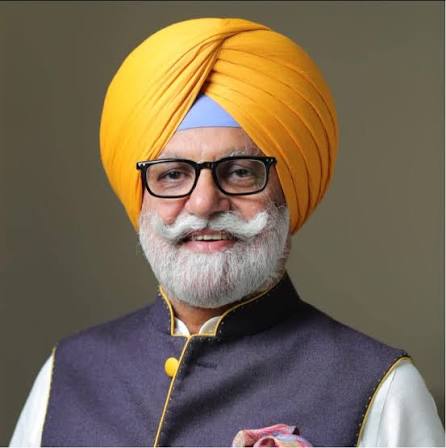
Congress leader and MLA Rana Gurjeet Singh has strongly criticised the Bhagwant Mann government over these developments. In a post on X, he pointed out that the land pooling policy was withdrawn after farmers took to the streets, while GMADA’s ₹15,000-crore fundraising tender had now been scrapped amid intensified ED scrutiny. He argued that these were not isolated U-turns but reflected a larger problem in the government’s decision-making process.
GMADA had floated the fundraising tender in June 2026 with the objective of mobilising ₹15,000 crore through financial instruments, including bonds and other borrowing arrangements. The money was intended to finance 14 development projects and land acquisition activities in Mohali and New Chandigarh. GMADA had estimated that approximately ₹17,686 crore would be required for these projects. In August, Gujarat-based Tipsons Consultancy Services Private Limited emerged as the lowest bidder, offering to arrange the funds at a fee of 1.27 per cent, amounting to approximately ₹191.16 crore.
However, the tender was subsequently cancelled. According to the explanation provided by a senior GMADA official, a disagreement emerged over the accounting system to be adopted. The selected company reportedly insisted on implementing an accrual-based accounting system, whereas GMADA was already following a double-entry accounting system. The proposed change was expected to require at least six months. It is important to distinguish this official explanation from the political allegations surrounding the cancellation. Although the tender’s cancellation coincided with increased ED scrutiny, it has not been established that the investigation was the direct reason for scrapping the tender.
The ED investigation has nevertheless added another dimension to the controversy. The agency has been examining GMADA’s land transactions, alleged financial irregularities and certain concessions reportedly extended to private developers. On October 15, the government also decided to withdraw concessions worth approximately ₹57 crore relating to a 1.13-acre food-court plot in Sector 62, Mohali. The ED has been examining allegations concerning government dues and the role of officials and private companies. These matters remain under investigation, and allegations should not be treated as established guilt.
The proposed ₹15,000-crore borrowing arrangement had also attracted judicial and political attention. The Punjab and Haryana High Court had sought explanations from the government regarding GMADA’s financial management and the transfer of approximately ₹6,400 crore from GMADA funds to the Punjab government’s treasury. Opposition leaders raised concerns about whether the authority’s resources were being diverted from their intended development purposes.
Leader of Opposition Partap Singh Bajwa had also questioned the financial implications of the proposal, arguing that the total burden, including interest over a 20-year period, could reach approximately ₹39,000 crore. His criticism also included the proposed ₹191.16-crore fundraising fee. These concerns have intensified the debate over whether the proposed borrowing was financially justified and whether the government had adequately assessed its long-term consequences.
The land pooling controversy provides another important example of the government’s difficulties in implementing major policies. In June 2025, the Punjab government introduced a policy involving approximately 65,533 acres of land for development through land pooling. Farmers strongly opposed the proposal, expressing concerns about their land ownership, livelihoods and the future of agricultural communities. Protests spread across different parts of Punjab, and the matter also reached the Punjab and Haryana High Court. Following mounting opposition and legal developments, the government withdrew the original policy in August 2025. Subsequent modifications and revised proposals continued to keep the issue alive.
Rana Gurjeet Singh’s criticism raises a broader question about the government’s approach to policymaking. A government must examine the legal, economic, administrative and social consequences of major decisions before announcing them. It cannot expect farmers, courts, opposition parties or investigative agencies to identify potential problems after implementation has already begun. Public protests and external scrutiny should not become the routine mechanisms through which government mistakes are discovered and corrected.
Punjab is already facing serious financial challenges, including mounting debt, expenditure pressures and the need for substantial investment in infrastructure and development. Under these circumstances, any proposal to mobilise ₹15,000 crore must be supported by a transparent financial assessment, a clear repayment strategy and publicly accessible details about the proposed utilisation of funds. Borrowing for development is not necessarily wrong, but financial accountability and long-term sustainability cannot be compromised.
The government must now explain what will happen to the 14 proposed GMADA development projects requiring an estimated ₹17,686 crore. Will a fresh tender be issued? Will an alternative financing model be adopted? Will the government commission an independent review of the financial arrangements and land transactions? These are legitimate questions that deserve clear answers.
The latest controversy also presents an opportunity for the Bhagwant Mann government to restore public confidence by making its decision-making process more transparent. Instead of responding to criticism only after controversies emerge, the government should establish stronger systems of consultation, financial scrutiny and administrative accountability.
Punjab cannot afford governance based on trial and error. Withdrawing a major policy after farmers take to the streets and cancelling a massive financial tender amid growing scrutiny raises serious questions about planning and administrative preparedness. A responsible government must think before it acts, consult stakeholders before announcing major decisions and take responsibility for the consequences of its policies. Punjab needs transparent, carefully planned and accountable governance—not repeated U-turns.
By Satnam Singh Chahal | Punjab Outlook — Political Analysis