
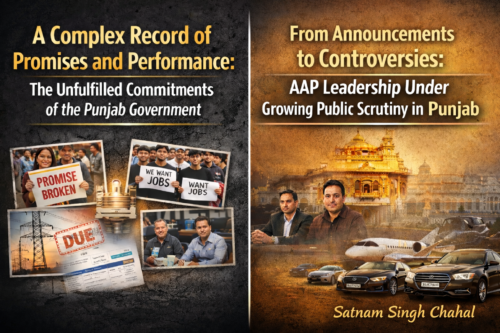
 The Punjab government entered office with a wave of hope, promising transformative reforms that would reshape the future of the state. Women were promised a monthly stipend of ₹1,000, which was expected to bring financial independence and stability to millions. Yet, the promise remains unfulfilled, with no scheme, budget allocation, or timeline ever announced. The disappointment among women is deep, especially because this promise was one of the biggest election commitments.
Employment generation was another area where expectations were high. The government had claimed that young Punjabis would find abundant opportunities and that large-scale government hiring would end the unemployment crisis. However, unemployment remains widespread, and thousands of Punjabi youth continue to migrate abroad every month. Adding to the frustration, many of the new jobs within Punjab’s departments and institutions reportedly went to individuals from other states, leaving local youth feeling sidelined and betrayed. Hiring remains slow, uneven, and often tangled in administrative delays.
In education, the government had promised a complete revolution similar to the Delhi model. Although a few schools received repairs and cosmetic improvements, the larger system continues to face shortages of teachers, lack of proper infrastructure, and repeated protests from educators over policies and working conditions. The promise of a transformed education system has not translated into reality for most students.
The free electricity promise, despite being heavily advertised, also falls short when measured against actual implementation. Many households complain that their bills remain high, citing hidden charges and inflated readings. Punjab’s financial burden has grown significantly due to these subsidies, raising questions about long-term sustainability. Farmers, too, continue to face irregular electricity supply, contradicting the government’s claims of improvement.
Healthcare reforms, centred around Aam Aadmi Clinics, were promoted as groundbreaking. While some clinics function reasonably well, many suffer from inadequate medicine supplies, a lack of specialists, and insufficient staff. Larger hospitals still struggle with shortages of beds, equipment, and necessary facilities. The gap between publicity and ground reality remains wide.
Beyond governance, several controversial claims made by the leadership have further eroded public trust. After his Germany tour, Chief Minister Bhagwant Mann announced that BMW would set up a major car manufacturing project in Punjab. The company publicly denied any such plan. Similarly, his announcement regarding the arrest of gangster Goldy Brar in the United States proved false, as confirmed by American authorities. These inaccuracies embarrassed the state and raised questions about responsible communication.
Another dramatic episode involved Mann presenting a player who alleged that former Chief Minister Charanjit Singh Channi demanded a one-crore rupee bribe for a job. Mann himself promised to give the player a good job, but no action followed, leaving the matter unresolved. Likewise, Mann’s unusual claim that people from Western countries would soon travel to Punjab for employment remains disconnected from reality, especially when local youth are leaving the state in record numbers.
Arvind Kejriwal also contributed to misinformation during a Gujarat rally where he declared that all 23 districts of Punjab were flooded and that the government had paid compensation of ₹50,000 per acre. Farmers later stated that no such compensation was provided. Similar contradictions exist regarding earlier promises that leaders would live simple lives with minimal security. Today, both Kejriwal and Mann enjoy high-security cover, luxurious residences, and frequent travel in chartered aircraft—contradicting their earlier declarations of simplicity.
There is growing concern that youth from Punjab are not benefiting from new job opportunities, while individuals from outside states are being favored. Business owners also express dissatisfaction that many government supplies, contracts, and goods are purchased from outside Punjab instead of supporting local industries, leaving local traders struggling.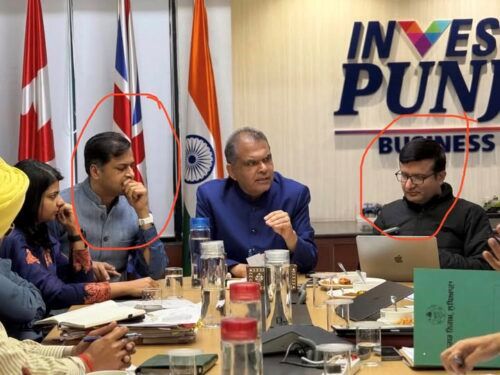
The promise to identify and arrest those responsible for the Guru Granth Sahib sacrilege within fifteen days remains unfulfilled even after years, causing emotional pain among Sikhs. Within the ruling party itself, it is believed that only a few selected leaders are allowed to speak publicly, while many MLAs remain silent, raising questions about internal democracy. Concerns have also been raised that the administration is being run by a team from Delhi rather than elected Punjabi representatives. A widely circulated photograph showing two non-Punjabi individuals sitting in an official meeting added fuel to these concerns.
Additional allegations include the purchase of road-safety vehicles at inflated prices with suspected commission payments, as well as accusations that the Chief Minister purchased 2,800 acres of land in Australia, a matter on which he has yet to provide any clarification. Together, these unfulfilled promises, misleading announcements, and unanswered allegations contribute to growing public disappointment. What began as a movement of hope now appears increasingly like a record of over-promising and under-delivering, leaving Punjab searching for accountability and real change.