
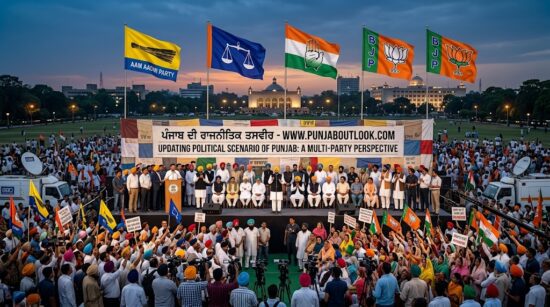
 Punjab’s political landscape presents an important question: are political parties being weakened only by their opponents, or are their own leaders, workers, supporters and internal groups also contributing to their decline? The Indian Punjab political scene has witnessed changing loyalties, internal disagreements, leadership disputes, factionalism and conflicting ambitions across several political organisations, including the Congress, Shiromani Akali Dal, Akali Dal (Waris Punjab De), BJP and BSP.
A political organisation does not become weak overnight. Its decline can begin from within when personal interests take precedence over collective objectives, when leaders stop listening to ordinary workers, when internal disagreements become public battles and when people associated with the organisation begin treating political positions as personal property. The damage becomes more serious when those who once built an organisation start questioning its leadership, credibility and direction in public without making genuine efforts to resolve differences through democratic institutions.
The Punjab Congress has repeatedly faced the challenge of managing differences among senior leaders. Instead of presenting a united organisational face, disagreements over leadership, political authority, appointments and future responsibilities have at times become public controversies. The June 2026 reports of repeated meetings by the central leadership to address factionalism illustrated the continuing difficulty of maintaining unity within the state organisation.
The question is not whether leaders are entitled to disagree. Disagreement is a normal part of democratic politics. The real question is whether they place the interests of the organisation above their individual ambitions. When senior leaders compete for influence rather than collectively strengthening the party, ordinary workers become confused and frustrated. Those who spend years building the organisation often feel ignored when political importance is concentrated around a few influential individuals.
Congress must also examine the consequences of political defections. When established leaders leave one party for another, the organisation loses not only an individual but sometimes an entire network of workers, supporters and local relationships. The public then begins questioning whether political commitment is based on ideology or personal convenience.
The Shiromani Akali Dal has a long history in Punjab’s political and Sikh institutional life. Its political journey cannot be understood simply through electoral results. Its relationship with the Sikh community, Panthic institutions, religious leadership and the people of Punjab has always been significant.However, the party has faced internal rebellion, leadership disagreements and the emergence of alternative Akali formations. These developments have raised questions about organisational unity and the ability of different leadership groups to work towards a common political direction.The return of some former leaders to the SAD in November 2026, alongside continuing differences among Akali factions, demonstrates the complexity of rebuilding organisational unity.
An organisation cannot regain public confidence merely by bringing back familiar faces. It must also examine why people left, why workers became dissatisfied and why sections of the Sikh community developed reservations. Leadership must be prepared to accept criticism, establish accountability and provide meaningful opportunities to younger generations.The biggest challenge for any Akali organisation is to ensure that Panthic principles, Sikh interests and public service remain more important than individual political positions.
The emergence of Akali Dal (Waris Punjab De) introduced another dimension into Punjab’s political landscape. It brought questions of Panthic identity, Sikh political representation, youth participation and an alternative political direction into public discussion.
However, a new political organisation also has to establish democratic procedures, organisational discipline and transparent decision-making. Recent developments have exposed disagreements within its leadership. Reports in November 2026 described the dissolution of district organisational structures and the suspension of members of its principal drafting committee. The disagreements reportedly involved organisational appointments, leadership authority and the direction of the organisation.
This raises an important question: can an organisation established around a particular ideology maintain its credibility if its own members cannot agree on democratic functioning and collective decision-making?A political movement cannot depend exclusively on the popularity of one personality, one family or a particular moment of public enthusiasm. It needs committed workers, a clearly defined programme, responsible leadership and a transparent mechanism for resolving internal disputes.The Sikh community also deserves clarity about the organisation’s long-term objectives, its political priorities and the responsibilities it intends to undertake. Ideological commitment must be reflected in organisational conduct, not merely in public speeches.
The Punjab BJP faces a different but equally important organisational challenge. As it seeks to expand its political presence in Punjab, the induction of leaders from other parties has created questions about the relationship between established party workers and political newcomers.Reports in August 2026 described resignations, protests and dissatisfaction among sections of the BJP’s traditional cadre following organisational appointments and reshuffling. Some veteran leaders reportedly felt that long-serving workers were being overlooked while leaders arriving from rival parties were receiving important responsibilities. These are reported grievances, not proof that every appointment was unfair.
Political expansion is not necessarily a problem. Every party has the right to welcome new members. But an organisation must also respect those who spent years building its foundation. If newcomers receive positions without a transparent assessment of their contribution, while established workers feel neglected, internal resentment can grow.The BJP therefore faces the challenge of balancing expansion with organisational continuity. Political workers should be valued for their service, commitment and contribution rather than judged only by their political influence or capacity to attract attention.
The Bahujan Samaj Party has its own political history and social base in Punjab. Its political relevance cannot be assessed only through the number of elected representatives it has. Its organisational network, grassroots workers and engagement with the issues of disadvantaged communities are also important.Like every political organisation, the BSP faces the challenge of keeping its workers connected with the party’s original objectives. When local leadership becomes disconnected from ordinary members, when organisational activity is limited to occasional political programmes, or when internal communication weakens, the grassroots structure can lose its effectiveness.
A political party cannot survive merely through its historical identity. It must continuously connect its principles with the everyday concerns of the people, develop new leadership and maintain an active presence in villages, towns and constituencies.The BSP’s future organisational work therefore requires attention to cadre development, local accountability, transparent leadership selection and sustained engagement with the communities it claims to represent.
Although these political organisations have different ideologies, histories and social constituencies, they face some common organisational questions.Why do some leaders remember the party only when they need a political position?Why do some elected representatives distance themselves from the workers who helped them reach public office?Why do internal disagreements frequently become public confrontations?Why are dedicated grassroots workers sometimes overlooked in favour of influential individuals?Why do some people change political affiliations without explaining the ideological or policy reasons behind their decisions?Why is accountability often demanded from opponents but not from one’s own leadership?
Political defection is not automatically wrong. A person may legitimately leave a party because of ideological differences, policy disagreements or dissatisfaction with its leadership. But repeated political switching without a clear public explanation damages confidence in political representation. A voter has a legitimate interest in understanding why a representative changes political affiliation after receiving a mandate under a particular party’s banner.
A November 2026 analysis in The Tribune also highlighted how defections and political realignments have become a recurring feature of Punjab politics, raising questions about ideological commitment and democratic accountability.
One of the biggest casualties of internal political competition is the ordinary party worker.A worker spends years putting up posters, arranging meetings, attending protests, travelling from village to village and defending the party during difficult times. But when elections approach, the importance of that worker can suddenly diminish. Tickets, positions and responsibilities may become concentrated among influential leaders, their close associates and those with access to decision-makers.This creates frustration, discouragement and eventually political disengagement.
Political organisations must remember that leaders may change, governments may change and electoral circumstances may change, but a committed grassroots worker is an essential part of the organisation’s long-term foundation.No party can build a sustainable political future by repeatedly ignoring the people who built it.
Punjab has witnessed enough political promises, changing alliances, leadership disputes and organisational conflicts. The people of Punjab deserve political organisations that are prepared to answer difficult questions about their own conduct.Congress must address its internal disagreements. The Shiromani Akali Dal must confront questions of trust, leadership and organisational unity. Akali Dal (Waris Punjab De) must establish transparent internal functioning and clarify its political direction. The BJP must balance organisational expansion with respect for its established workers. The BSP must strengthen its grassroots connections and organisational continuity.None of these challenges can be resolved by blaming opponents alone.
Political organisations should introduce internal democratic mechanisms, transparent appointments, regular consultations with workers, clear disciplinary procedures and accountability for elected representatives. Leaders who disagree should have institutional platforms to express their concerns rather than turning every disagreement into a public confrontation.Punjab’s political experience offers several traditional expressions that remain relevant:
“ਜਿਹੜੀ ਟਾਹਣੀ ‘ਤੇ ਬੈਠੇ ਹੋ, ਉਸੇ ਨੂੰ ਨਾ ਵੱਢੋ।”
“ਘਰ ਦਾ ਭੇਤੀ ਲੰਕਾ ਢਾਹੇ।”
“ਏਕਾ ਬਲ ਹੈ, ਫੁੱਟ ਕਮਜ਼ੋਰੀ ਹੈ।”
“ਜਿਸ ਥਾਲੀ ਵਿੱਚ ਖਾਣਾ, ਉਸੇ ਵਿੱਚ ਛੇਕ ਨਹੀਂ ਕਰਨਾ ਚਾਹੀਦਾ।”
“ਆਪਣਿਆਂ ਦੀ ਫੁੱਟ, ਬਾਹਰਲਿਆਂ ਦੀ ਜਿੱਤ ਦਾ ਰਾਹ ਖੋਲ੍ਹਦੀ ਹੈ।”
“ਕੁਰਸੀ ਦੀ ਲਾਲਸਾ ਜਦੋਂ ਸੇਵਾ ਤੋਂ ਵੱਡੀ ਹੋ ਜਾਵੇ, ਤਾਂ ਸੰਗਠਨ ਕਮਜ਼ੋਰ ਹੋਣ ਲੱਗਦੇ ਹਨ।”
The responsibility cannot be placed on one party, one leader or one political faction. It must be examined within every organisation.Opponents can criticise a political party, but its own leadership and members have a responsibility to protect its credibility. A political organisation is not the personal property of its president, elected representatives, office-bearers or influential families. It belongs to the people who believe in its principles and contribute to its public work.
The people of Punjab should also distinguish between genuine ideological disagreement and political opportunism, between constructive criticism and deliberate organisational disruption, and between leadership accountability and personal rivalry.Ultimately, political parties are not weakened only when they lose elections. They begin losing their foundations when trust disappears between leaders and workers, when ideology becomes secondary to personal ambition and when public service is replaced by the pursuit of positions.
Punjab does not need political organisations built around individual ambitions. It needs organisations built around principles, public accountability, democratic values and genuine commitment to the people.The question every political leader and worker should ask is simple: Am I strengthening the organisation to which I belong, or am I contributing to its decline for my own personal interests?
Editorial note: This is a political analysis of organisational behaviour, not an allegation against every member or worker of the parties discussed. Reported internal disputes have been distinguished from broader analysis.