
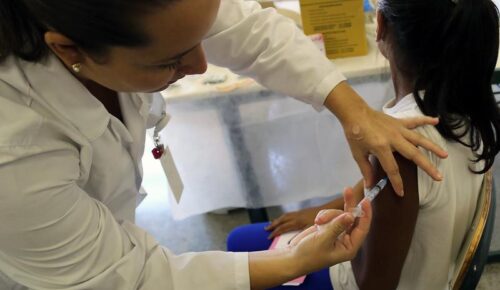
 The vaccine against human papillomavirus, or HPV, has reduced cervical cancer by nearly 90% in women vaccinated as adolescents. It has been studied in more than 50 randomized controlled trials. Over 135 million doses have been administered in the United States.
And last month, a newly formed working group under the reconstituted Advisory Committee on Immunization Practices (ACIP), which helps guide vaccine decisions by the Centers for Disease Control and Prevention (CDC) announced plans to conduct a multi-year “comprehensive review” of the vaccine’s efficacy, effectiveness, and safety.
The working group’s charter, finalized in December 2025, does not limit itself to the one genuinely open question in HPV vaccine science, whether a single dose provides adequate long-term protection. It calls for a sweeping reexamination that includes adjuvant toxicity, potential contaminants, possible HPV type replacement, and a full reassessment of safety data. It lists neurology and toxicology among the disciplines to be represented on the working group.
And it operates under an ACIP that was reconstituted in June 2025 after Health and Human Services (HHS) Secretary Robert F. Kennedy Jr. fired all 17 prior members and replaced them with appointees who include paid expert witnesses against the product now under review.
Periodic review of vaccine recommendations is normal and necessary. What this charter describes is something else entirely. It is the construction of uncertainty around a vaccine whose benefits have been demonstrated more conclusively than almost any medical intervention in modern history.
What the evidence shows
The real-world impact of HPV vaccination on cancer is no longer theoretical. Population-based studies from countries with established vaccination programs and centralized cancer registries have documented what clinical trials predicted: This vaccine prevents cancer at a population level.
In Sweden, a cohort study spanning 1.7 million women found that those vaccinated before age 17 had an 88% lower risk of developing invasive cervical cancer compared with unvaccinated women. In England, girls vaccinated at ages 12 to 13 experienced an 87% reduction in cervical cancer incidence and a 97% reduction in the highest-grade precancerous cervical lesions.
Denmark reported an 86% reduction in cervical cancer among women vaccinated before 17. Australia, the first country to implement a national HPV vaccination program, is on trajectory to eliminate cervical cancer as a public health problem, with a 93% drop in genital warts among young women within five years of the program’s launch and documented herd protection extending to unvaccinated males.
A new modeling study in the Annals of Internal Medicine, published the same week the working group was announced, found that, in Norway, where HPV vaccination coverage exceeds 90%, women vaccinated between ages 12 and 24 may need cervical cancer screening only once every 15 to 25 years. The vaccine works so well that the question in high-coverage countries is not whether it prevents cancer but how much screening can safely be reduced.
In the United States, where monitoring is complicated by the absence of a centralized cancer registry, the data are nonetheless striking. Infections with HPV types targeted by the vaccine have declined 88% among teenage girls since introduction. Cervical precancer incidence among women aged 20 to 24 fell from approximately 1,300 to 266 per 100,000 women screened from 2008 to 2022, an 80% decline in the immediate precursor to cervical cancer, observed across American clinical settings in real time.
The real-world impact of HPV vaccination on cancer is no longer theoretical.
The clinical trial evidence underlying these outcomes is among the most extensive for any vaccine in use. Our research group has catalogued more than 50 randomized controlled trials of HPV vaccines, conducted across multiple continents and enrolling tens of thousands of participants, including men, people living with HIV, and women up to age 45.
Vaccine efficacy against persistent infection and high-grade precancerous lesions consistently falls between 90% and 100% in populations not previously exposed to HPV. Five of these trials used true saline placebo controls; the safety and efficacy findings are indistinguishable from those of trials using adjuvant-containing placebos. The World Health Organization’s (WHO’s) Global Advisory Committee on Vaccine Safety, drawing on data from hundreds of millions of doses worldwide, has classified HPV vaccines as “extremely safe,” identifying no serious adverse reactions beyond the rare risk of severe allergic reaction at roughly three per million doses.
The ACIP working group’s mandate to reassess this evidence from the ground up is not a response to new data suggesting that the vaccine is less effective or less safe than previously understood. No such data exist.
The single-dose data before the previous ACIP was fired
There is one area of HPV vaccine science that is genuinely evolving: whether a single dose provides durable, long-term protection comparable to two or three doses. The question is not whether a single dose works. It clearly does. The question is whether protection lasts a lifetime without a booster, and the evidence is encouraging but not yet conclusive. That question was already being evaluated through the proper channels when the process was cut short.
Prior to the June 2025 dissolution of ACIP, the HPV Vaccines Working Group had been reviewing single-dose data for nearly a year. Chaired by Dr. Oliver Brooks, MD, with CDC co-leads Carla DeSisto, PhD, MPH, and Lauri Markowitz, MD, and liaison participation from the American Academy of Pediatrics (AAP), the American College of Obstetricians and Gynecologists (ACOG), the Infectious Diseases Society of America (IDSA), the American Cancer Society, and more than a dozen other organizations, the group had assembled a substantial body of evidence. At its April 15, 2025, meeting, the working group presented detailed reviews of the literature, modeling analyses, and the first phase of its Evidence to Recommendation framework, the systematic process ACIP has historically used to move from data to policy.
The group had evaluated the longest-term single-dose data available. From the IARC-India trial: efficacy against HPV 16/18 infections persisting at 15 years. From the Costa Rica Vaccine Trial: measurable immune responses persisting at 16 years following a single dose. The KEN SHE trial in Kenya demonstrated 97.5% efficacy against persistent infections with HPV types 16 or 18 at 18 months with a single dose of the nonavalent (nine-strain) vaccine. A more recently published NIH-funded trial of more than 20,000 girls in Costa Rica, led by Aimee Kreimer, PhD, at the National Cancer Institute, found that a single dose of either the two-strain or nine-strain HPV vaccine was at least 97% effective against persistent HPV 16/18 infections over five years, statistically comparable to two doses. The WHO endorsed single-dose schedules in 2022, and 67 countries have adopted them, primarily in resource-limited settings where the practical alternative to one dose is often no vaccination at all.
The previous working group had also clearly identified what the evidence did not yet show. The April 2025 slides explicitly noted two outstanding gaps: (1) There are no single-dose efficacy data for males, and (2) there are no data on single-dose protection against HPV-related disease at sites other than the cervix, including the throat, anus, and genitals. The group further flagged evidence suggesting that adolescent boys may produce lower antibody levels than girls after a single dose.
All members of the working group supported some change to the HPV dose schedule. They were preparing two specific policy questions for a vote at the June 2025 ACIP meeting: (1) whether to broaden the routine vaccination age from 11 to 12 years to 9 through 12 years, a change intended to improve series completion rates by prompting providers to vaccinate at the earliest recommended age, and (2) whether to reduce the number of recommended doses. The final Evidence to Recommendation framework and data from the ESCUDDO trial, a key single-dose efficacy study, were scheduled for presentation at that meeting. Dr. Markowitz’s closing slide asked the committee what additional information it would need “before potentially voting at the next meeting.”
The committee never got to vote. On June 9, 2025, Secretary Kennedy fired all 17 ACIP members. Two days later, he announced their replacements. Seven months after that, the January 5, 2026, schedule revision imposed a one-dose HPV recommendation from the top, without an ACIP vote, as part of a broader overhaul driven by an assessment authored by Tracy Beth Hoeg, MD, PhD, acting director of the Food and Drug Administration’s (FDA’s) Center for Drug Evaluation and Research, and Martin Kulldorff, PhD, HHS chief science and data officer.
There are no single-dose efficacy or immunogenicity data for males.
The dose reduction arrived as a component of a larger effort to shrink the vaccine schedule, not as the conclusion of the deliberative process that was weeks from completion. It also created an immediate problem for clinicians: the FDA package insert for Gardasil 9 (a nine-strain vaccine) specifies two or three doses depending on age at initiation, not one. The standard ACIP evidence review process has historically served as the bridge between off-label vaccine use and clinical practice. Without that vote, providers are being asked to follow a federal schedule that has no FDA labeling support and no formal evidence deliberation behind it.
And the evidence gap that the previous working group had flagged so clearly was ignored in the January decision. All published single-dose efficacy and duration data come from studies in females. According to Plotkin’s Vaccines, the most authoritative textbook in the field, there are no single-dose efficacy or immunogenicity data for males. The male data supporting HPV vaccination—from FDA licensure, from pivotal efficacy trials, and from studies designed to show that the immune response in adolescent boys matched the response seen in women who benefited in the clinical trials—are based on two- and three-dose regimens.
This matters because HPV is not only a women’s health concern. HPV causes nearly 23,000 cancers annually in American men. The most common HPV-associated cancer in the United States is now cancer of the throat and base of the tongue, not cervical cancer, and the burden falls predominantly on men. A national policy change affecting male cancer prevention that was made without any male-specific single-dose data deserves more scrutiny than it has received.
What the working group charter reveals
The new working group’s charter extends well beyond dosing. Several provisions signal a review oriented less toward refining policy than toward questioning the vaccine’s value.
The charter directs the working group to “summarize and review existing data and knowledge regarding the potential toxicity of HPV vaccine, adjuvants, and potential contaminants and/or impurities.”
HPV vaccine
PAHO / Flickr cc
Adjuvant safety is not a new or unresolved question. The aluminum salts in HPV vaccines are present in quantities well below what humans encounter routinely through food and drinking water, and large studies across multiple countries have found no connection to autoimmune disease, neurologic disorders, or other serious health problems.
But the December 2025 ACIP meeting separately flagged aluminum adjuvants as a 2026 priority, with discussion of forming a dedicated working group on vaccine adjuvants. The vast majority of HPV vaccine trials use aluminum adjuvant, and the five that used saline placebos produced safety and efficacy results indistinguishable from the rest. Launching parallel reviews of the HPV vaccine and of vaccine adjuvants is a way of raising concern without having to produce evidence that justifies it.
The charter also calls for review of “potential HPV type replacement,” the idea that vaccinating against certain cancer-causing HPV strains might cause other strains to become more prevalent. This has been monitored continuously since the vaccine’s introduction. The evidence does not support clinically meaningful type replacement. Including it in the charter treats a speculative concern as though it carries the same weight as an established finding.
The disciplinary composition listed in the charter is telling. Alongside expected fields like epidemiology, immunology, oncology, and virology, the document lists neurology and toxicology among the disciplines to be represented. These are not standard fields for an HPV vaccine advisory body. They are, however, fields closely associated with longstanding claims from the vaccine-skeptic movement about neurologic injury and adjuvant toxicity, claims that have been investigated repeatedly and have not been supported by epidemiologic evidence.
Meanwhile, the clinicians and researchers with the most relevant expertise have been excluded from ACIP deliberations. Liaison members from the AAP, ACOG, IDSA, the American Academy of Family Physicians, the American Medical Association, and other organizations that participated in every prior ACIP working group were barred from working group participation in August 2025. The specific membership of the new HPV working group has not been publicly disclosed, despite repeated requests from liaison representatives. Robert Malone, MD, the ACIP’s vice chair, has said membership details are forthcoming. They have not materialized.
The conflicts of interest surrounding this review are extensive. Both Malone and Kulldorff have served as paid expert witnesses against Merck in vaccine litigation—Kulldorff in cases alleging that Gardasil caused injuries, Malone in an antitrust lawsuit over Merck’s MMR vaccine. CDC rules have historically prohibited vaccine advisers from holding such roles.
And Kennedy himself has referred vaccine injury cases to the law firm Wisner Baum, which is currently suing Merck over Gardasil, since at least 2018. Kennedy was entitled to a 10% referral fee on successful judgments. After pushback, he signed that financial stake over to his son, who works at the same firm. Four US senators wrote to Kennedy last month demanding he recuse himself from decisions involving HPV vaccines, noting that “the person making national vaccine policy has financial connections to people who profit when vaccine injury claims succeed.” He has refused.
What’s at stake
HPV causes about 39,000 cancers per year in the United States: cervical, throat, anal, vulvar, vaginal, and penile. More than four in 10 of these cancers occur in men. Globally, a major study published this month in Nature Medicine found that infections remain the leading modifiable contributor to cancer in women worldwide, with high-risk HPV accounting for the largest share of infection-attributable preventable cancers.
Coverage already trails other adolescent vaccines. Only 62.9% of US adolescents have completed the recommended HPV vaccine series, compared with more than 90% for the tetanus-diphtheria-pertussis booster and meningococcal vaccines given at the same age. The association between HPV and sexual transmission has always made this vaccine harder to recommend in a brief clinical visit, and research consistently shows that the strongest predictor of whether a teenager gets vaccinated is whether the provider presents the vaccine as routine rather than opening a conversation about whether to get it.
Any further weakening of the recommendation, whether through a formal downgrade or through the ambient uncertainty that a prolonged “comprehensive reexamination” creates, will suppress coverage. Parents will wait when they hear that the government is reevaluating whether the HPV vaccine works. Clinicians navigating an unstable recommendation landscape will hesitate. And the cancers that result will not appear for a decade or more, long after the decisions that caused them have receded from public attention.
Before it was dissolved, the HPV Vaccines Working Group was asking the right questions through the right process: Should the starting age move to 9? Are the single-dose data mature enough for a schedule change? How do we account for the gaps in male-specific evidence? These questions were being addressed by experts with relevant credentials, using systematic evidence review, with input from the professional societies whose members vaccinate children every day. A vote was weeks away.
The reconstituted working group has been given a fundamentally different mandate. Its charter reopens questions the previous group had already resolved. Its disciplinary structure reflects the preoccupations of vaccine skepticism more than the science of cancer prevention. Its membership is hidden. Its professional society liaisons have been shut out.
And the committee it reports to includes individuals with direct financial conflicts tied to the product under review, while the HHS secretary overseeing the entire process has personal financial ties to litigation against the vaccine’s manufacturer.
The concern is that the process has been engineered to reach a different conclusion.
The HPV vaccine is the only medical intervention that prevents six distinct cancer types across both sexes. Its population-level impact is still building—vaccinated cohorts have not yet aged into peak cancer incidence, and the 86% to 88% reductions in cervical cancer documented across multiple countries represent only the beginning. If this working group engages honestly with the accumulated evidence, it will arrive at the same conclusion every prior review has reached.
The concern is not that the evidence will be examined. The concern is that the process has been engineered to reach a different conclusion.
Dr. Scott is a clinical associate professor of infectious diseases at Stanford University School of Medicine, a co-author of “Updated Evidence for Covid-19, RSV, and Influenza Vaccines for 2025-2026” in the New England Journal of Medicine, and is co-lead of a comprehensive database of approximately 1,700 randomized controlled trials of vaccines.