
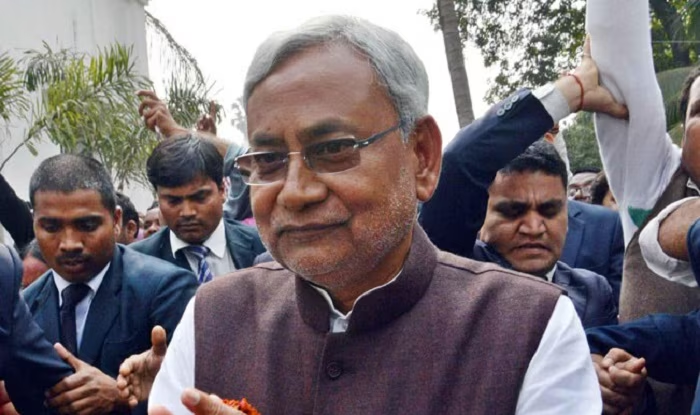
 There are moments in public life when a leader does not simply commit a political mistake but crosses a sacred boundary of human dignity. The recent controversy surrounding Bihar Chief Minister Nitish Kumar allegedly attempting to remove the hijab of a Muslim woman has become one such disturbing episode. It is not about whether he meant it, whether he tried to justify it, or whether his supporters offer excuses. What matters is the symbolism of that gesture—the intrusion into a woman’s personal space, the dismissal of her identity, and the assault on her dignity. In a constitutional democracy, a woman’s attire is her choice. Her hijab is not a political prop; it is part of her faith, her comfort, and her autonomy. A chief minister attempting to touch that space is a moral violation long before it becomes a political one.
The emotional weight of the incident lies in what it suggests: that power can treat a woman’s body and faith like expendable material for political theatre. A hijab may look like cloth to spectators, but for many women it represents modesty, belief, dignity, and social belonging. To publicly interfere with that is to suggest that authority outranks individual rights. It is not a question of ideology or debate over secularism; it is a basic matter of respect. A leader who cannot respect the personal liberty of a woman exposes a frightening lack of emotional intelligence and democratic understanding.
The satire writes itself. Instead of governing Bihar, solving unemployment, developing industries, or curbing crime, are we supposed to believe that the chief minister has now taken over the job of clothing inspector? Should citizens expect checkpoints for fashion clearance certificates? Will turbans, bindis, pagris, and crosses be next on the inspection list? India asked for governance, and Bihar received a wardrobe supervisor armed with unchecked ego and trembling fingers. This is not policy—this is theatre performed at the cost of a woman’s pride.
There is also a deeply personal element to this controversy. A woman’s body language, her clothing, and her faith-based decisions are not invitations for intervention. They are boundaries that even the highest-ranked public servant must respect. The Constitution protects her liberty not as a favour but as a right. When an elected leader touches a woman without consent, he signals that state power may override personal dignity. If that becomes acceptable, then democracy crumbles into intimidation.
Ultimately, the right to govern does not come from political alliances or legislative numbers—it comes from moral authority. When that moral authority collapses, the chair beneath a leader begins to shake. A chief minister who cannot restrain his hands cannot be trusted to restrain the forces of law and order. A leader who disrespects women cannot claim to protect citizens. A man who belittles faith cannot present himself as secular. The office of chief minister is not a throne; it is a public trust, and public trust demands restraint.
Bihar deserves governance, not fashion policing. The state needs jobs, infrastructure, healthcare, investment, and law and order—not commentary on women’s wardrobe choices. The emotional outrage building around this incident is not about religion alone; it is about dignity. A line was crossed, and when a leader crosses that line, people naturally ask whether he has forfeited the moral right to remain in office. In a democracy, a leader may keep a chair through numbers, but respect is held through conduct—and that respect has been shattered.