
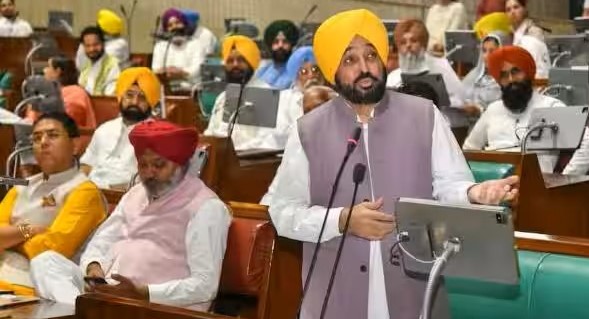
 The introduction of the Sacrilege Bill 2026 in the Punjab Vidhan Sabha has once again brought a deeply sensitive issue into public debate. While the government is presenting this bill as a strong step toward justice, the legal reality is quite different. A bill, no matter how powerful its provisions may appear, does not become law until it completes all constitutional procedures, including approval by the Governor and scrutiny under the legal framework. Until that process is completed, no action can be taken under this bill. This raises an important concern—whether the announcement is meant to deliver justice or simply to create an impression of action.
The situation becomes even more questionable when one looks at the fate of the Punjab Prevention of Offences Against Holy Scriptures Bill, 2025. That bill was introduced with similar promises and assurances, projecting it as a historic step. However, instead of being passed, it was sent to a Select Committee for consultation, with a commitment that the report would be submitted within a specific timeframe. Months have passed beyond that deadline, yet there has been no clear public disclosure of the report, no transparent discussion, and no explanation for the delay. This silence has created a serious credibility gap.
The repeated introduction of new bills without concluding previous legislative processes suggests a troubling pattern. Instead of completing the work on the 2025 bill, the government has moved ahead with a new proposal in 2026. This gives the impression that the focus is shifting from resolving the issue to managing public perception. When announcements replace outcomes and new promises overshadow unfinished commitments, governance begins to look more like a cycle of political strategy than a sincere effort to deliver justice.
Another important dimension of this issue is the promises made by the ruling leadership before coming to power. Strong statements and public oaths were taken, assuring the people of Punjab that those responsible for sacrilege incidents would be identified and punished. These assurances carried significant emotional and moral weight, as they were directly linked to the faith and sentiments of the people. However, years later, there is little visible progress. Major cases remain unresolved, and the justice that was promised continues to be delayed.
This situation highlights a fundamental issue: the problem is not the absence of laws. Even under existing legal provisions, authorities have the power to investigate and prosecute those responsible for such acts. The lack of progress indicates that the real challenge lies in implementation, not legislation. Bringing new bills without effectively using existing laws risks weakening public trust and raising doubts about the seriousness of intent.
The people of Punjab are not merely looking for new laws; they are seeking accountability and results. The continued delay in addressing past commitments, combined with the introduction of fresh legislative proposals, creates confusion and frustration. Faith is a deeply personal and collective matter, and it cannot be treated as a recurring political issue without consequences.
In the end, the true test of the Sacrilege Bill 2026 will not be in its wording, but in its outcome. Whether it becomes law, whether past reports are made public, and whether those responsible for sacrilege incidents are finally held accountable these are the questions that will determine its credibility. Until then, the debate will continue to revolve around one central concern: is this a genuine attempt to deliver justice, or just another chapter in an ongoing cycle of promises and delays?
Share via: