
Language is not merely a tool of communication—it is the identity, culture, and soul of a people. In Punjab, the Punjab Official Language Act, 1967 was enacted with precisely this vision: to ensure that Punjabi remains the primary language of governance, administration, and public life. The law clearly mandates that Punjabi, written in Gurmukhi script, should be used in official work across the state.
Over the years, successive governments have reiterated their commitment to strengthening the use of Punjabi in offices, courts, and public dealings. Circulars have been issued, warnings have been given, and in some instances, provisions for fines and disciplinary action against violators have also been discussed and implemented through administrative instructions. The message has always been clear Punjabi must not only survive, but thrive in its own homeland.
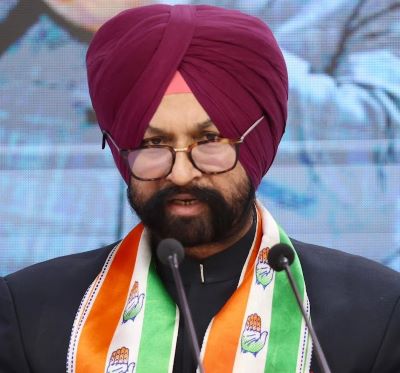
However, a troubling contradiction has increasingly come to light. While government employees and ordinary citizens are expected to comply strictly with the law, many elected representatives themselves appear to disregard it. It has been repeatedly observed that some MLAs, while addressing proceedings in the Punjab Legislative Assembly, choose to speak in English instead of Punjabi.
This raises a fundamental question: if lawmakers themselves do not follow the law, who will enforce it?
The issue is not about opposing English or any other language. In today’s globalized world, multilingualism is an asset. However, when it comes to official functioning within Punjab—especially in the state assembly, which represents the voice and aspirations of its people—Punjabi should hold primacy. The assembly is not just a legislative body; it is a symbol of Punjab’s democratic and cultural identity.
The apparent double standards undermine both the law and public trust. When strict action is threatened against lower-level officials for not using Punjabi, but no accountability is fixed for elected representatives, it creates a perception that laws are selectively applied. This not only weakens governance but also sends a damaging message about the seriousness of preserving Punjabi language and culture.
Legally speaking, the enforcement of the Punjab Official Language Act falls under the state government and its administrative machinery. However, when it comes to MLAs, the matter becomes more complex. Members of the legislative assembly operate under specific rules of procedure and privileges. Any action against them for language use would likely require intervention by the Speaker of the Assembly or amendments to procedural rules that explicitly mandate the use of Punjabi during proceedings.
This is where political will becomes crucial. If the government is serious about implementing the language law in letter and spirit, it must begin with those at the top. Clear guidelines should be issued for assembly proceedings, and a framework for accountability must be established. Otherwise, the law risks becoming symbolic rather than effective.
Ultimately, the responsibility lies with both the government and the representatives of the people. Respecting Punjabi is not just a legal obligation—it is a moral duty. If leaders lead by example, the message will resonate across society. But if they fail to do so, the very purpose of the law stands diluted.
The question remains unanswered: if those who make the law do not follow it, who will ensure justice?