
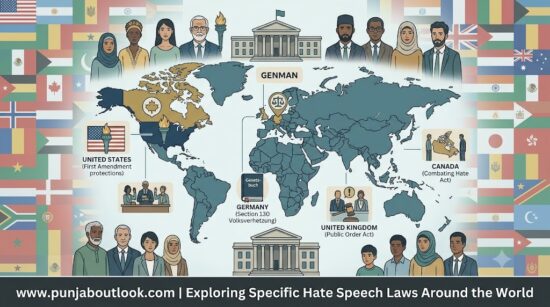
 Hate speech laws vary widely by country, reflecting different balances between protecting free expression and preventing harm to individuals or groups. There is no single universal definition, but hate speech generally involves expression that attacks, incites hatred, or discriminates against people based on characteristics such as race, religion, ethnicity, nationality, gender, sexual orientation, or disability. International guidance, such as the UN’s Rabat Plan of Action, recommends a high threshold for criminalisation, focusing on context, intent, content, reach, and likelihood of incitement to discrimination, hostility, or violence. In the United States, there are no specific hate speech laws.
The First Amendment provides strong protection for even offensive or hateful expression. The Supreme Court has ruled repeatedly that laws targeting hate speech would violate free speech guarantees. Restrictions apply only to narrow categories like true threats, direct incitement to imminent lawless action, or fighting words. Hate crimes (biased-motivated actions) can carry enhanced penalties, but the underlying speech itself is generally protected.
Germany has some of the strictest laws in Europe. Under Section 130 of the Criminal Code (Volksverhetzung or incitement to hatred), it is illegal to publicly incite hatred against parts of the population, call for violent or arbitrary measures against them, or insult or defame groups in a way that violates human dignity. This can result in up to five years in prison. The law applies extraterritorially if the effect occurs in Germany. The Network Enforcement Act (NetzDG, enacted in 2017 and updated since) requires large social media platforms to remove “clearly illegal” content, including hate speech, within 24 hours of a complaint (or 7 days for other unlawful content), with fines up to €50 million for systemic failures.
Updates have increased penalties for online insults and added reporting obligations for neo-Nazi content.The United Kingdom addresses hate speech through the Public Order Act 1986 (as amended), the Racial and Religious Hatred Act 2006, and other statutes. These criminalize threatening, abusive, or insulting words or behavior intended or likely to stir up racial or religious hatred, with similar provisions for disability, sexual orientation, and transgender identity in some contexts. Penalties include fines or imprisonment.
The Online Safety Act 2023 imposes a “duty of care” on platforms to protect users from illegal content, including hate crimes and abusive material. It requires proactive measures against harmful content, though it aims to safeguard lawful speech. Scotland has its own Hate Crime and Public Order Act.In Canada, the Criminal Code prohibits advocating or promoting genocide against an “identifiable group” (maximum five years imprisonment) and publicly inciting or wilfully promoting hatred against such groups (up to two years). Identifiable groups include those distinguished by race, religion, national or ethnic origin, age, sex, sexual orientation, gender identity or expression, or mental or physical disability.
Defenses exist for statements of truth, public interest, or religious opinion. The Combatting Hate Act (Royal Assent in June 2026) introduced a standalone hate crime offense, clarified definitions of hatred, criminalized public display of certain hate and terrorism symbols (with exceptions for legitimate purposes like education or art), and strengthened protections around places of worship and community centers.Australia has jurisdiction-specific laws, with a significant federal development in 2026: the Combatting Antisemitism, Hate and Extremism (Criminal and Migration Laws) Act, which strengthens criminal and migration responses to hate and extremism. It builds on existing provisions against urging violence against groups based on race or other characteristics.France prohibits public communication that is defamatory, insulting, or incites discrimination, hatred, or violence based on origin, ethnicity, nationality, race, religion, sex, sexual orientation, or disability.
The Gayssot Act bans denying or justifying crimes against humanity, such as the Holocaust. An earlier attempt at strict 24-hour removal rules for online hate speech (Avia law) was largely struck down by the Constitutional Council in 2020.The European Union has a 2008 Framework Decision requiring member states to criminalize public incitement to violence or hatred based on race, color, religion, descent, or national/ethnic origin. Implementation varies, with many countries extending protections to sexual orientation, gender identity, and other grounds. The EU’s Digital Services Act adds platform obligations to address illegal content, including hate speech.India lacks a dedicated hate speech statute but uses provisions in the Indian Penal Code, such as Section 153A (promoting enmity between groups on grounds of religious)
Disclaimer: This article and accompanying images are for informational and illustrative purposes only. Some visuals may be AI-generated or digitally enhanced and may not depict actual events or persons.Views expressed are based on publicly available information and analysis.