
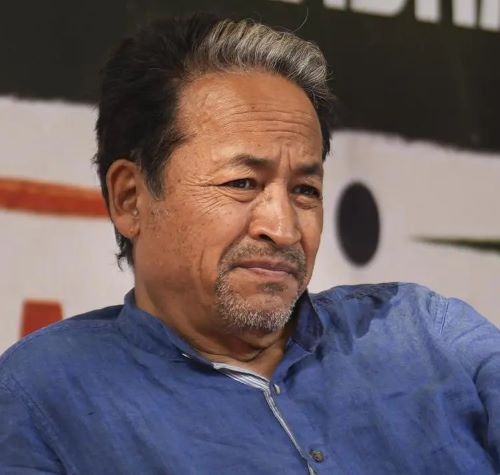
 In this special feature series, we present the remarkable journey of Sonam Wangchuk — an engineer, education reformer, environmental innovator, and a prominent voice from the Himalayan region of Ladakh. His life story represents a rare combination of scientific thinking, social commitment, grassroots innovation, and concern for the future of our planet.From his childhood struggles with an education system that failed to recognise local realities, to establishing the Students’ Educational and Cultural Movement of Ladakh (SECMOL), Wangchuk’s journey reflects the power of determination and creative thinking. His work challenged traditional approaches to education and demonstrated that learning becomes more effective when it is connected with culture, environment, and practical experience.
Through initiatives such as Operation New Hope, he showed how communities, teachers, and students can collectively transform education. His belief that schools should create problem-solvers rather than merely examination performers continues to inspire educators across India and beyond.Beyond classrooms, Sonam Wangchuk’s innovations in environmental sustainability have brought global attention to the challenges faced by Himalayan communities. His Ice Stupa project, solar energy initiatives, and sustainable architectural designs demonstrate how simple, locally appropriate solutions can address complex problems such as water scarcity and climate change.
This series also examines his emergence as a public voice for Ladakh, his concerns regarding environmental protection, cultural preservation, constitutional safeguards, and sustainable development. While his views and methods have generated public discussion and debate, his commitment to peaceful democratic engagement and environmental responsibility has made him a significant figure in contemporary India.
The purpose of this feature is not only to celebrate achievements but also to encourage informed discussion. Great public figures often inspire both admiration and debate, and understanding their complete journey requires examining their contributions, challenges, ideas, and the wider impact of their work.At a time when the world faces urgent challenges related to climate change, education inequality, and sustainable development, the story of Sonam Wangchuk offers an important message: innovation becomes meaningful when knowledge is used to serve humanity and protect future generations.Through this four-part series, we invite readers to explore the life and ideas of a man who transformed the mountains of Ladakh into a laboratory of learning, sustainability, and hope.
Meet & Greet Sonam Wangchuk – Part 1.The Man Who Turned the Mountains into a Classroom
There are very few individuals whose work has transformed not only the lives of thousands of people but also changed the way the world thinks about education, innovation, and sustainable development. Sonam Wangchuk is one such visionary. An engineer, education reformer, inventor, environmentalist, and social activist from the Union Territory of Ladakh, Wangchuk has devoted his life to solving real-world problems through practical science, community participation, and indigenous knowledge. His work has earned him international recognition and established him as one of India’s most respected innovators.
Born on September 1, 1966, in the small village of Uleytokpo near Alchi in Ladakh, Sonam Wangchuk spent his childhood in one of the most remote and environmentally challenging regions of India. During his early years, there was no formal school in his village. His mother became his first teacher, educating him in the Ladakhi language until he was nine years old. Those early lessons laid the foundation for his lifelong belief that education should begin in a child’s own language and culture rather than forcing students to adapt to unfamiliar systems.
When Wangchuk was finally sent to a school in Srinagar, he encountered a harsh reality. The medium of instruction was entirely different from his native language, making it extremely difficult for him to understand classroom lessons. Like many children from remote communities, he struggled not because he lacked intelligence, but because the education system failed to recognize his linguistic and cultural background. This personal experience would later become the driving force behind his campaign to reform India’s education system.
Instead of accepting the shortcomings of conventional education, Wangchuk transformed his struggles into motivation. He developed a deep interest in science, engineering, and problem-solving. His curiosity led him to pursue Mechanical Engineering at the National Institute of Technology (formerly Regional Engineering College) in Srinagar, where he graduated in 1987. Rather than choosing a comfortable corporate career, he decided to return to his homeland and dedicate his knowledge to improving the lives of people in Ladakh.
At a time when many educated young people were leaving remote regions in search of better opportunities, Wangchuk chose the opposite path. He believed that real development begins when educated individuals use their knowledge to uplift their own communities. His decision reflected a philosophy that would define his entire career: innovation should solve society’s problems rather than merely generate profits.
In 1988, together with a group of like-minded students and volunteers, Wangchuk established the Students’ Educational and Cultural Movement of Ladakh (SECMOL). The organization was created after observing that an overwhelming majority of students in Ladakh were failing government examinations. Wangchuk believed the problem did not lie with the children but with an education system that emphasized rote memorization instead of understanding, creativity, and practical knowledge.
SECMOL introduced a revolutionary educational approach. Instead of endless textbook learning and examination pressure, students were encouraged to participate in farming, engineering projects, solar energy installations, building construction, leadership training, environmental conservation, and community development. Learning became practical rather than theoretical, allowing students to gain confidence while developing valuable life skills.
The success of SECMOL surprised many education experts. Students who had previously been labeled as academic failures began demonstrating remarkable abilities when given opportunities to learn through practical experiences. This challenged long-held assumptions about intelligence and highlighted the importance of adapting education to local conditions and individual learning styles.
One of Wangchuk’s strongest beliefs is that education should prepare students for life rather than simply helping them pass examinations. He has repeatedly argued that schools should produce innovators, entrepreneurs, scientists, environmentalists, and responsible citizens instead of merely creating job seekers. According to him, true education develops curiosity, creativity, critical thinking, and compassion.
Beyond education, Wangchuk has consistently promoted the idea that traditional knowledge and modern science should work together rather than compete with each other. In Ladakh, where people have survived for centuries in one of the world’s harshest climates, local communities possess valuable knowledge about architecture, agriculture, water conservation, and environmental adaptation. Wangchuk has incorporated these traditional practices into modern engineering solutions, demonstrating that sustainable development can be achieved without abandoning cultural heritage.
His philosophy has inspired educators, engineers, policymakers, and environmentalists around the world. Universities, research institutions, and governments have studied the SECMOL model as an example of how locally relevant education can transform communities while preserving cultural identity. What began as a small experiment in the mountains of Ladakh has become an internationally recognized movement advocating education that is practical, sustainable, and rooted in local realities.
The story of Sonam Wangchuk reminds us that true innovation often begins with simple questions: Why are students failing? Why are villages losing water? Why are buildings dependent on expensive fuel? By refusing to accept conventional answers, he has spent decades developing solutions that are inexpensive, environmentally friendly, and beneficial to society.
This first chapter introduces a man whose life demonstrates that one individual’s determination can inspire global change. From a small Himalayan village to international recognition, Sonam Wangchuk’s journey is not merely a story of personal success but a powerful example of how education, science, and compassion can work together to build a better future.