
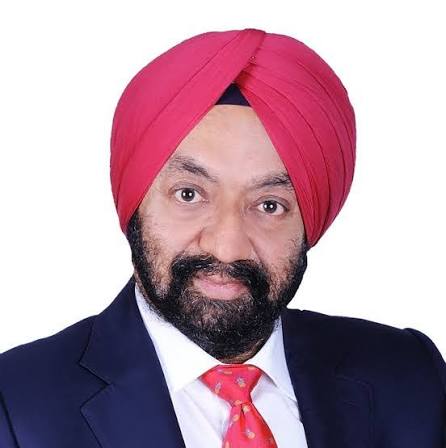
 New Delhi-Vikramjit Singh Sahney has raised concerns over what he described as Punjab’s “changing social landscape”, warning that continued demographic trends could lead to a historic shift in the state’s demographic balance in the coming decades.
In a statement, Sahney said the developments required “serious reflection and timely action”, linking his concerns to the need for stronger safeguards against religious conversions carried out through coercion, fraud, inducement, superstition or undue influence.
The Rajya Sabha MP said he had introduced a Private Member’s Bill titled “The Prohibition on Unlawful and Forced Religious Conversion Bill, 2026” in Parliament. According to Sahney, the proposed legislation is aimed at protecting every citizen’s freedom of conscience while preventing vulnerable people from being exploited in the name of religion.
“The freedom to choose one’s faith is a fundamental principle, but that freedom cannot be allowed to become a tool for exploitation,” is the central argument behind the initiative, according to Sahney’s statement.
The proposed legislation comes against the backdrop of continuing debates in Punjab over religious conversions, missionary activity, social change and the protection of the state’s distinct religious and cultural character. Punjab has a particularly sensitive religious landscape, with a large Sikh population alongside Hindu, Muslim, Christian and other communities.
Sahney argued that protecting religious freedom should not simply mean protecting the right to profess and practise a faith. It should also mean ensuring that individuals are not subjected to pressure, deception or inducements while making decisions about their religious beliefs.
The MP specifically referred to coercion, fraud, allurement, superstition and undue influence as practices that the proposed legislation seeks to address. His formulation therefore places the emphasis on the circumstances under which a conversion takes place rather than on restricting an individual’s voluntary choice of religion.
However, any legislation dealing with religious conversion is likely to generate significant constitutional and political debate. The challenge will be to distinguish clearly between voluntary conversion, which is connected to an individual’s freedom of conscience, and conversion alleged to have been obtained through force, deception or improper inducement.
Sahney’s intervention also raises a larger question about Punjab’s future. If demographic changes are accelerating, policymakers will have to examine the underlying causes rather than simply focus on religious conversion. Migration, declining population growth, youth emigration, economic pressures, changing marriage patterns and the movement of people into and out of Punjab can all influence the state’s demographic composition.
For Punjab, the debate is therefore much larger than a single proposed Bill. It touches upon identity, constitutional freedoms, social stability and the future demographic character of the state.
Sahney said the objective was not to undermine religious freedom but to protect it from exploitation. He called for the preservation of Punjab’s “rich spiritual and cultural heritage” for future generations.
The proposed Private Member’s Bill could now bring the issue into sharper focus in Parliament, particularly over how India balances freedom of conscience and religious choice with the state’s responsibility to protect citizens from coercion, fraud and exploitation.
At the heart of the debate will be one fundamental question: How can Punjab protect its distinctive social and cultural character without compromising the constitutional right of every individual to freely choose, practise and profess a religion?