
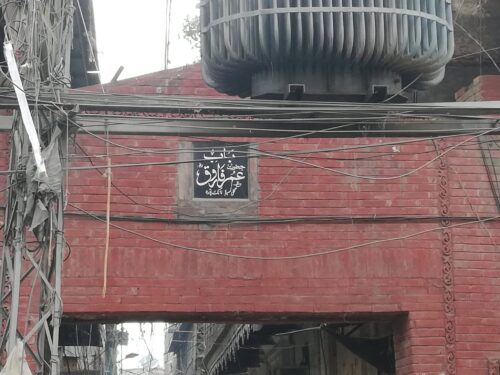
Guru Nanak Pura (also spelt Nanakpura or Guru Nanakpura) is a historic locality in Rawalpindi, Pakistan, established by the Sikh community and named in honour of the first Sikh Guru, Baba Guru Nanak Sahib (Pehli Patshahi). Located along the route from Raja Bazar toward the Railway Station area near Kashmiri Bazar, it formed part of the old city’s well-planned residential fabric. Origins and Design: The neighbourhood was developed as a planned housing society for prosperous Sikh and Hindu families. It featured a secure layout with six gates controlling access, reflecting the need for safety and community cohesion in the pre-Partition era.
Houses were often multi-storied (frequently more than three stories), with elegant balconies, raised platforms (darshni deauriyan or raised beds/plinths), and distinctive havelis whose architecture remains prominent today. The overall design emphasised order, beauty, and privacy typical of affluent urban settlements of the time. One Gurdwara Sahib and one Mandir (temple) still stand within Guru Nanak Pura. In the post-Partition period, these buildings have been occupied by migrant families, a common outcome for many religious sites left behind after 1947. Broader Sikh and Multi-Community Context in Rawalpindi. Rawalpindi held significant importance for the Sikh community.
After the decline of Mughal authority, Sikh forces under Sardar Gujjar Singh (of the Bhangi Misl) and associates captured the town from the Gakhars in the mid-1760s. Administration was entrusted to Sardar Milkha Singh, who encouraged traders from nearby commercial centers such as Jhelum and Shahpur to settle there. The city prospered as a trading hub under Sikh rule, which continued under Maharaja Ranjit Singh’s empire until the British annexation of Punjab in 1849 (following the surrender of Sikh forces near Rawalpindi in March 1849).
Before Partition, Rawalpindi was a diverse city with substantial Muslim, Sikh, Hindu, and smaller Jain (and other) populations living side by side. Commercial activity, especially in areas like Raja Bazar, was largely dominated by Hindu and Sikh merchants. The city was not a formal “second headquarters” of the Sikh Empire (Lahore served as the primary capital), but it functioned as an important regional administrative, military, and commercial center under Sikh governance.Many localities in Rawalpindi still carry names linked to the Sikh Gurus or related heritage, reflecting the community’s historical presence. These include:Nanak Pura (Guru Nanak)
Arjun Pura / Arjanpura
Angat Pura / Angadpura
Akal Garh
Kartarpura
Krishanpura
Haripura
Mohanpura
Amarpura
Wikipedia and local historical accounts note that neighborhoods such as Krishanpura, Akal Garh (Akaal Garh), Mohanpura, Amarpura, Kartarpura, and Angatpura continue to bear these names.
LegacyGuru Nanak Pura stands as a tangible reminder of Rawalpindi’s multi-religious past and the prosperity of its Sikh and Hindu residents. The surviving multi-story houses, havelis, gated street layout, and religious buildings (even if repurposed) preserve architectural and cultural traces of that era. Videos and local recollections continue to document the area’s former grandeur and the emotional connection many in the Sikh diaspora feel toward these pre-1947 neighborhoods.The story of Guru Nanak Pura illustrates how place names, architecture, and community planning can outlast political upheavals, keeping alive the memory of Guru Nanak’s legacy and the vibrant Sikh presence in the Potohar region.