
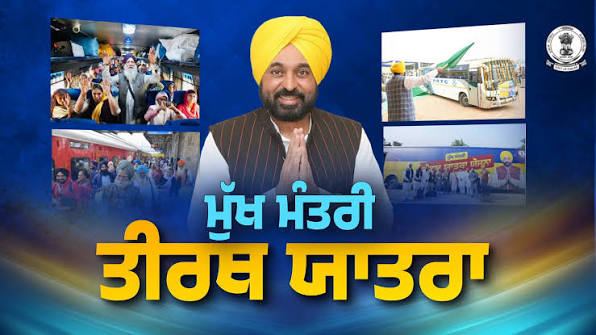
The Punjab government’s Mukhyamantri Tirth Yatra scheme was introduced with the stated objective of helping people undertake religious pilgrimages by providing transportation and other facilities. The scheme has also been expanded to additional religious routes.
But a different question is now emerging from videos circulating on social media: What happens when a government-sponsored religious journey turns into an occasion for drinking, partying and personal entertainment?
Videos allegedly showing some participants drinking and enjoying themselves during the journey—and in some cases after reaching the destination—have raised concerns about whether the basic purpose and dignity of a Tirth Yatra are being maintained.
The issue is not about denying anyone the right to enjoy a journey. The question is about public money, public responsibility and the character of a pilgrimage programme.
When taxpayers’ money is being used to facilitate religious travel, beneficiaries are expected to respect the nature of the programme. The government is not merely arranging a holiday tour; it is supporting people in visiting places considered sacred and spiritually important.The controversy becomes particularly uncomfortable when participants subsequently record videos praising and thanking the Punjab government for providing the trip, while their own conduct shown in videos appears inconsistent with the religious purpose of the journey.
Where is the accountability?
The Punjab government’s current Tirth Yatra management system includes mechanisms for trip planning, passenger management, media management and feedback collection. The government’s official app description specifically says that officials can capture and upload photographs, videos and documents and collect pilgrim feedback during and after trips.
That raises an obvious question: Is the government monitoring how these publicly funded journeys are actually being conducted?If the videos are authentic and accurately represent participants on government-sponsored pilgrimages, the government should not simply ignore them.At the same time, individual videos should not be treated as proof against every pilgrim or every group. The authenticity, date, location and circumstances of each video should be verified before conclusions are drawn.
Religion should not become political publicity
A religious pilgrimage should ideally be about faith, reflection, discipline and respect for the sacred destination—not government publicity.Likewise, beneficiaries should understand that accepting a publicly funded pilgrimage comes with a responsibility to respect the programme.The Punjab government should therefore consider establishing clear code-of-conduct guidelines for future Tirth Yatra groups, including restrictions on alcohol and inappropriate behaviour during official travel, along with proper supervision and accountability.
Punjab already faces serious concerns surrounding alcohol and drug abuse. Recent reporting from Toor Banzara, for example, highlighted allegations about the easy availability of drugs and the devastating impact of addiction on families.Against that backdrop, images of people allegedly drinking during a government-funded religious pilgrimage are bound to create public anger and questions about priorities.
Public money demands public accountability
The Tirth Yatra scheme can be a meaningful welfare initiative if it genuinely helps ordinary people visit important religious places who otherwise might not be able to afford the journey.But government-funded welfare schemes must also have transparency, discipline and accountability.The government should explain how such incidents are monitored, whether any code of conduct exists, and what action if any is taken when participants misuse a publicly funded pilgrimage for activities unrelated to its purpose.A free pilgrimage funded by taxpayers should not become a free holiday at taxpayers’ expense. The dignity of the pilgrimage, the sanctity of the destination and the value of public money all deserve equal respect.
Disclaimer: This article and accompanying images are for informational and illustrative purposes only. Some visuals may be AI-generated or digitally enhanced and may not depict actual events or persons.Views expressed are based on publicly available information and analysis