
 Punjab has made enormous contributions to India’s freedom struggle, national food security, defence and economic development. The people of Punjab played a decisive role in the Green Revolution, helping India move towards food self-sufficiency. Yet, since the reorganisation of Punjab in 1966, the state has remained involved in a series of disputes with the Union Government over Chandigarh, river waters, federal powers, agricultural policies, financial assistance and the implementation of political agreements. These longstanding issues have contributed to a perception among many Punjabis that the state’s concerns have not received the attention they deserve. Whether every allegation of discrimination is justified must be assessed against official records, constitutional provisions and comparable treatment of other states.
The history of these disputes goes back to November 1, 1966, when Punjab was reorganised and Haryana was created as a separate state. Chandigarh became a Union Territory and the shared capital of Punjab and Haryana. The reorganisation did not resolve all territorial questions, and the transfer of Chandigarh to Punjab remained a major political demand. Successive governments have discussed the issue, but a mutually accepted settlement has not materialised. For many Punjabis, the prolonged delay raises questions about why a dispute that has continued for decades remains unresolved.
In 1973, the Akali Dal adopted the Anandpur Sahib Resolution, which raised questions about state autonomy, Centre-state relations and Punjab’s political, economic and religious concerns. The resolution became an important part of the debate over federalism in India. Punjab’s leaders argued for greater powers for states, while the Union Government maintained the authority of the constitutional framework. The larger question remains whether India’s federal structure provides states with sufficient autonomy to address their particular economic, cultural and administrative needs.
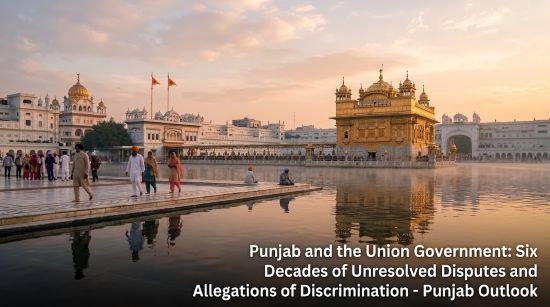
During 1982–84, the Dharam Yudh Morcha brought together several demands, including issues concerning river waters, Chandigarh and state autonomy. The political confrontation intensified and culminated in Operation Blue Star in June 1984 at the Golden Temple complex in Amritsar. The military operation caused profound suffering and left a lasting wound in Sikh memory. The events of that period must be examined in their full historical context, including political failures, militant violence, state action and civilian suffering. The experience underlined the importance of political dialogue and timely negotiations in addressing sensitive constitutional and religious issues.
Another painful chapter followed the assassination of Prime Minister Indira Gandhi on October 31, 1984, when large-scale anti-Sikh violence took place in Delhi and other parts of India. Sikh families lost loved ones, homes and livelihoods, while many survivors spent decades seeking justice. The slow progress of accountability in numerous cases deepened the mistrust felt by affected families and sections of the Sikh community. The demand for justice has remained an important issue in relations between Sikh citizens and the Indian state. A democratic government has a responsibility to ensure that victims receive justice without discrimination and that those responsible for crimes are held accountable through due process.
On July 24, 1985, Prime Minister Rajiv Gandhi and Akali leader Sant Harchand Singh Longowal signed the Punjab Accord. It addressed Chandigarh, territorial questions, river waters and other issues intended to restore peace and confidence. The agreement created expectations that longstanding disputes would be resolved through political dialogue. However, several major matters remained unsettled. The continued uncertainty over the implementation of important commitments has led many Punjabis to question why agreements signed at the highest political level have not produced lasting solutions.
The river-water dispute has remained one of Punjab’s most sensitive issues. Punjab’s agricultural economy depends heavily on water, while groundwater depletion has become a serious concern for farmers and rural communities. Disagreements over the Ravi-Beas waters and the Sutlej-Yamuna Link canal have involved Punjab, Haryana and the Union Government, as well as judicial proceedings. Punjab’s position has emphasised its water needs and the importance of protecting its agricultural future, while Haryana has maintained its claims under existing arrangements. A lasting settlement must respect applicable law, consider water availability and address the legitimate interests of all affected states. Continued political confrontation without a credible resolution serves neither farmers nor the wider public.
In 2004, the Punjab Termination of Agreements Act sought to terminate earlier river-water agreements involving Punjab. The legal issues subsequently reached the Supreme Court through a Presidential Reference. This episode illustrates the complex relationship between state legislation, constitutional authority and interstate water-sharing arrangements. Rather than allowing the issue to remain a source of recurring political tension, the concerned governments should work towards a legally sound and transparent settlement based on current evidence about water availability and the needs of the people.
The introduction of the Goods and Services Tax in 2017 changed the taxation system for Punjab and other states. Punjab’s government has raised concerns about revenue flexibility, compensation and the resources available to meet its expenditure commitments. The Union Government has operated through the national GST framework and the applicable compensation arrangements. The question of discrimination cannot be answered merely by pointing to the existence of GST; it requires an examination of Punjab’s actual revenue position, the applicable legal obligations, payments released and any outstanding claims. Transparent figures would help establish whether the state has received everything legally due to it.
The farmers’ movement of 2020–21 became another defining moment in Punjab’s relationship with the Union Government. Parliament passed three agricultural laws in September 2020. Many farmers feared the legislation could weaken the existing procurement system and increase their vulnerability to private market forces. The Union Government argued that the reforms would expand marketing opportunities and encourage investment. After months of protests across the country, Prime Minister Narendra Modi announced the decision to repeal the laws in November 2021, and Parliament subsequently passed the repeal legislation. The movement demonstrated the importance of consulting farmers and affected communities before implementing major agricultural reforms. It also raised questions about why a prolonged protest was necessary before the government reconsidered its policy.
The dispute over Punjab’s Rural Development Fund has further intensified concerns about the state’s financial relationship with the Union Government. Punjab has maintained that funds associated with the statutory levy on agricultural procurement are essential for rural roads, markets and other infrastructure. The Union Government has raised questions about the use of the funds and the conditions governing their release. In August 2025, Punjab Finance Minister Harpal Singh Cheema publicly alleged that substantial RDF and GST-related amounts remained outstanding. In August 2026, the state continued to dispute the Union Government’s position on the amount due. These figures and claims must be examined through official records, payment statements and the applicable legal framework. The essential issue is whether all legally payable amounts have been released and, if not, what process and timetable will resolve the dispute.
Punjab’s contribution to national food security also deserves serious consideration. For decades, its farmers have supplied wheat and rice through public procurement, helping maintain national food stocks. At the same time, intensive cultivation has contributed to groundwater pressure, rising production costs and environmental challenges. Farmers have sought stronger procurement guarantees, support for crop diversification and assistance to move towards sustainable agricultural practices. The Union Government continues to provide minimum support prices and operate procurement arrangements, but questions remain about whether the support available adequately addresses Punjab’s long-term agricultural and environmental needs. A fair assessment must consider both the benefits of the procurement system and the costs borne by the state’s farmers and natural resources.
The broader question of discrimination requires a transparent comparison of how Punjab is treated relative to other states in similar circumstances. Are legally due funds released on time? Are financial assistance and development programmes implemented according to consistent criteria? Are Punjab’s elected representatives meaningfully consulted before decisions affecting the state are taken? Are interstate agreements implemented according to the law? These questions should be answered with official documents, parliamentary records, financial data and judicial findings rather than political claims alone. If the Union Government believes Punjab has received fair treatment, it should provide clear and verifiable information. If Punjab’s government alleges discrimination, it should substantiate the allegation with detailed evidence.
For the Punjabi diaspora, these are not merely political disputes. They concern the future of Punjab’s farmers, rural communities, young people, water resources and democratic institutions. The continued uncertainty surrounding major issues affects public confidence and makes it more difficult to plan for long-term economic development. Punjab needs constructive engagement between the Union Government and the state government, with clear responsibilities, transparent financial accounting and measurable deadlines for resolving outstanding matters.
The North American Punjabi Association (NAPA) believes that Punjab should receive equal treatment under the Constitution, respect for its legitimate interests and a fair hearing on longstanding disputes. This does not mean that Punjab should be exempt from national laws or receive benefits outside the established framework. It means that the same principles of fairness, transparency and accountability should apply to Punjab as they do to every other state. Where agreements have been made, their status should be clarified. Where financial claims are disputed, independent verification should establish the facts. Where constitutional or legal questions remain unresolved, the appropriate institutions should address them without unnecessary delay.
After decades of negotiations, protests and political assurances, Punjab deserves a clear and credible roadmap for resolving its outstanding disputes with the Union Government. The people of Punjab should not have to wait another generation for answers on Chandigarh, river waters, rural development funding and other longstanding concerns. The Union Government and the Punjab Government must move beyond accusations and counter-accusations and commit to transparent negotiations, evidence-based decisions and time-bound action. The ultimate objective should be a stronger federal system in which Punjab’s contributions are recognised, its legitimate concerns are addressed and the rights and interests of all citizens are protected.-
Disclaimer: This article and accompanying images are for informational and illustrative purposes only. Some visuals may be AI-generated or digitally enhanced and may not depict actual events or persons. Views expressed are based on publicly available information and analysis