
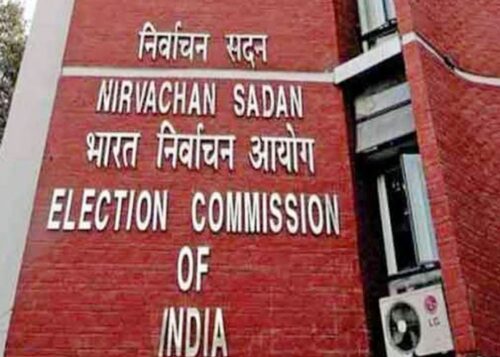
 On the morning of 24 October 2026, The Wire published the latest instalment of its series on the Special Intensive Revision (SIR) of electoral rolls in West Bengal. What follows is drawn from that report. The Chronicle does not vouch for its accuracy or veracity, has not seen the underlying records, and sets out the claims only so that they may be tested against the law.
According to the report, about 60 lakh Bengal voters whose entries showed “logical discrepancies” were placed before judicial officers deployed under the Supreme Court’s supervision. The judges found some 32.7 lakh eligible and 27.2 lakh not eligible. The Election Commission of India then appealed against the inclusion of 16,08,175 of the voters the judges had cleared: 49.4 per cent, very nearly one in every two.
The data comes from the Civic Research Group, an independent body of researchers in West Bengal. The scale is not seriously in dispute, since the Commission itself reported 16,10,311 appeals against inclusion to the Supreme Court in September.
The newer claim concerns timing. Civil-rights activists have read a date-stamp into the structure of the appeal identification numbers, and The Wire says it has verified the reading independently. On that reading, more than 12 lakh appeals carry a single timestamp, 5 April 2026; another 1.4 lakh carry 6 April, and 30,000 carry 8 April. The roll was frozen for the Assembly election at midnight on 7 April.
The report adds that a retired judge, sitting as one of the appellate tribunals for Murshidabad, has said on record that the appeals against inclusion before his bench were filed by the Additional Chief Electoral Officer.
The decoding rests on unnamed Commission sources. A shared timestamp may mean a batch upload, not necessarily the absence of individual scrutiny, and only the Commission can confirm or rebut either point. The weightier question, however, is one of law: whether the Commission could file these appeals at all.
Twelve Lakh Strokes of a Single Clock
On 10 October 2026, the Commission wrote to every Chief Electoral Officer capping objections by an individual elector at ten during a claims-and-objections period, and five a month during continuous updation. The stated purpose was to discourage bulk filing.
If The Wire’s decoding holds, the Commission itself lodged objections to inclusion, in appellate form, at the rate of more than twelve lakh in a day. A citizen who filed an eleventh objection would be turned away. The institution that set the cap filed the twelve-lakhth.
Who May Object: An Elector’s Privilege, Not a Regulator’s
The law governing electoral rolls is the Representation of the People Act, 1950, and the Registration of Electors Rules, 1960, framed under it. The scheme is old, plain and deliberately narrow.
When a roll is published in draft, claims and objections are invited. The Rules distinguish three kinds and say exactly who may file each:
a claim for inclusion must be signed by the person who wishes to be enrolled;
an objection to particulars in an entry may be filed only by the person to whom the entry relates; and
an objection to the inclusion of someone else’s name may be preferred only by a person whose name is already on that roll. This is Rule 13(2), and the Commission’s own letter of 10 October restates it in so many words.
The Commission is not an elector of any constituency. Nor is the Chief Electoral Officer, or an Additional CEO, in official capacity. The right to object to a neighbour’s enrolment belongs to the neighbour’s fellow electors. It is a citizen’s privilege and a citizen’s risk, since a false declaration on Form 7 is punishable under the Act.
The Registration Officer’s Own Motion
The machinery is not left helpless before a bad entry. The Rules give it a lever, but a careful one.
Before final publication, the Electoral Registration Officer may, on his own motion, list entries he believes to be of dead persons, persons not ordinarily resident, or persons otherwise not entitled. He must then publish that list, notify a time and place for consideration, and hear objections. Where the ground is residence or entitlement, he must make every endeavour to give each person a reasonable opportunity to show cause. After final publication, Section 22 of the Act gives him the same power, again conditioned on a hearing.
The State’s power over the roll thus runs through a quasi-judicial officer, case by case, after notice to the elector. Nowhere does it run through the Commission as a litigant against its own officer’s decision.
No Hearing Below, No Appeal Above
The Rules then provide for appeals, and the drafting is precise. During a revision, an appeal lies from the registration officer’s decision to an appellate officer designated by the Commission, conventionally the District Election Officer.
Everything turns on the proviso. No appeal lies where the person desiring to appeal did not avail of the right to be heard by the registration officer. The Rules list who holds that right: the claimant, the objector, the person objected to, and anyone the officer chooses to hear for assistance.
First, then, an appeal against inclusion is not confined to the excluded voter. An elector who filed an objection, was heard and lost may carry it in appeal; that is the only third-party appeal against inclusion the Rules contemplate. Second, the Commission, which could not have been an objector, cannot pass through the proviso. On the plain text, it is a stranger to the proceeding.
Two further features matter. The appellate decision is final. And an appeal does not stay final publication: a reversal takes effect only from the date of the appellate order, so the voter cleared below stays on the roll until then.
A second ladder exists in Section 24 of the Act, for orders passed during continuous updation: a first appeal to the district magistrate or an officer of equivalent rank, and a second appeal to the Chief Electoral Officer. The section is silent on who may appeal. The settled understanding, however, is that an appeal belongs to a person aggrieved who was a party below. Where Parliament means the State to appeal against its own officers, as the tax statutes allow the revenue department to, it says so expressly. The election law says nothing of the kind.
There is a structural oddity too. Under Section 24, the Chief Electoral Officer is the second appellate authority, so an appeal lodged by the Additional CEO comes from inside the very office that may one day hear it.
Cricket settled this long ago. The fielding side may appeal; the umpire may not appeal against his own decision, still less against the third umpire’s.
A Court-Made Ladder
West Bengal, of course, did not proceed under the ordinary Rules alone. Amid allegations traded between the State and the Commission, the Supreme Court, under Article 142 and with the consent of the parties, entrusted the adjudication of claims and objections to judicial officers. On 10 March 2026, it directed that appellate tribunals of former High Court judges be constituted, and the Commission notified nineteen of them on 21 March.
Who may appeal to those tribunals is therefore governed by the Court’s orders and the Commission’s notification, not by the Rules alone. If either expressly gave the Commission standing to appeal against inclusion, the legal objection narrows to one of propriety and process. If neither did, the statutory principle should fill the silence: no hearing below, no appeal above.
The Bench appears to have seen the asymmetry. At a hearing on 25 August, Justice Joymalya Bagchi reportedly observed that appeals against exclusion deserved priority, since deletion denudes a voting right, while challenges to inclusion have other remedies under the law. On the statute, those other remedies are the registration officer’s own-motion power with show-cause, and objections by electors. Neither is an institutional appeal against a judicial officer’s finding.
Questions for Nirvachan Sadan
The Chronicle draws no conclusion of motive. It leaves the following for the Commission to answer, publicly and on the record.
Under which provision of law, or which term of the Supreme Court’s orders or the tribunal notification, did the Commission acquire standing to appeal against inclusions ordered by judicial officers?
Who signed the memoranda of appeal, and in what capacity? Was the Additional Chief Electoral Officer authorised by a written order of the Commission?
Did each of the 16 lakh appeals state an individual, reasoned ground relating to that voter, or were the grounds generated in bulk?
Does the series letter in the appeal identifier encode a filing date? Were 12 lakh appeals uploaded on 5 April 2026, and if so, when and by whom were they prepared and reviewed?
Why did the Commission appeal against 40 to 60 per cent of cleared voters in 222 of the State’s 294 constituencies, a uniformity that individual scrutiny rarely produces?
How does the Commission reconcile its ten-objection cap on citizens with appeals filed at a rate of lakhs a day?
Any appellate authority would put these same questions to an appellant at the threshold, before reaching the merits. Until the Commission answers them, sixteen lakh voters whom judges found eligible remain respondents in appeals that the law, on its plain text, does not appear to allow.
Share The KBS Chronicle
About the author: KBS Sidhu, IAS (retd., 1984 batch, Punjab cadre), retired as Special Chief Secretary, Government of Punjab. He has discharged statutory duties under the election law at every level, from presiding officer at a polling station to District Election Officer, Amritsar, in which capacity he was also Returning Officer for the Amritsar and Tarn Taran parliamentary constituencies, and has served as an election observer of the Election Commission of India in three successive Lok Sabha elections. He is Founder-Editor of The KBS Chronicle and Convener of the Shiromani Punjab Forum.