
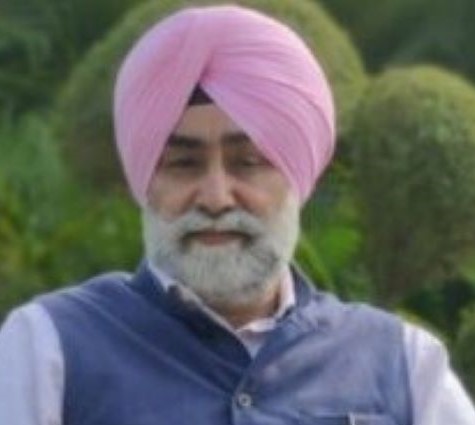
“The process is focused more on exclusion and has played havoc with democracy,” former Chief Election Commissioner S.Y. Quraishi has warned.These are not the words of an Opposition politician. They come from a former head of the Election Commission of India. Quraishi does not oppose cleaning electoral rolls. Dead, duplicate, permanently shifted and ineligible names must be removed. His concern is that revision appears to have moved from protecting inclusion towards facilitating exclusion.
Retired IAS officer K.B.S. Sidhu has raised an equally serious apprehension. Punjab’s pre-SIR mapping exercise reportedly flagged logical discrepancies involving more than 37 lakh voters out of nearly 1.8 crore mapped electors. They have not been deleted, but the scale of the scrutiny is alarming. (The KBS Chronicle)
Many discrepancies may arise not from fraud, but from differences in Punjabi and English spellings, incorrectly recorded ages, changed surnames, altered addresses and mistakes in the 2002-03 rolls. A clerical error committed 23 years ago can now cast doubt upon a genuine citizen.
Suppose even 20 lakh voters are eventually left out. Divided across Punjab’s 117 Assembly constituencies, that means more than 17,000 voters per seat.
That is an electoral earthquake.
Punjab’s 2027 election is likely to be a five-cornered contest involving AAP, Congress, the Shiromani Akali Dal, the BJP and emerging Panthic or independent formations. In such a fragmented contest, margins in many constituencies may be only 1,000 to 3,000 votes. The exclusion of even a fraction of 17,000 electors can overturn a result several times over.
I recently filled the SIR forms for my family. I am reasonably educated and familiar with government paperwork, yet I found the process complex. Old electoral entries had to be located, names matched and family details connected with the 2003 roll. Without the help of our Booth Level Officer, completing the forms would have been extremely difficult.
What then happens to an elderly villager, a widow whose name changed after marriage, a migrant tenant, a daily-wage worker, a student living away from home or someone unable to trace a parent’s old entry?
There will inevitably be genuine people left out.
The Election Commission says BLOs must help voters, make repeated household visits and collect no document other than the enumeration form during the enumeration stage. Unmatched voters are to receive notices and an opportunity to establish eligibility. Claims or objections may also be filed before the Electoral Registration Officer, followed by appeals to the District Magistrate and the Chief Electoral Officer. (Election Commission of India)
These safeguards appear satisfactory on paper. In practice, an omitted voter must first discover the omission, understand the procedure, gather documents, approach officials and meet the deadline. Further litigation may take years. A favourable order after the 2027 election cannot restore the vote denied in 2027.
The timetable is therefore crucial. Chandigarh’s draft electoral roll will be published on July 21. It will be available on the Chief Electoral Officer’s website and ECINet. Notices for further verification will be issued until September 18 to approximately 69,451 voters whose forms lacked legacy-mapping details or contained discrepancies. (Akashvani News)
Punjab is on a later schedule. House-to-house visits have been extended until August 3. The draft roll will now be published on August 13 instead of July 31, while the final roll will be issued on October 12. (Akashvani News)
The period after August 13 must become a statewide audit. Every citizen should check whether the name appears correctly. Every political party should compare the draft roll booth by booth, identify missing supporters and help them file claims immediately. A formal opportunity for rectification means little to citizens who do not know that their names have disappeared.
Chief Minister Bhagwant Mann has at least sounded a wake-up call.
He has urged Punjabis to complete the process and asked AAP volunteers to assist anyone facing difficulty. His linking of voter registration with welfare benefits may be controversial, but it has conveyed the urgency. (India Today)
But where are the Congress and the Shiromani Akali Dal? Where are their statewide help centres and trained Booth Level Agents? Press conferences and photographs of leaders filling their own forms are not enough.
The BJP has complained about alleged unauthorised collection of information and demands for documents not prescribed by the Commission. That complaint deserves investigation. (The Times of India)
This unnecessarily complex process also casts aspersions on the Election Commission. When lakhs struggle to retain a right they already possess, doubts about the neutrality of the exercise are inevitable.
Over time, it may also damage the BJP-led Union government’s image. The Election Commission is constitutionally independent, but any widespread exclusion will politically be blamed upon the party governing at the Centre. Resentment over a lost vote can last longer than one election.
SIR must remove the dead, duplicate and genuinely ineligible. It must not remove a living citizen merely because that person cannot reconstruct a 23-year-old paper trail.
Punjab’s election may first be decided by who is still allowed to remain a voter.