
 Punjab has a statutory agency responsible for protecting the environment, controlling pollution and enforcing environmental standards. Yet a basic question increasingly demands an answer: if the Punjab Pollution Control Board is doing its job effectively, why do air, water and noise pollution continue to remain such persistent problems across the state?
The issue is not simply about the existence of the Punjab Pollution Control Board (PPCB). The real question is about enforcement, accountability and measurable results. A regulatory institution cannot be judged merely by the number of inspections it conducts, notices it issues or meetings it holds. Its performance must ultimately be visible in cleaner air, safer water, quieter communities and healthier rivers and drains.
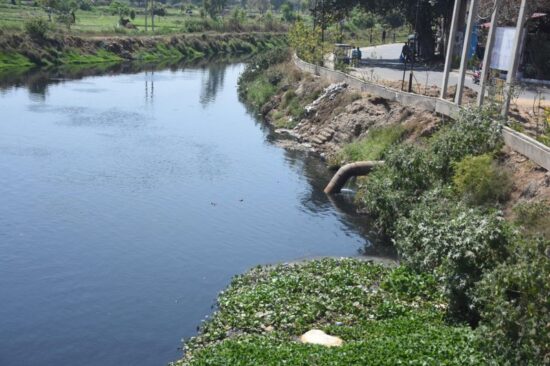
The continuing crisis of Buddha Nullah in Ludhiana is perhaps the most visible example of this contradiction. Millions and according to various reports, hundreds of crores — have been invested over the years in rejuvenation, sewage treatment and pollution-control infrastructure. Yet pollution continues to enter the watercourse through multiple routes.
A September 2026 report identified at least six illegal discharge points still carrying untreated sewage and dairy waste into Buddha Nullah, despite years of government action and earlier directions to close such outlets.
The situation is complicated rather than completely one-sided. Recent monitoring shows that some pollution parameters have improved at several locations. However, other indicators remain seriously problematic. A comparison of January 2025 and April 2026 samples showed substantial improvement in BOD and COD at some stretches, while total coliform levels increased at several downstream locations. At Walipur, for example, total coliform reportedly rose to 54 lakh MPN/100 ml.
That should raise a fundamental question: What is the point of building treatment plants if untreated or inadequately treated waste can continue finding its way into the watercourse?
There have also been repeated operational failures. In August 2026, officials reviewing the Buddha Dariya project found that pumps installed near Gurdwara Gau Ghat had remained non-functional for around 20 days. More recently, the Punjab Water Supply and Sewerage Board reportedly pointed to unauthorised sewer connections, diversion of sewage and inadequate sewer-line cleaning as contributing factors to excessive pollution loads at the Balloke STP.This is precisely where the role of the pollution regulator becomes critical.
A pollution-control board cannot become merely a post-pollution institution. Its responsibility must include preventing pollution before it happens, continuously monitoring high-risk industries and discharge points, publishing results transparently and taking timely action against persistent violators.
Punjab’s pollution problem is also much bigger than Buddha Nullah. Industrial emissions, vehicular pollution, construction dust, agricultural burning, untreated sewage, industrial effluents, solid waste and excessive noise collectively threaten the state’s environmental health.
The public needs to know: How many polluting units were inspected? How many were found violating standards? How many were prosecuted? How much environmental compensation was recovered? How many illegal discharge points were permanently closed? How many industries were ordered to stop operations and how many subsequently resumed operations?These figures should not remain buried in departmental files.
Punjab needs an annual public Pollution Accountability Report. It should provide district-wise data on air, water and noise pollution, major polluters, enforcement action, penalties, environmental compensation, prosecution and compliance status. The data should be available online in a format ordinary citizens can understand.
The government should also establish an independent mechanism for verifying the pollution-control board’s claims. Where pollution repeatedly occurs at the same location, responsibility should not disappear behind a maze of departments. Municipal corporations, sewerage agencies, industrial associations and the PPCB may have different responsibilities, but the citizen deserves one clear answer about who is accountable for the final outcome.
Calling the PPCB a “white elephant” may be politically convenient, but the more important issue is measurable institutional performance. Punjab does not need another committee, another meeting or another promise. It needs clean rivers, breathable air and enforceable pollution standards.
Buddha Nullah should become the test case.If billions have been spent and pollution still enters the watercourse, the state must explain what went wrong, who was responsible, what has been corrected and what remains unfinished.Punjab’s environment cannot be cleaned through announcements.It has to be cleaned through enforcement.And if the watchdog repeatedly watches pollution happen instead of preventing it, Punjab’s citizens have every right to ask: Who is watching the watchdog? Referance:The Tribune
Disclaimer: This article and accompanying images are for informational and illustrative purposes only. Some visuals may be AI-generated or digitally enhanced and may not depict actual events or persons.Views expressed are based on publicly available information and analysis