
 When August 15 arrives, the entire nation is draped in the colours of the Tricolour. Children sing patriotic songs in schools, martyrs are remembered, and every Indian takes pride in living in a free country. Yet, in the heart of Punjab, August 15 carries another image as well—an image in which, even as the Tricolour was being unfurled on one side, millions of Punjabis were staring through tears at the ruins of their homes and lives on the other.
A mother had lost her son, a sister her brother, a wife her husband and a child his father. Families were uprooted overnight. Some left their homes in Lahore; others arrived in Amritsar and elsewhere to begin life again under tarpaulin shelters. Places of worship were left behind. Lands, shops and ancestral homes were abandoned. Trains crossing the newly drawn border sometimes carried corpses instead of passengers.
That was Punjab’s experience of Independence.
The Punjab that had made some of the greatest sacrifices for India’s freedom was also made to bear the unbearable pain of Partition. For Punjabis, therefore, August 15 is not merely a day of celebration. It is a day of pride and mourning, victory and separation, freedom and an immeasurable human tragedy. The story of India’s Independence remains incomplete without acknowledging Punjab’s sacrifice and suffering.
Punjab did not merely ask for freedom; it paid for it with blood.
From Madan Lal Dhingra and Lala Lajpat Rai to Kartar Singh Sarabha and Shaheed-e-Azam Bhagat Singh, from the massacre at Jallianwala Bagh to Udham Singh’s decades-long wait to avenge it, from the Kuka movement to the peasant and Akali movements, and through the sacrifices of countless unnamed patriots, Punjab helped nurture India’s freedom struggle with its blood and courage.
Whenever we breathe freely today, we must remember the enormous price paid for that freedom. Punjab therefore has every right to ask: after giving so much to the nation, how was Punjab treated in independent India?
The struggle did not end with Independence. Only its form changed.
Punjabis continued to struggle for their language, culture and administrative identity. Movements were launched, protests took place, arrests were made and sacrifices followed. Eventually, the Punjabi Suba became a reality.
But the story of Punjab’s aspirations did not end there. Several issues concerning Punjab’s rights and interests remained unresolved. The question of river waters, for instance, continues to be a deeply emotive and contested issue. It is a matter of particular significance for a state that played a pivotal role in feeding the nation and strengthening India’s food security.
Then came a period that left deep wounds in Punjab and the Sikh psyche.
The military operation in June 1984 at the Golden Temple complex and the damage caused to the Akal Takht Sahib remain among the deepest wounds in modern Sikh memory. The Akal Takht Sahib is not merely a physical structure. The assault on it therefore became, in the Sikh consciousness, not simply destruction of bricks and mortar but a profound spiritual and emotional wound.
Prime Minister Narendra Modi has also spoken in Parliament about the 1984 episode as an “attack” on the Akal Takht Sahib and acknowledged the pain associated with it.
The tragedy did not end there. Following the assassination of Prime Minister Indira Gandhi on October 31, 1984, anti-Sikh violence erupted in Delhi and other parts of the country. The killings remain one of the darkest chapters of independent India’s history. Innocent people were targeted because they were Sikhs—because they wore turbans, maintained their unshorn hair and carried a distinct religious identity.
For a community whose members had sacrificed themselves in the struggle for India’s freedom, it was a terrible irony that innocent Sikhs were themselves killed because of their identity.
These were not merely killings. They shattered the trust and faith of generations.
It is important, however, to distinguish between the Indian State and the governments that were in power at a particular point in time. Governments are temporary; the State is permanent. The historical wounds inflicted during the Congress-led governments cannot become a reason to alienate future generations from the idea of India itself.
Today, Punjab faces another political reality.
The Aam Aadmi Party came to power promising to build a society inspired by the dreams of Shaheed Bhagat Singh and presenting itself as an instrument of change. The people of Punjab were promised a drug-free state, employment, better education, industrial growth, improved law and order, prosperity and justice in cases of sacrilege.
But the question today is no longer about promises. It is about results.
If Punjab’s youth continue to struggle with drugs, if young people feel compelled to leave their homeland in search of employment, if industry remains hesitant about investing, if law and order continues to raise concerns, and if farmers and ordinary families remain anxious about their future, then we must ask: is merely invoking the names of martyrs a genuine tribute to them?
My answer is clear: No.
Punjab does not need the politics of the names of martyrs; it needs the politics of their dreams.
A true tribute to Bhagat Singh and the countless martyrs would be a Punjab where the hands of young people hold opportunities rather than drugs; where farmers see prosperity rather than anxiety; where entrepreneurs see confidence rather than fear of extortion; and where every citizen receives equal protection under the law.
When a Chief Minister is compelled to address his own people from behind bulletproof glass, the gap between governmental claims and ground reality becomes difficult to ignore.
Putting photographs of martyrs on walls is easy. Translating their ideals into governance, policy and character is much harder. The true respect for martyrs is measured not by photographs, slogans or ceremonies, but by intent, policy and outcomes.
This is also why the approach of the Narendra Modi government at the Centre deserves consideration while assessing India’s present direction.
Over the past years, India has made significant progress in infrastructure, the digital economy, technology, start-ups, roads, railways, airports, space, defence, national security and its standing in the world. For Punjab, particularly important is the recognition that the state is not merely another geographical unit but a strategically vital region connected with India’s security, agriculture, border management and cultural heritage.
A stronger Punjab means a stronger India.
The Modi government has also taken several initiatives relating to Sikh heritage and Sikh concerns that deserve recognition. The Kartarpur Sahib Corridor was a long-standing emotional aspiration of the Sikh community. Its creation sought to respond to that deep sentiment and faith. The Shiromani Gurdwara Parbandhak Committee honoured Prime Minister Modi with the Qaumi Sewa Award.
The ropeway project for Hemkunt Sahib is another important initiative aimed at improving access and convenience for pilgrims. The national commemoration of the 550th Prakash Purab of Guru Nanak Dev Ji, the 350th Prakash Purab of Guru Gobind Singh Ji, the 400th Prakash Purab and 350th martyrdom anniversary of Guru Tegh Bahadur Ji, and the recognition of the martyrdom of the younger Sahibzadas through Veer Bal Diwas have brought Sikh history and sacrifice into the national consciousness.
Initiatives concerning the Bandi Singhs, renewed legal efforts in cases related to the 1984 anti-Sikh violence, the removal of blacklists, relief in citizenship-related matters and the safe return of sacred Saroops of Sri Guru Granth Sahib Ji from Afghanistan are also part of this broader engagement.
For me, this is not merely about praising a political party or an individual. It is about something larger: ensuring that the contribution of Punjab and the Sikh community receives its rightful place and respect in India’s national narrative.
My Sikh identity connects me with humanity, justice and Sarbat da Bhala—the welfare of all. My Punjab teaches me sacrifice, hard work and Chardi Kala. The Tricolour reminds me that Punjab and the Sikh community have made an extraordinary contribution to the unity, integrity and security of India.
That is why, on August 15, the questions before us are profound.
What have we done with the sacrifices of our martyrs?
Have we built the society they dreamed of?
Have we rebuilt a Punjab that gave India food and also shed its blood on the nation’s borders?
Have we given our young people the dignity, opportunity and secure future they deserve—the same young generation whose forefathers embraced the gallows for India’s freedom?
My answer and my resolve are clear.
The next generation of Punjab must inherit not only memories of wounds, but also a legacy of pride. Not merely a history to remember, but a future to build.
The martyrs gave their today for our tomorrow. Our true homage to them will be to dedicate our today to building a Punjab that is drug-free, prosperous, secure, self-respecting and full of opportunity.
The wounds of Partition are our memory.
The sacrifices of our martyrs are our inspiration.
The Tricolour is our pride.
And a Punjab rising in Chardi Kala is our destination.
That is the true tribute to our martyrs.
Jai Hind.
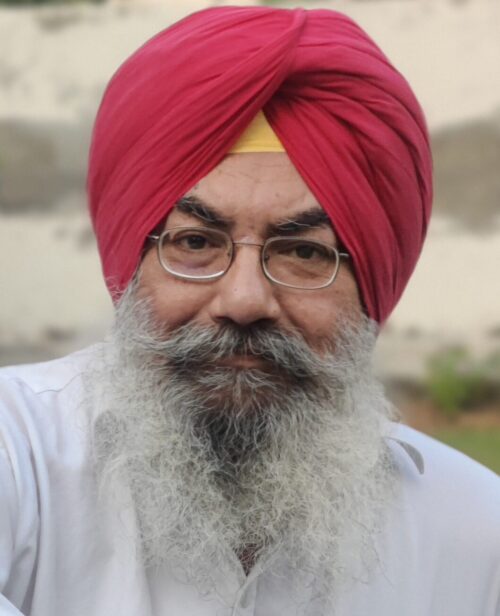
— Prof. Sarchand Singh Khiala
BJP Spokesperson, Punjab
9781355522