
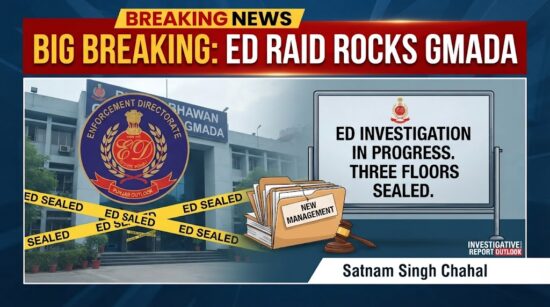
Mohali: Tuesday morning at the PUDA Bhawan in Sector 62, Mohali, reportedly began like any other government working day files waiting for signatures, officers waiting for meetings, and citizens waiting for answers. But then the Enforcement Directorate (ED) arrived, and suddenly the building discovered that some doors can become more important than development plans. According to reports, ED teams entered the GMADA office, began examining records and reportedly sealed at least three floors. The reported investigation is linked to matters including alleged irregularities in Change of Land Use (CLU) approvals and the “Remigate” case. The ED has not yet publicly disclosed the complete details of the operation.
The irony is almost too perfect for Punjab. An authority created to plan and develop Greater Mohali now finds parts of its own office apparently requiring a little “urban planning” by the Enforcement Directorate. Three floors sealed! For years, ordinary citizens have watched their files travel from one room to another, sometimes apparently moving slower than a bullock cart. Now, according to reports, the files have finally received VIP treatment nobody is allowed to move them at all.
The names circulating in connection with the offices being searched include Arvind Singh Malhi, Rakesh Popli, Ajay Garg and Vikas Garg, according to information being reported and circulated about the operation. GMADA’s official directory lists Amarinder Singh Malhi as Additional Chief Administrator, Rakesh Kumar Popli in the Finance & Accounts wing, Er Ajay Garg in the Engineering wing, and Vikas Garg as Principal Secretary. The exact status of each officer’s involvement in the ED inquiry, however, should not be presumed merely because an office or official is being searched.
And this is where Punjab’s famous political poetry becomes almost tailor-made for the situation. Surjit Patar’s poetry often reminded Punjab that truth has a habit of surviving attempts to bury it. In the GMADA drama, the question is not whether every officer or every file is guilty the investigation will have to establish that. The real question is much simpler: what exactly is hidden inside those files that has suddenly made three floors so interesting?
Punjab’s legendary poet Shiv Kumar Batalvi wrote with a tragic sense of things that disappear before people fully understand what happened. GMADA’s present situation offers a bureaucratic version of that tragedy: plots were visible, approvals were visible, buildings were visible but the paper trail apparently deserves a special searchlight.
There is also something wonderfully Punjabi about the whole episode. When an ordinary citizen asks about a file, the answer can sometimes be: “Sahib meeting vich han.” Ask again tomorrow: “File upar gayi hai.” Ask next week: “Officer tour te han.” But when the ED arrives, suddenly the entire administrative universe becomes wonderfully punctual.
File ਵੀ ਲੱਭ ਗਈ, room ਵੀ ਲੱਭ ਗਿਆ ਤੇ record ਵੀ ਲੱਭ ਗਿਆ!
The satire becomes sharper when one remembers that the Punjab and Haryana High Court has recently sought information from GMADA concerning the use of “no-litigation” undertakings by plot allottees over the past five years. The court matter is separate from today’s reported ED search, but it adds another layer to the wider questions surrounding GMADA’s functioning and its dealings with citizens and property holders.
The ED action also comes days after the agency reportedly approached a Kharar court seeking directions for registration of an FIR against five persons associated with two real estate firms over alleged fraudulent CLU matters involving projects in Mullanpur/New Chandigarh. The court directed the Mohali SSP to submit a status report. Again, these are allegations under investigation, not established findings of guilt.So perhaps Punjab needs a new official slogan for urban development: “First develop the city, then develop the file, and finally pray that nobody develops an interest in the file.”
The great Punjabi poet Pash famously wrote about the dangers of remaining silent in the face of injustice. Today, the most interesting voices may not come from political speeches at all. They may come from the documents, approvals, noting sheets, CLU permissions, correspondence and digital records now reportedly being examined by investigators.For the public, the central question is brutally simple: Were land-use approvals, development decisions and official permissions handled strictly according to law, or did influence, money and connections enter the planning process? That is precisely what an investigation must establish through evidence not television debates, political accusations or social-media rumours.
Until the ED officially explains what it has found, nobody should be declared guilty merely because an office was searched. But if the investigation uncovers wrongdoing, Punjab’s development authorities will face a much bigger question than the sealing of three floors: How many citizens were made to run from office to office while somebody, somewhere, allegedly knew exactly how the system worked?And perhaps the most appropriate Punjabi punchline comes from the old folk wisdom:
“ਜਦੋਂ ਘਰ ਦੀਆਂ ਕੰਧਾਂ ਨੂੰ ਹੀ ਪੁੱਛਗਿੱਛ ਪੈ ਜਾਵੇ, ਤਾਂ ਰਾਜ਼ ਦਰਵਾਜ਼ੇ ਨਹੀਂ—ਫਾਈਲਾਂ ਦੱਸਦੀਆਂ ਨੇ।”
Today, three floors are reportedly sealed. Tomorrow, perhaps the seals will come off. But the real seal that Punjab’s citizens want removed is the seal of silence surrounding how land, CLU approvals, development permissions and public authority have been exercised.Punjab Outlook Investigative Analysis: The ED raid should not become another political spectacle that disappears after 48 hours. If the agency has found evidence, the public deserves to know what the evidence shows.If nothing improper is established, the concerned officials deserve the same transparency. Either way, the files should speak and this time, nobody should be allowed to put them back to sleep.
Disclaimer: This article and accompanying images are for informational and illustrative purposes only. Some visuals may be AI-generated or digitally enhanced and may not depict actual events or persons.Views expressed are based on publicly available information and analysis