
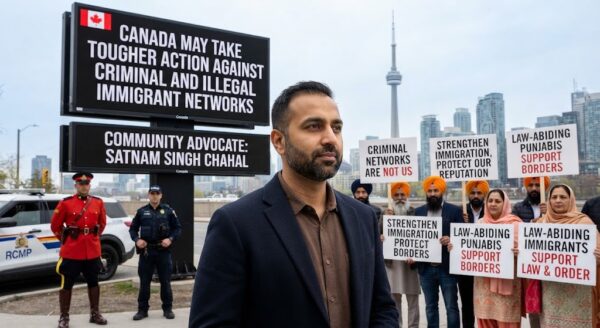
The Punjabi community has built a strong presence in Canada through hard work, entrepreneurship, education and professional achievement. However, the alleged involvement of some individuals in criminal, violent and anti-social activities is creating serious concerns and, unfortunately, affecting the image of the wider Punjabi community. A few individuals cannot and should not be allowed to define an entire community, but their actions can have consequences far beyond their own lives.
Canada has every right to strengthen its immigration and law-enforcement measures when individuals are found to be involved in organized crime, human smuggling, fraud, violence, drug trafficking or other illegal activities. If criminal networks are exploiting immigration pathways or using the Canadian system for unlawful purposes, the authorities are justified in taking firm action against those responsible.
The real concern is that continued reports of criminal and anti-social activities involving some members of the Punjabi diaspora could increase political and public pressure for tougher immigration screening, enforcement and deportation measures. Such steps could ultimately affect not only offenders but also genuine students, workers, entrepreneurs, families and other law-abiding immigrants who contribute positively to Canadian society.
The Punjabi community must therefore take this issue seriously rather than dismissing every negative report as an attack on Punjabis. Community leaders, religious institutions, social organizations, educational institutions and diaspora associations have a responsibility to speak clearly against crime and illegal activities. Silence can unintentionally give the impression that the community is unwilling to confront wrongdoing within its own ranks.
At the same time, law enforcement and immigration authorities must ensure that action is based on evidence and due process. Being Punjabi, Sikh, Indian or an immigrant must never itself become a reason for suspicion or discrimination. The focus should remain firmly on individuals who violate Canadian laws, exploit immigration systems or participate in criminal networks.
There is also a responsibility on families and the wider community to guide young people away from criminal influences, gang culture and easy-money schemes. Parents, educators and community organizations must create stronger awareness about the long-term consequences of criminal behaviour, including imprisonment, deportation, loss of immigration status and damage to family reputation.
Canada remains a country built on immigration, but immigration also comes with responsibilities. Newcomers are expected to respect the law, contribute to society and uphold the values of peaceful coexistence. Those who deliberately abuse the system or engage in criminal activities should not expect community identity to shield them from legal consequences.
The message from responsible Punjabi community organizations should therefore be clear: crime has no community, and illegal activity cannot be defended in the name of community solidarity. The overwhelming majority of Punjabis and Sikhs living in Canada are hardworking, law-abiding and constructive members of society. Protecting that reputation requires the community itself to stand firmly against the small number of individuals whose actions are damaging the credibility and future prospects of millions of others.
If Canada chooses to take bolder steps against criminal networks and individuals who misuse immigration channels, the Punjabi community should not fear legitimate enforcement. Instead, it should cooperate with authorities, support due process and ensure that innocent and law-abiding immigrants are not unfairly stigmatized because of the actions of others. The best defence of the Punjabi community’s reputation is not rhetoric—it is responsible citizenship, transparency and a united stand against crime.
Disclaimer: This article and accompanying images are for informational and illustrative purposes only. Some visuals may be AI-generated or digitally enhanced and may not depict actual events or persons.Views expressed are based on publicly available information and analysis