
 The philoophy of Guru Nanak Dev Ji teaches humanity, equality, compassion and service without discrimination. A Gurdwara is not merely a place of worship; it is also a place where people can seek peace, food, dignity and shelter during difficult times. The Sikh principle of Sarbat da Bhala — the welfare of all — reminds us that humanity must come before religion, caste, political affiliation or social status.
The reported incident involving Baba Ramdev and Gurdwara Bangla Sahib in New Delhi is often discussed in connection with this humanitarian tradition. According to the account shared, after allegedly attempting to escape police custody by changing his clothes, Ramdev sought refuge at the Gurdwara. The story further claims that the Gurdwara was willing to provide shelter because he was unarmed. However, these particular details require independent verification before they can be presented as established historical facts.
May 19, 2011 — Government efforts to persuade Baba Ramdev: The Indian government began efforts to persuade Baba Ramdev to call off his proposed hunger strike. Negotiations continued in the following days as his campaign against corruption and alleged black money gained national attention.
June 1, 2011 — Arrival in Delhi: Baba Ramdev arrived in Delhi amid considerable public attention. Senior Union ministers met him to discuss his demands and explore the possibility of reaching an agreement.
June 2–3, 2011 — Negotiations intensify: Discussions between the government and Ramdev’s representatives continued, but the two sides failed to reach a lasting agreement. The situation became increasingly tense as preparations for the planned protest continued.
June 4, 2011 — Hunger strike begins: Baba Ramdev began his hunger strike at Ramlila Maidan in New Delhi. Thousands of supporters gathered at the venue to support his campaign against corruption and alleged black money.
Night of June 4–5, 2011 — Police action: Shortly after midnight, police moved into the protest site to disperse the gathering. Reports described the use of tear gas and baton charges, creating panic among protesters and prompting many people to leave the area.
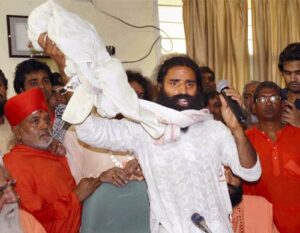
Early morning of June 5, 2011 — Ramdev attempts to leave the protest site: Contemporary reports stated that Ramdev changed into a salwar-kameez and covered his beard with a dupatta while attempting to leave the area. He was subsequently apprehended near Ranjit Singh Flyover. This documented account should be distinguished from the separate claim that he personally took refuge at Gurdwara Bangla Sahib.
June 5, 2011 — Gurdwara Bangla Sahib provides shelter to supporters: Following the police action, large numbers of Ramdev’s supporters reportedly went to Gurdwara Bangla Sahib. A contemporary newspaper report stated that Gurdwara authorities estimated they might have sheltered as many as 10,000 supporters during the course of the day. This episode provides a documented example of the Gurdwara offering refuge to people caught up in a tense political confrontation.
The most important point is that the reported sheltering of Ramdev’s supporters is documented in contemporary coverage, whereas the specific claim that Ramdev himself entered the Gurdwara after escaping the police needs further verification. Historical accuracy is essential, particularly when discussing the reputation of a religious institution and its humanitarian traditions.
The broader significance of the incident lies in the Sikh principle that a person in distress should not be denied humanitarian assistance because of political differences, personal beliefs or social standing. A Gurdwara is expected to serve humanity, not to function as a political institution or a place where anyone receives immunity from the law.
Guru Nanak Dev Ji’s teachings established a moral foundation based on equality, honest living, sharing and compassion. These values continue through the Sikh tradition of Langar, where people from every background sit together and share a meal without discrimination. The message is simple: hunger does not have a religion, suffering does not have a caste, and human dignity should not depend on political influence.
The Sikh tradition of seva, or selfless service, further reinforces this responsibility. Whether someone is hungry, homeless, frightened or in danger, helping that person is an expression of faith in action. The principle of Sarbat da Bhala extends this concern to the welfare of all humanity, including those whose political views or personal circumstances may differ from our own.
At the same time, offering humanitarian shelter does not mean obstructing lawful police action or preventing the justice system from functioning. Compassion and respect for the law can coexist. Religious institutions can protect human dignity, provide food and temporary shelter, and still cooperate with lawful authorities when required.
The real test of a religious institution is not how it treats powerful people when they arrive with supporters, but whether it responds with compassion when ordinary people are frightened, vulnerable or in need of help. The Sikh tradition calls for the same humanitarian spirit to be extended to everyone, without political favouritism or discrimination.
A Gurdwara is more than a building; it is a symbol of humanity, equality and service. Its doors should represent compassion, not political convenience. That is the enduring message of Guru Nanak Dev Ji’s philosophy and the spirit of Sarbat da Bhala.
Disclaimer: This article and accompanying images are for informational and illustrative purposes only. Some visuals may be AI-generated or digitally enhanced and may not depict actual events or persons.Views expressed are based on publicly available information and analysis