
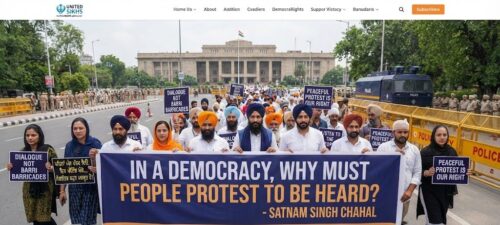
 There is something deeply troubling about the way ordinary people are increasingly forced to make their voices heard. In a democracy, citizens should not have to reach the point of hunger strikes, sit-ins, road blockades or prolonged protests simply to bring their legitimate demands to the attention of those in power. Yet across Punjab, a familiar pattern appears to be emerging: people first submit memorandums, then make representations, then protest, then sit on hunger strike—and only after the situation becomes tense does the government appear to take notice. And sometimes, instead of receiving a meaningful dialogue, protesters receive police barricades, water cannons, tear gas or lathi-charge.
This raises a fundamental democratic question: Is peaceful protest still considered a legitimate democratic right, or has it become something governments tolerate only until it becomes inconvenient?A government is elected to listen to citizens—not merely to govern them. People may be farmers, students, workers, employees, unemployed youth, pensioners, traders or members of different social organisations, but they all have one thing in common: their vote gives them a democratic voice. When that voice is ignored repeatedly, frustration naturally grows.The first stage is usually polite. Delegations meet officials. Memorandums are submitted. Meetings are requested. Promises are made. People return home hoping that their concerns will be addressed.Then nothing happens.
The memorandum becomes another file. The meeting becomes another photograph. The promise becomes another sentence in a press release. Eventually, people return to the streets.And here comes the irony.The citizen who was ignored while sitting peacefully in an office suddenly becomes a “law-and-order problem” when he sits peacefully on the road.The government may argue that roads cannot be blocked, public order must be maintained and emergency services must not be disrupted. Those are legitimate concerns. Protesters, too, have responsibilities. Peaceful demonstrations should remain peaceful, public property should not be damaged and ordinary citizens should not be unnecessarily inconvenienced.But the government’s responsibility is equally important: maintain order without unnecessarily treating peaceful citizens as enemies.
A democratic government should have a ladder of response: dialogue first, negotiation second, mediation where necessary—and force only when genuinely unavoidable.Unfortunately, when the first response to a protest becomes confrontation, something has gone wrong.People ask for a meeting; they get barricades. They ask for answers; they get announcements. They ask for justice; they get another committee. They sit peacefully; they face police action.How did democracy become so dependent on pressure?There is an uncomfortable satire hidden in this situation:
“ਪਹਿਲਾਂ ਮੰਗ ਪੱਤਰ ਦਿਓ, ਫਿਰ ਮੀਟਿੰਗ ਮੰਗੋ, ਫਿਰ ਧਰਨਾ ਲਾਓ, ਫਿਰ ਭੁੱਖ ਹੜਤਾਲ ਕਰੋ, ਫਿਰ ਪੁਲਿਸ ਬੁਲਾਓ— ਤੇ ਜੇ ਫਿਰ ਵੀ ਗੱਲ ਨਾ ਬਣੇ, ਤਾਂ ਕਹੋ ਲੋਕਤੰਤਰ ਬਹੁਤ ਮਜ਼ਬੂਤ ਹੈ!”
This is not what democracy was supposed to look like.The right to peaceful assembly and expression is fundamental to democratic life. A protest should not automatically be interpreted as an act against the government. In fact, a peaceful protest can be a democratic safety valve. It gives frustrated citizens a way to express anger without resorting to violence.When governments listen early, protests can remain small.When governments ignore grievances, protests often become larger.When authorities respond aggressively to peaceful protesters, the confrontation can become even more emotional.And then everybody loses.
The government loses public trust. Citizens lose confidence in institutions. Police personnel are placed in difficult situations. Public life is disrupted. And the original issue—the very demand that brought people onto the streets—gets buried under images of confrontation.That is why Punjab must ask a larger question: How long can this cycle continue?How many times must ordinary people put their health at risk through hunger strikes before someone takes their demands seriously?How many times must citizens travel long distances to sit on roads simply to get a meeting with officials?How many times must protesters shout slogans before the government hears the actual grievance behind those slogans?And most importantly, why does the pressure of a protest sometimes appear to carry more weight than the voice of a citizen?
There is also a danger in normalising hunger strikes as a political tool. Hunger strikes are serious acts that can put people’s health at risk. They should not become the standard mechanism through which citizens obtain government attention. A functioning administration should provide institutional channels where grievances can be heard before people feel compelled to risk their lives.A democracy cannot operate on the principle that “whoever protests the hardest gets heard first.”If that becomes the system, the weakest citizens are often left behind—because not everyone has the resources, organisation or physical ability to protest for days.The elderly cannot always sit in the cold or heat.Workers cannot always afford to lose wages.Families cannot always travel to protest sites.Students cannot indefinitely abandon their studies.And ordinary citizens cannot spend their lives standing behind barricades waiting for an official to listen.
Government must therefore strengthen the institutions through which grievances are addressed.A citizen should not need a microphone to become visible. A citizen should not need a hunger strike to become audible. A citizen should not need a police confrontation to become important.This is particularly important in Punjab, a state with a strong tradition of protest, political participation and public mobilisation. People here have historically raised their voices on issues affecting their livelihoods, rights and communities. That tradition should be respected—but governments must also ensure that protest does not become the only language that administration understands.There is nothing democratic about silencing a legitimate grievance simply because it is inconvenient.
At the same time, there is nothing democratic about using protest as an excuse for violence or intimidation.Democracy requires responsibility on both sides.Citizens must protest peacefully.Governments must listen seriously.Police must maintain order proportionately.Officials must provide transparent timelines.And elected representatives must remain accessible to the people who elected them.The ultimate test of democracy is not how a government behaves when everything is peaceful and everyone agrees with it.The real test is how it treats the people who disagree.If citizens can criticise the government without fear, protest without being treated as criminals, and demand accountability without having to risk their lives, democracy is healthy.But if citizens have to repeatedly take to the streets just to make their elected representatives listen, then something within the democratic system deserves serious examination.Perhaps the most important question is therefore not “How many protesters were detained?”
It is:
“Why did they have to become protesters in the first place?”And perhaps the question governments should ask themselves before ordering another barricade, another police deployment or another crackdown is even simpler:“Have we listened enough?”Because a democracy should not reward citizens for shouting louder.It should have institutions capable of hearing them when they speak softly.
And Punjab’s people deserve nothing less.
Disclaimer: This article and accompanying images are for informational and illustrative purposes only. Some visuals may be AI-generated or digitally enhanced and may not depict actual events or persons.Views expressed are based on publicly available information and analysis