
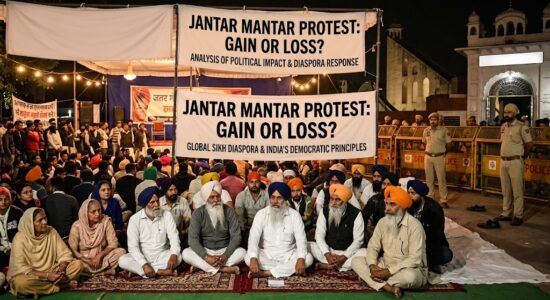
The initial protest at Jantar Mantar has raised serious questions about the handling of public demonstrations, respect for Sikh religious traditions, the treatment of women protesters, and the consequences of confrontational policing. The incident deserves an impartial examination because its implications may extend beyond the protest site and affect public trust, religious sentiments, and India’s international image.
The reported entry of police personnel into a Gurdwara Sahib with uncovered heads and shoes has caused deep hurt and anger among Sikhs. For the Sikh community, a Gurdwara is not merely a building; it is a sacred place governed by established religious traditions. Any alleged disregard for these traditions requires a transparent explanation and, if a violation is established, appropriate accountability. The incident may further weaken the relationship between sections of the Sikh community and the BJP, although the extent of any political impact cannot be determined without broader evidence.
Equally serious are allegations that girls and other women protesters were mistreated during the police action. The authorities must clarify what happened, examine available video footage, identify the personnel involved, and ensure that any complaint of excessive force or misconduct is investigated fairly. Every citizen, including young protesters, has the right to dignity and lawful treatment. The police have a responsibility to maintain order, but that responsibility must be exercised within the law and with particular sensitivity when women, peaceful demonstrators, and religious institutions are involved.
The central question is what both sides gained or lost. The government may have succeeded in exercising immediate control over the protest, if that was its objective, but the longer-term consequences depend on whether its actions were lawful, proportionate, and publicly justified. If grievances remain unanswered and allegations of misconduct are not investigated, public distrust may deepen. Conversely, an independent inquiry, clear communication, and accountability where warranted could help restore confidence.
The protesters may have succeeded in bringing their grievances and concerns about religious respect and police conduct into public discussion. However, any confrontation that results in injuries, arrests, disruption, or a breakdown in communication can impose costs on protesters and their cause. The most effective way forward is to document the events, present evidence, pursue lawful remedies, and maintain peaceful democratic pressure.
The incident also raises concerns about India’s international reputation. Images or reports showing alleged mistreatment of women, disrespect towards a place of worship, or excessive force against demonstrators can attract scrutiny from the global Sikh diaspora, human-rights organisations, and international media. The extent of any reputational damage should be assessed through actual international coverage and responses rather than assumed. Nevertheless, a democracy’s reputation depends not only on its institutions and global standing but also on how its authorities treat citizens who disagree with those in power.
Ultimately, neither the government nor the protesters can resolve a political dispute through confrontation alone. The immediate priority should be to establish the facts, protect religious sentiments, investigate allegations of mistreatment, and ensure that peaceful protest remains a democratic right. The government must demonstrate accountability, while protesters should be able to raise their concerns without fear of unlawful retaliation.
Jantar Mantar should become an occasion for democratic reflection, not a lasting symbol of mistrust. The real test will be whether the authorities respond with transparency and restraint and whether all parties choose dialogue over escalation.
Disclaimer: This article and accompanying images are for informational and illustrative purposes only. Some visuals may be AI-generated or digitally enhanced and may not depict actual events or persons.Views expressed are based on publicly available information and analysis