
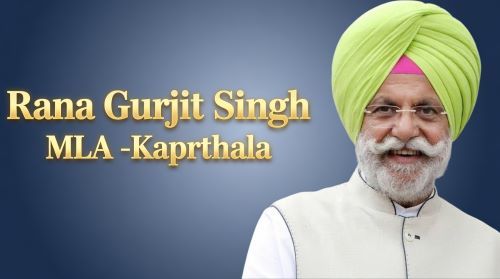
 Editor’s Note:”Meet and Greet” series was prepared to provide readers with a comprehensive understanding of Rana Gurjeet Singh’s background, political journey, achievements, challenges, leadership style, and public image.The purpose of this series is not to promote or oppose any political personality but to encourage informed public discussion. A healthy democracy depends on citizens understanding the leaders who represent them, their records, their ideas, and their responsibilities. Editor
Punjab’s political landscape has always been shaped by leaders who come from different backgrounds, bring different experiences, and adopt different approaches to public service. Some leaders emerge from traditional political families, while others enter politics after achieving success in professional fields. Rana Gurjeet Singh represents the latter category — a leader whose journey moved from entrepreneurship and business leadership to electoral politics and government responsibility.
Over the years, he has established himself as one of the prominent political figures of the Doaba region. His career reflects the complexities of modern politics, where public expectations, administrative responsibilities, party dynamics, and personal reputation all play important roles.
One of the defining features of Rana Gurjeet Singh’s journey has been the combination of economic experience and political involvement. His background in business provided him with exposure to management, investment, employment creation, and organizational leadership. When he entered politics, he brought this experience into the public arena, emphasizing development, economic growth, and opportunities for Punjab.
His role as an elected representative from Kapurthala has remained central to his political identity. A constituency is the foundation of any politician’s public life, and maintaining a connection with voters requires continuous effort. Through elections, public meetings, political activities, and legislative responsibilities, he has remained connected with the people of Kapurthala.
His ministerial experience added another dimension to his career. Serving in government provided him with an opportunity to participate directly in policymaking and administration. It also placed him under greater public scrutiny, as ministers are judged not only by their intentions but by the visible results of their decisions.
Like every senior political leader, Rana Gurjeet Singh’s career has included both appreciation and criticism. Supporters view him as an experienced, development-oriented leader with knowledge of administration and economic issues. They believe his professional background gives him a practical understanding of Punjab’s challenges.
Critics, however, emphasize the importance of transparency, accountability, and measurable results. They argue that every public representative must continuously prove their effectiveness through visible improvements and direct benefits reaching ordinary citizens. These debates are an essential part of democratic politics.
Perhaps one of the most important aspects of Rana Gurjeet Singh’s political journey is his ability to remain relevant through changing political circumstances. Punjab politics has witnessed many transformations, including changes in governments, party strategies, and voter expectations. Remaining influential in such an environment requires experience, adaptability, and organizational strength.
His career also reflects the changing nature of political leadership in Punjab. Modern governance requires leaders who understand not only social and political issues but also economic realities. Challenges such as unemployment, youth migration, industrial development, agricultural transformation, and financial management require practical solutions and long-term planning.
For Kapurthala and the Doaba region, the future will depend on how effectively leaders address the aspirations of a new generation. Young people seek employment, quality education, better healthcare, entrepreneurship opportunities, and a secure future within Punjab. Meeting these expectations will remain the biggest test for every political representative.
The final judgment of any political leader belongs to the people. Elections, public opinion, media analysis, and the passage of time determine how history remembers individuals who serve in public life. Political careers are never defined by one event or one position; they are shaped by years of decisions, relationships, achievements, and challenges.
Rana Gurjeet Singh remains an important name in Punjab politics because of his long public career, experience in governance, and continued influence in the Doaba region. Whether viewed through the perspective of supporters or critics, his journey represents the opportunities and challenges of democratic leadership in Punjab.
What Supporters Say, What Critics Say – A Democratic Assessment
In a democracy, public leaders are always evaluated from different viewpoints. Supporters often focus on achievements, experience, and contributions, while critics examine decisions, policies, and controversies. A mature understanding of any political personality requires listening to both sides. Rana Gurjeet Singh’s long political career reflects this diversity of opinion.
Among his supporters, Rana Gurjeet Singh is seen as an experienced leader with a strong understanding of administration, economics, and governance. They believe that his background as an entrepreneur gives him a practical approach toward development and helps him understand the importance of investment, employment generation, and economic growth.
Supporters often highlight his experience as a minister and elected representative. They argue that political leadership requires knowledge of government systems, the ability to coordinate with officials, and the capacity to convert public demands into administrative action. In their view, Rana Gurjeet Singh’s experience provides him with the ability to handle complex governance challenges.
Many supporters also appreciate his connection with Kapurthala. They believe that his continued presence in the constituency, interaction with residents, and involvement in local issues demonstrate commitment to public service. They point to his efforts to raise regional concerns and maintain communication with voters as important aspects of his political role.
Another point emphasized by supporters is his understanding of economic issues. Punjab faces serious challenges including unemployment, youth migration, industrial slowdown, and financial pressures. Supporters believe that leaders with business experience can contribute valuable perspectives on creating jobs and encouraging economic activity.
However, critics present a different viewpoint. They argue that every elected representative must be judged primarily on measurable outcomes, transparency, and the direct impact of policies on ordinary citizens. According to critics, political experience alone is not enough; people expect visible improvements in infrastructure, public services, employment opportunities, and governance.
Some critics have questioned aspects of his political career and have raised concerns about controversies associated with his public life. They believe that leaders with significant influence must maintain the highest standards of accountability because public trust is the foundation of democracy.
His business background has also been a subject of public discussion. Supporters view it as an advantage because it provides knowledge of economic realities, while critics argue that politicians with business interests must maintain complete transparency to avoid any perception of conflict between private and public responsibilities.
Within party politics, Rana Gurjeet Singh has also experienced both support and differences of opinion. Like all major political organizations, Punjab Congress has witnessed internal discussions about leadership, strategy, and priorities. Senior leaders often have their own supporters and political viewpoints, which is a normal feature of democratic parties.
His supporters describe him as a confident and decisive leader who brings experience and organizational ability. Critics sometimes describe the same qualities differently, arguing that modern politics requires greater consultation, wider participation, and stronger emphasis on collective decision-making.
The debate surrounding Rana Gurjeet Singh reflects a larger question in Punjab politics: what qualities should voters prioritize in their leaders? Some citizens value administrative experience and economic understanding, while others prioritize grassroots activism, transparency, and direct public engagement.
Ultimately, the assessment of any politician belongs to the people. Elections, public opinion, media discussion, and democratic institutions provide the mechanisms through which citizens evaluate leadership. Different perspectives are not a weakness of democracy; they are evidence of an active public conversation.
Rana Gurjeet Singh’s career demonstrates the complexity of political leadership. He has supporters who appreciate his experience, development-oriented approach, and public role, while critics continue to examine his decisions and performance. Both viewpoints form part of the democratic process.
Public Connect, Political Influence, and Role in Punjab Congress
In democratic politics, a leader’s influence is not determined only by official positions but also by the relationship developed with people, party workers, and the wider political community. Rana Gurjeet Singh’s political journey reflects the importance of maintaining public contact, organizational strength, and the ability to remain relevant through changing political circumstances.
Kapurthala and the wider Doaba region have played an important role in Punjab’s political history. The region has produced many influential leaders and has a unique social character shaped by agriculture, education, industry, and a strong connection with the Punjabi diaspora. Within this political environment, Rana Gurjeet Singh has established himself as one of the prominent Congress leaders.
His supporters often describe him as a leader who understands both rural and urban concerns. Kapurthala constituency includes farming communities, business groups, government employees, students, and families connected with overseas opportunities. Addressing the needs of such a diverse population requires continuous engagement and understanding of different social and economic realities.
Public accessibility has remained an important part of his political approach. Through constituency visits, meetings with residents, participation in social events, and interaction with party workers, he has maintained visibility among the people. Supporters believe that regular public contact strengthens trust between an elected representative and citizens.
For a senior politician, relationships with party workers are equally important. Political organizations depend heavily on grassroots workers who connect leadership with voters. Rana Gurjeet Singh’s long association with Congress politics has allowed him to build networks within the party structure, particularly in the Doaba region.
Within Punjab Congress, he has often been viewed as an influential leader with his own political base. Like all major parties, Congress has witnessed internal debates, leadership changes, and different approaches toward strategy and organization. Senior leaders like Rana Gurjeet Singh play an important role in maintaining party presence and representing different sections of the organization.
His political influence has also come from his experience in government. Having served as a minister provides a leader with knowledge of administrative systems, policy-making processes, and government functioning. Supporters argue that such experience is valuable because effective representation requires understanding how decisions are implemented.
Another factor contributing to his public image is his connection with development-related issues. Many voters judge leaders by their ability to bring attention to local problems, improve infrastructure, support economic activity, and ensure that government schemes reach citizens. Rana Gurjeet Singh has emphasized development as an important part of his political message.
The overseas Punjabi community also plays an important role in Doaba politics. Many families in the region have relatives abroad, creating strong social and economic connections with countries around the world. Issues related to migration, investment, education, and opportunities for youth remain important concerns among these communities.
At the same time, political influence always comes with responsibility. Citizens expect elected representatives to be accessible, transparent, and responsive. Supporters may highlight achievements, while critics may raise questions about priorities and performance. This democratic evaluation is essential for maintaining accountability.
Rana Gurjeet Singh’s continued presence in Punjab politics demonstrates his ability to remain active despite changing political conditions. Political careers are rarely straightforward; they involve elections, challenges, public expectations, and constant competition. Remaining relevant requires both organizational ability and a connection with voters.
His role in Punjab Congress politics reflects the larger dynamics of the party — balancing experienced leadership with changing public expectations. As Punjab’s political landscape evolves, leaders with experience and established public networks continue to influence the direction of political discussions.