
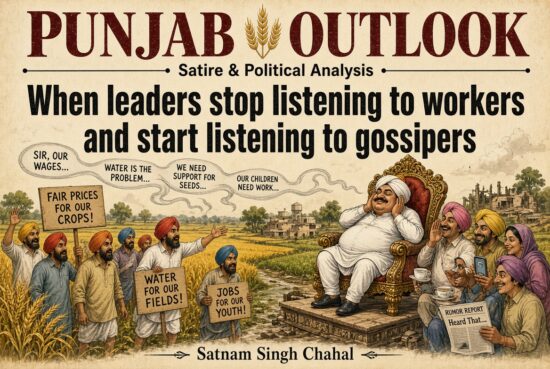
Politics has many varieties of leaders and even more varieties of supporters. There are workers who genuinely believe in a cause, workers who work for the party, workers who work for the people—and then there is another highly specialised category: the professional flatterer. The professional flatterer has no fixed political ideology. His ideology is simple: “Where is the chair?” He can praise any leader, defend any decision and explain any failure—as long as there is a chair nearby.
“ਜਿੱਥੇ ਕੁਰਸੀ, ਉੱਥੇ ਚਮਚਾ, ਜਿੱਥੇ ਚਮਚਾ, ਉੱਥੇ ਗੱਲ; ਸੱਚ ਬੋਲਣ ਵਾਲਾ ਦੂਰ ਖੜ੍ਹਾ, ਝੂਠ ਕਰੇ ਨੇਤਾ ਨਾਲ ਮੱਲ।”
Some political leaders, unfortunately, develop a special appetite for gossip. A genuine worker comes with ten problems from the constituency and gets five minutes. A gossiping flatterer arrives with one rumour about another leader and gets an hour. Why? Because problems require solutions. Gossip requires only popcorn.
The flatterer enters the leader’s room like a breaking-news channel. “Sir, do you know what he said about you?” The leader leans forward: “Who?” The flatterer replies, “Sir, I cannot reveal the name.” Now the leader is even more interested. “Tell me!” comes the demand. The reply: “Sir, please don’t tell anyone I told you.” And there begins the most important political meeting of the day. No discussion about unemployment. No discussion about roads. No discussion about farmers. No discussion about government employees. Just “Who said what to whom?”
Meanwhile, outside the office, the voter is standing in a queue wondering whether anybody in government remembers him. The funniest part is that gossipers often become the unofficial intelligence bureau of political leaders. They know who met whom, who had tea with whom, who attended whose wedding, who didn’t attend whose funeral and who liked whose Facebook post. They may not know how many voters are angry in the constituency—but they know exactly who unfollowed the leader on social media.
“ਲੋਕਾਂ ਦੇ ਦੁੱਖਾਂ ਦੀ ਖ਼ਬਰ ਨਹੀਂ, ਪਰ ਕਿਸ ਨੇ ਕਿਸ ਨੂੰ ਮਿਲਿਆ ਪਤਾ; ਨੇਤਾ ਜੀ ਨੂੰ ਸੱਚ ਨਾ ਦੱਸਣ, ਪਰ ਚੁਗਲੀ ਵਿੱਚ ਪੀਐਚ.ਡੀ. ਕਰਤਾ।”
Then comes the great political disease: Yes-Man Syndrome. The leader says something—“Yes, Sir.” The leader changes his mind “Yes, Sir.” The leader contradicts what he said yesterday “Yes, Sir, visionary decision.” The leader makes a mistake—“Sir, this was actually a masterstroke.” At this stage, the supporter is no longer a supporter. He has become a human approval button.
A healthy leader needs somebody brave enough to say, “Sir, you are wrong.” An insecure leader wants somebody who says, “Sir, you are always right.” And a politician surrounded entirely by the second category eventually begins believing his own press releases. That is when the political bubble becomes dangerous. Inside the bubble, everyone is happy. Inside the bubble, the leader is popular. Inside the bubble, the opposition is finished. Inside the bubble, the next election is already won. Outside the bubble, however, reality is standing patiently with a long list of questions.
“ਚਮਚਿਆਂ ਨੇ ਆਖਿਆ—ਜਿੱਤ ਪੱਕੀ ਏ, ਨੇਤਾ ਜੀ ਨੇ ਮੰਨ ਲਈ ਗੱਲ; ਵੋਟਾਂ ਵਾਲੇ ਦਿਨ ਪਤਾ ਲੱਗਿਆ, ਜਨਤਾ ਨੇ ਬਦਲ ਲਈ ਚਾਲ।”
There is another curious species—the seasonal supporter. He disappears after an election and returns six months before the next one. During election season he declares, “Sir, I have been with you for twenty years.” The leader asks, “Where were you?” The answer is immediate: “Sir, I was working quietly.” Quietly means nobody saw him.
Then comes the photograph supporter. He doesn’t necessarily want responsibility; he wants a photograph. One photograph with the leader can be used for six months. Two photographs can establish a political career. Three photographs can produce a visiting card. Five photographs can produce a claim: “Close aide of the leader.” And ten photographs? Congratulations. You are now a political heavyweight—at least on WhatsApp.
“ਫੋਟੋ ਇੱਕ ਹੋਵੇ ਤਾਂ ਜਾਣ-ਪਛਾਣ, ਦੋ ਹੋਣ ਤਾਂ ਖਾਸ ਬੰਦਾ; ਦਸ ਹੋ ਜਾਣ ਤਾਂ ਨੇਤਾ ਦਾ ਯਾਰ, ਵਟਸਐਪ ਬਣੇ ਰਾਜ ਦਾ ਧੰਦਾ।”
But the real damage is done to the genuine political worker. The worker who stood in the rain is ignored. The worker who defended the party during difficult times is forgotten. The worker who spent his own money is told to “wait.” Meanwhile, someone who mastered the art of saying “Wah ji wah!” gets front-row access.
This is how political organizations slowly lose their grassroots—not always because of the opposition, but sometimes because the leader’s own circle becomes an echo chamber. And an echo chamber is a dangerous place. Ask a question and the echo says, “Excellent question.” Make a mistake and the echo says, “Excellent mistake.” Lose public support and the echo says, “Sir, the people are still with you.”
Lose an election and suddenly the echo disappears. The phones stop ringing. The chairs become empty. The loyal gossipers discover new leaders. And the leader finally gets introduced to the most honest political organization in the country: the electorate.
The voter does not flatter. The voter does not gossip. The voter does not ask for a photograph. The voter simply presses a button. And that little button can end years of political “Yes Sir, Yes Sir” culture in a few seconds.
“ਚਮਚਾ ਕੁਰਸੀ ਨਾਲ ਜੁੜਿਆ ਰਹੇ, ਕੁਰਸੀ ਜਾਵੇ ਤਾਂ ਚਮਚਾ ਗਿਆ; ਜਨਤਾ ਨਾਲ ਜਿਹੜਾ ਸੱਚਾ ਰਿਹਾ, ਉਹੀ ਅਸਲ ਵਿੱਚ ਜਿੱਤਿਆ ਗਿਆ।”
The message for political leaders is simple: listen to the worker who tells you uncomfortable truths, not merely the flatterer who tells you comfortable lies. And for political workers, another lesson is equally important: loyalty does not mean surrendering your brain. A supporter who cannot criticize his leader is not necessarily loyal. He may simply be protecting his access to the chair.
Politics needs supporters who can say “Yes” when the leader is right and “No” when the leader is wrong. Because a leader surrounded by honest people may occasionally hear bad news—but a leader surrounded by flatterers eventually becomes bad news himself.
And finally, the greatest political comedy remains this: The gossiper thinks he is manipulating the leader. The leader thinks he is controlling the gossiper. Both think they are managing the public. Meanwhile, the public is sitting quietly and taking notes. Election Day is the day when every flatterer loses his microphone and every voter gets one.