
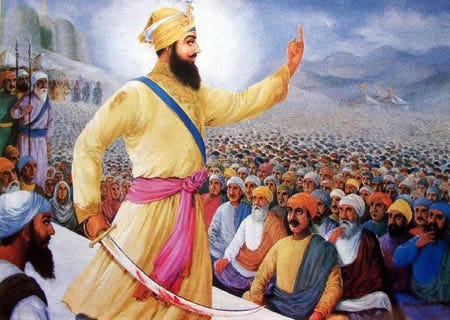
 The Sikh community, with an estimated global population of nearly three crore, has a remarkable history of faith, sacrifice, courage and service to humanity. From the creation of the Khalsa by Sri Guru Gobind Singh Ji in 1699 to the present era, Sikhs have made extraordinary contributions in every field of life. However, as the community enters a new phase of the 21st century, it faces a serious internal challenge: how to preserve and strengthen Sikh identity among future generations.
For decades, Sikh religious institutions, particularly the Shiromani Gurdwara Parbandhak Committee (SGPC) and various other Sikh organisations, have been conducting dharam parchar campaigns to spread the teachings of the Sikh Gurus, encourage Sikhs to follow Rehat Maryada and inspire individuals to become Amritdhari. These organisations have established educational institutions, organised religious programmes, published literature and spent considerable resources to promote Sikh teachings.
Before the historic 300th anniversary celebrations of the Khalsa in 1999, Sikh religious leadership had expressed the hope that the occasion would become a major turning point in Sikh history. A strong appeal was made that more Sikhs should embrace the Khalsa discipline and that efforts should be made to encourage every Sikh to understand and follow the principles established by Guru Gobind Singh Ji. The tercentenary celebrations created tremendous enthusiasm across Punjab and among Sikhs worldwide.
However, nearly 27 years after those historic celebrations, the community must honestly examine the present situation. While thousands of Sikhs continue to maintain the traditions of the Khalsa with dedication, the broader reality shows that a large section of Sikhs, particularly among younger generations, has moved away from traditional practices. The increasing number of clean-shaven Sikh men, declining knowledge of Sikh history among youth and reduced connection with Punjabi language and religious education have become issues of concern for many community observers.
This situation raises an important question: despite decades of dharam parchar efforts, why has the desired level of connection with Sikh traditions not been achieved? The purpose of asking this question is not to disrespect Sikh institutions or the individuals working within them. Rather, it is a call for self-reflection, transparency and improvement. A community that has always valued truth and accountability must also examine whether its strategies are producing meaningful results.
The Sikh community has the right to know how resources allocated for religious propagation are being utilised and what impact these programmes have created. Sikh institutions manage significant religious resources, and many organisations receive donations from devotees around the world. These funds are meant for preserving Sikh heritage, spreading Gurbani, educating youth and strengthening the community. Therefore, there is a natural expectation that regular assessments should be made regarding the effectiveness of these activities.
The question is not only about how much money is spent on dharam parchar, but about what transformation takes place because of that spending. How many young Sikhs have gained a deeper understanding of Sikh philosophy? How many families have been connected with Sikh education programmes? How many children growing up in Punjab and abroad understand the sacrifices of Sikh Gurus and the history of the Khalsa? These are important questions that deserve serious discussion.
The changing social environment has created new challenges for Sikh identity. Punjab has witnessed large-scale migration, economic difficulties, changing lifestyles and the influence of global culture. Abroad, Sikh families face the challenge of maintaining religious identity while their children grow up in multicultural societies. The younger generation today receives information through digital platforms and social media, and traditional methods of communication alone may no longer be sufficient.
Many young Sikhs are not necessarily disconnected from Sikhism, but they often lack meaningful opportunities to understand their faith. For some, Sikh identity has become more cultural than religious because of limited exposure to Sikh history, Gurbani and the philosophy of the Gurus. This situation requires a new approach that connects Sikh teachings with the questions and challenges faced by modern youth.
The responsibility of preserving Sikh identity does not belong only to religious institutions. Families also play a crucial role. The first lessons of faith, language, history and values are usually learned at home. However, families need support from Sikh organisations through effective educational programmes, youth activities and modern learning resources.
The future of Sikh identity will depend on whether institutions can develop new methods of engagement. Young Sikhs today need more than traditional speeches. They need interactive education, digital resources, leadership opportunities and a deeper understanding of how Sikh principles apply to modern life. The message of the Gurus must be presented in a way that inspires the younger generation.
Another important issue is transparency. Sikh institutions represent a community founded on principles of honesty, equality and service. Providing detailed information about religious programmes, educational initiatives and the outcomes achieved can strengthen public confidence. Measuring success through actual community engagement rather than only the number of events organised would create a more effective approach.
At the same time, Sikh identity should not be viewed only through external appearance. The symbols of Sikhism have great importance, but the teachings of the Gurus also emphasise compassion, truthful living, equality, humility and service to humanity. A complete understanding of Sikhism requires both maintaining identity and living according to Sikh values.
The Sikh community has successfully preserved its identity through centuries of challenges. From persecution during the time of the Sikh Gurus to sacrifices made in defence of justice and human rights, Sikh history demonstrates remarkable resilience. The present challenge is different: it is not the protection of Sikh identity from external threats but ensuring that future generations remain connected to their own heritage in a rapidly changing world.
After almost three decades since the 1999 Khalsa tercentenary, this is the right time for Sikh institutions, scholars, community leaders and ordinary Sikhs to engage in a meaningful conversation. The goal should not be criticism but improvement, not division but collective responsibility.
The vision of Guru Gobind Singh Ji was to create a community that was spiritually strong, disciplined, fearless and committed to serving humanity. Preserving that vision requires more than announcements and celebrations. It requires dedication, accountability and a renewed commitment to educating and inspiring every generation of Sikhs.
The future of Sikh identity will ultimately depend on one important question: Are Sikh institutions and the community prepared to adapt their methods while remaining faithful to the timeless message of the Sikh Gurus?
Disclaimer: This article and accompanying images are for informational and illustrative purposes only. Some visuals may be AI-generated or digitally enhanced and may not depict actual events or persons.Views expressed are based on publicly available information and analysis.