
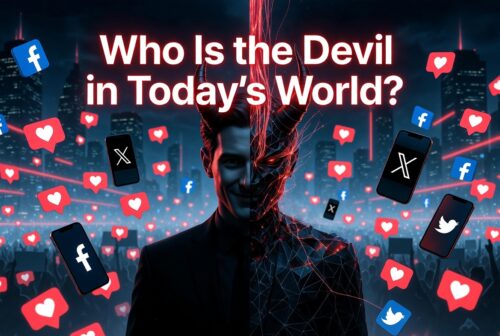
 Throughout history, the image of the devil has symbolized greed, cruelty, injustice, deception, and the abuse of power. In ancient stories, the devil appeared as a frightening figure. In today’s world, however, many people ask a more disturbing question: what if the devil no longer wears a frightening face? What if evil often hides behind respectability, influence, wealth, or authority?Every citizen lives within multiple systems. We are connected to governments, political parties, courts, police, hospitals, schools, businesses, and religious institutions. These institutions are essential for society to function, but like all human institutions, they can also be affected by corruption, misuse of authority, or failures of accountability.
Sometimes works of art, literature, or cinema raise uncomfortable questions about society. A film may encourage viewers to reflect on injustice, abuse of power, or failures within institutions. Whether or not every portrayal reflects historical reality, such stories often invite public discussion about accountability, transparency, and justice.When citizens witness corruption, exploitation, or abuse, they naturally begin asking difficult questions.
Why do ordinary people often struggle to obtain services that should be available as basic public rights?Why do many families face enormous financial burdens when seeking healthcare?Why do court cases sometimes take years to conclude?Why do citizens encounter bureaucratic hurdles in offices that are meant to serve them?Why do people sometimes lose trust in institutions that exist to protect them?These are legitimate questions in every democracy.
Power itself is not evil. Democratic societies require governments, courts, police forces, hospitals, and public administrations. The challenge arises when power is exercised without accountability, transparency, or respect for the rule of law. History repeatedly demonstrates that concentrated power without effective oversight can lead to injustice.
Citizens also have responsibilities. Democracies depend upon informed voters, independent institutions, responsible journalism, active civil society, and transparent governance. When public debate focuses only on elections while neglecting education, healthcare, environmental protection, employment, and judicial reform, important issues may receive less attention than they deserve.
Environmental degradation presents another moral challenge. Polluted rivers, contaminated groundwater, unsafe air, adulterated food, and poor waste management can affect public health. Addressing these problems requires scientific research, effective regulation, enforcement of environmental laws, and cooperation among governments, industries, and citizens.
Young people today face many concerns beyond politics. Rising living costs, unemployment, housing affordability, educational expenses, mental health pressures, and uncertainty about the future shape their everyday lives. Many wonder whether the systems around them are truly designed to support their aspirations.
Economic inequality raises further questions. Why do opportunities often remain concentrated among a relatively small number of influential individuals or families? How can institutions ensure equal opportunities while respecting democratic principles and the rule of law? These debates continue in societies around the world and deserve thoughtful discussion rather than simplistic answers.
Religious leaders, political representatives, public servants, journalists, business leaders, and ordinary citizens all share responsibility for strengthening ethical standards. Accountability cannot rest with one institution alone. Sustainable reform requires transparent governance, independent oversight, an effective justice system, a free press, and active citizen participation.
Perhaps the “devil” in modern society is not a single person or group. Rather, it can be understood as the collective presence of greed, corruption, indifference, hatred, dishonesty, and the misuse of power wherever they occur. These qualities can emerge in any institution if ethical values and accountability weaken.
The greatest challenge before society is not merely identifying wrongdoing but building systems that discourage it. Strong laws, independent courts, transparent administration, ethical leadership, quality education, scientific thinking, and public participation remain among the strongest safeguards against injustice.
Every generation inherits both the achievements and the failures of those who came before it. Whether future generations inherit stronger institutions or deeper mistrust depends upon the choices societies make today. Real progress begins when citizens continue asking difficult questions while seeking solutions grounded in justice, compassion, evidence, and respect for human dignity.
Disclaimer: This article and accompanying images are for informational and illustrative purposes only. Some visuals may be AI-generated or digitally enhanced and may not depict actual events or persons.Views expressed are based on publicly available information and analysis.