
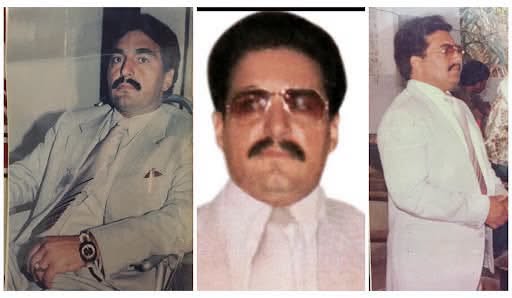
(By Satnam Singh Chahal | Punjab Outlook — Investigative Report)The conviction of a former Punjab Police officer in the 1992 disappearance of Sikh transporter Amrik Singh Sakri has brought renewed attention to one of the long-running cases involving alleged illegal detention and enforced disappearances during the militancy period in Punjab. After nearly 34 years of legal proceedings, a special CBI court in Mohali on November 11, 2026, convicted former Deputy Superintendent of Police Gurmeet Singh Randhawa in connection with Amrik Singh’s abduction.
Amrik Singh Sakri was a transporter whose disappearance became a decades-long struggle for his family. According to the account shared by journalist Kamaldeep Singh Brar, Amrik Singh was a prosperous businessman who owned a fleet of approximately 15 to 16 buses. However, this specific business detail requires independent documentary confirmation.
According to the CBI case, Amrik Singh was allegedly taken away by a Punjab Police team led by then-DSP Gurmeet Singh from Hotel Amaltas in Ludhiana on November 25, 1992, while attending a marriage function.
The incident became the beginning of a prolonged search for the missing transporter. His family continued seeking information about his whereabouts, but he was never traced.Amrik Singh’s son, Devinder Singh, submitted an affidavit alleging that his father had been abducted by Punjab Police. His wife, Paramjeet Kaur, subsequently pursued legal remedies before the Supreme Court.
On November 15, 1995, the Supreme Court intervened in the matter following a petition concerning Amrik Singh’s disappearance. The case subsequently became part of a wider investigation into allegations of illegal detention, disappearances and the disposal of unidentified bodies during the period of counter-insurgency operations in Punjab.
The family approached the authorities for answers, but the disappearance remained unresolved. Reports on the case also state that the Punjab government claimed Amrik Singh had died and submitted funeral-related advertisements as supporting material. The family disputed this claim.The Supreme Court-ordered investigation eventually led to the CBI registering a regular case on February 23, 2000.
The CBI filed its chargesheet on November 27, 2001, naming five police personnel: DSP Gurmeet Singh, DSP Parminderjit Singh, SHO Suba Singh, Sub-Inspector Surinder Singh and ASI Jaswant Singh.Charges were framed against the accused on April 15, 2004. However, the legal proceedings continued for years, with the trial facing substantial delays.Three of the accused police personnel Suba Singh, Surinder Singh and Jaswant Singh died during the prolonged proceedings. Consequently, the legal proceedings against them could not reach a final verdict.
In a significant development, the special CBI court in Mohali convicted former DSP Gurmeet Singh Randhawa under Sections 365 and 120-B of the Indian Penal Code, relating to kidnapping and criminal conspiracy.The court, however, acquitted co-accused DSP Parminderjit Singh, giving him the benefit of doubt.The sentence for Randhawa is scheduled to be pronounced on November 12, 2026. Therefore, the final punishment was not yet known at the time of this report.The conviction is an important judicial development, but it has not answered the most painful question confronting the family: what happened to Amrik Singh after he was taken away?
The Amrik Singh case raises serious questions about accountability in cases involving alleged custodial disappearances. How can a family be expected to wait for more than three decades to obtain a judicial finding? Why did the proceedings take so long? What happened to the missing person, and why has his fate not been established?
The deaths of three accused officers before the conclusion of the trial and the acquittal of another accused also demonstrate how prolonged judicial proceedings can limit the possibility of complete accountability.The conviction of Randhawa establishes criminal responsibility in relation to the kidnapping and conspiracy charges. However, it does not establish the ultimate fate of Amrik Singh or prove who may have caused his death.
The case also brings back memories of human-rights activist Jaswant Singh Khalra, who exposed alleged illegal cremations of unidentified bodies in Punjab and was abducted and murdered in 1995. Several police personnel were convicted in the Khalra murder case.The two cases are legally distinct and should not be treated as identical. Nevertheless, both underline the importance of independent investigations, judicial accountability and the right of families to know the truth about missing loved ones.
The central issue is not simply whether one former police officer will receive a prison sentence. It is whether the family of Amrik Singh will ever learn the truth about his disappearance.For his family, 34 years of waiting have not brought back their loved one. A conviction may provide a measure of justice, but justice remains incomplete until the truth about Amrik Singh’s fate is established.
Disclaimer: This article and accompanying images are for informational and illustrative purposes only. Some visuals may be AI-generated or digitally enhanced and may not depict actual events or persons.Views expressed are based on publicly available information and analysis