
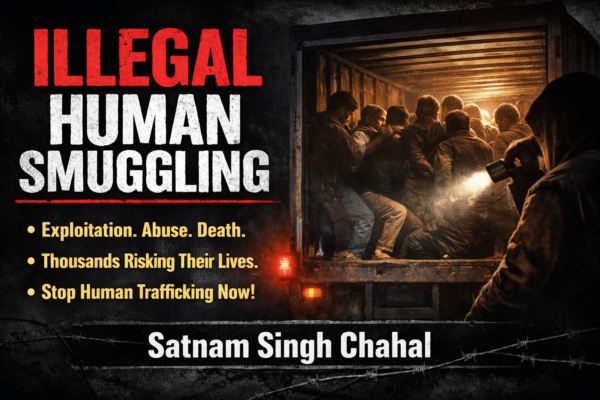
 Rising Donkey Routes, Deportations, and Illegal Immigration Networks: An In-Depth Investigation into Human Smuggling from South Asia. English Version. Introduction. The phenomenon of illegal immigration through dangerous routes, colloquially known as “donkey routes” (ਡੰਕੀ ਰੂਟ), has become a pressing humanitarian and geopolitical crisis. Thousands of young people from Punjab, Haryana, Gujarat, and other regions of South Asia risk their lives annually, attempting to reach Western countries through treacherous, unauthorised pathways orchestrated by sophisticated human smuggling networks. This crisis represents not just a law enforcement challenge, but a profound tragedy rooted in economic desperation, social pressures, and the exploitation of vulnerable communities by criminal enterprises that profit from human suffering.
Understanding Donkey routes refers to illegal immigration pathways involving multiple countries, forged documents, and dangerous journeys across continents. The term “donkey” suggests a slow, arduous journey with numerous stops, much like the plodding pace of the animal itself. These routes have evolved over decades, constantly adapting to enforcement measures and changing geopolitical circumstances. They typically involve multiple transit countries across several continents, fraudulent visas and travel documents, dangerous land, sea, and air travel segments, systematic exploitation by human smuggling networks, and costs ranging from $50,000 to $150,000 per person.
The routes have become increasingly sophisticated, utilising modern technology, encrypted communications, and complex financial systems to evade detection and prosecution. The most common pathways have developed based on visa policies, border enforcement capabilities, and existing smuggling infrastructure. The Central American Route typically runs from India or Pakistan through the UAE or Turkey, then to Ecuador or Nicaragua (countries with more liberal visa policies), followed by a treacherous overland journey through Central America to the US-Mexico border. The European Route usually goes from India through the UAE or Turkey to Serbia or Romania, then onward to Italy or France, with many attempting to reach the United Kingdom. The African Route involves travel from India to Kenya or Uganda, then through Libya or Algeria, culminating in dangerous Mediterranean crossings to reach Europe.
The Eastern European Route has emerged more recently, going from India through Russia to the Belarus-Poland border region, exploiting tensions and gaps in European Union border security. Each of these routes presents unique dangers, from desert crossings to sea voyages in overcrowded vessels, from freezing mountain passes to suffocating container shipments.The Human CostThe pursuit of better opportunities through these illegal routes has resulted in numerous documented tragedies that have shocked communities and made international headlines. In January 2022, the Patel family from Gujarat Jagdish Patel, his wife Vaishaliben, and their children Vihangi (11) and Dharmik (3)—froze to death attempting to cross from Canada into the United States during a severe blizzard in Manitoba. Their bodies were found in a field just meters from the border, a heart-wrenching testament to the desperation that drives people to risk everything. Hundreds of South Asian migrants have perished in overcrowded boats attempting to reach Europe across the Mediterranean Sea, often drowning when vessels capsize or when unscrupulous smugglers abandon them at sea. Numerous migrants have died in harsh desert conditions along the US-Mexico border, succumbing to dehydration, heat stroke, or exposure.
There have been multiple horrific incidents of migrants dying in shipping containers due to lack of oxygen, including cases where dozens were found dead after being sealed inside for days without adequate ventilation or water.Beyond these fatal incidents, survivors of donkey routes often report severe physical and psychological trauma that affects them for years or even the rest of their lives. Physical injuries from dangerous travel conditions are common, including broken bones from falls, injuries from vehicle accidents, and damage from exposure to extreme weather. The psychological trauma from violence and exploitation runs deep, with many migrants witnessing or experiencing beatings, threats, and various forms of abuse. Sexual assault is particularly prevalent, affecting women and children who are vulnerable to predatory smugglers and fellow travelers. Malnutrition and untreated medical conditions are endemic during these journeys, as migrants often go days without adequate food or water and receive no medical care for injuries or illnesses.
Post-traumatic stress disorder affects a significant percentage of survivors, manifesting in nightmares, anxiety, depression, and difficulty trusting others or forming normal relationships after their ordeal.The Smuggling NetworksHuman smuggling has evolved from small-scale operations into a multi-billion dollar transnational criminal enterprise with sophisticated organizational structures rivaling legitimate international businesses. These networks are highly organized, with clear hierarchies and specialized roles that allow them to move people across multiple countries while evading law enforcement. At the top are masterminds and financiers, often based in source countries like India or Pakistan, who coordinate overall operations, manage finances, and rarely expose themselves to arrest by maintaining distance from actual smuggling activities. Document forgers are specialists in creating fake passports, visas, and identity documents that are increasingly sophisticated and difficult to detect.
Transit coordinators arrange transportation and accommodation in various transit countries, maintaining safe houses and coordinating with local contacts. Ground agents facilitate actual border crossings, guide migrants through dangerous terrain, and often serve as the direct interface with the people being smuggled. Safe house operators provide temporary shelter during the journey, though conditions in these locations are often overcrowded, unsanitary, and exploitative.The financial mechanisms employed by these networks are complex and designed to avoid detection while ensuring payment. Payments are typically made in installments, with initial deposits paid before departure and subsequent payments required at various stages of the journey, creating a form of debt bondage. The extensive use of hawala and informal money transfer systems allows smugglers to move funds across borders without leaving traditional banking records. Families often provide collateral in the form of property deeds, jewelry, or other valuables, which smugglers hold until full payment is received.
This creates enormous pressure on families and can lead to exploitation, with smugglers demanding additional payments by threatening to abandon migrants mid-journey or to seize family property. The fees charged vary widely depending on the destination and route, typically ranging from $50,000 to $150,000, with routes to the United States generally commanding the highest prices. For context, this represents multiple years or even decades of income for average rural families in Punjab or Gujarat.Modern smuggling networks utilize technology extensively to coordinate operations and evade law enforcement. Encrypted messaging apps like WhatsApp, Telegram, and Signal are used for coordination between smugglers and communication with migrants’ families. Social media platforms are exploited for advertising services and recruiting new clients, with smugglers often posting fake success stories and images of prosperous life abroad. GPS tracking devices and smartphone navigation apps help guide migrants through unfamiliar and dangerous terrain.
Some networks have even begun using drones for border surveillance, identifying patrol patterns and weak points in border security. There are reports of cryptocurrency being used for some financial transactions, though traditional hawala systems remain more common. This technological sophistication makes these networks increasingly difficult to dismantle, as they can quickly adapt communications methods and routes when law enforcement closes in.Root Causes and Push FactorsUnderstanding why thousands of people risk everything on these dangerous journeys requires examining the complex web of economic, social, cultural, and political factors that create such desperate circumstances. Economic desperation stands as the primary driver, with limited employment opportunities in rural areas leaving young people with few options for supporting themselves and their families. Agricultural distress and mounting farmer debt have created a generation that sees no future in farming, the traditional occupation of their families. The desire for better living standards is not mere materialism but often a matter of survival and dignity, as families struggle to meet basic needs.
There is intense pressure to support extended families financially, with the expectation that one successful family member will lift everyone out of poverty. The desire to escape poverty cycles that have persisted for generations becomes overwhelming, leading people to take extraordinary risks.Social and cultural factors create powerful additional pressures that compound economic desperation. In Punjab and Gujarat particularly, there exists what can only be described as an “emigration culture” where going abroad is seen as the ultimate marker of success and ambition. Social status becomes deeply associated with foreign residence, with families of emigrants gaining prestige in their communities regardless of the actual conditions of their relatives abroad. Success stories from earlier emigrants, often significantly exaggerated or omitting the hardships and exploitation endured, create unrealistic expectations about life in Western countries. Family pressure to settle abroad can be intense, particularly for young men who are expected to bring prosperity and status to their families. The display of wealth by returnees or those sending money home creates powerful aspirational pressure, as communities see new houses, expensive cars, and lavish weddings funded by foreign earnings, without understanding the full picture of debt, exploitation, or years of hardship that often lie behind such displays.
Political and institutional factors create additional push factors by making legal immigration nearly impossible for most people while failing to address underlying economic problems. Bureaucratic challenges in legal immigration systems mean that even qualified candidates face years of waiting and uncertain outcomes. Long waiting periods for legal visas to countries like the United States or Canada can stretch to decades for certain categories, making illegal routes seem like the only viable option for people who cannot wait years for their opportunity. Corruption in visa processing systems creates additional barriers and costs, with legitimate applicants sometimes losing money to fraudulent consultants or facing arbitrary rejections. The lack of comprehensive rural development policies means that villages continue to lose young people without developing alternative sources of economic vitality.
Inadequate youth employment programs fail to provide meaningful opportunities for the millions of young people entering the workforce each year, leaving them vulnerable to the promises of smugglers.Deportations: The Return JourneyRecent years have seen sharp increases in deportations of illegal immigrants, including many who traveled via donkey routes, creating a reverse crisis as deported individuals return to communities unprepared to support them. The United States has deported thousands of Indian nationals annually in recent years, with numbers fluctuating based on policy changes but generally trending upward. Canada has significantly increased deportations due to growing numbers of asylum claim rejections, particularly affecting Punjabi nationals who claimed asylum after entering on student or visitor visas. The European Union has conducted mass deportations following failed asylum claims, with charter flights returning hundreds of South Asian nationals at once. Gulf countries, while not traditional destinations for donkey routes, have also increased deportations for visa violations and unemployment as their economies have contracted, adding to the overall numbers of returning migrants.
The deportation process itself can be lengthy and traumatic, adding another layer of suffering to an already difficult situation. Migrants who are apprehended are first held in detention facilities, which are often overcrowded and offer minimal services. Legal proceedings follow, with immigration court hearings determining whether individuals can remain or must be deported, though in many cases the outcome is predetermined given the nature of illegal entry. Documentation becomes a critical issue, as nationality and identity must be verified before someone can be deported, and some migrants destroy their documents to delay this process. Repatriation involves deportation flights to the country of origin, often with migrants shackled and treated as criminals. Reception at home country airports involves processing by immigration authorities, with Indian officials documenting the return and in some cases, investigating the circumstances of illegal emigration.Post-deportation challenges often prove even more severe than the dangers of the journey itself, as deported individuals face profound social, economic, and psychological difficulties. Severe social stigma and shame attach to deportation in communities where emigration is valorized and return is seen as failure. Financial ruin is nearly universal, as families have typically mortgaged property, sold valuables, and taken on crushing debt to finance the journey, with no way to repay once the individual returns empty-handed. Mental health issues including severe depression, anxiety, and PTSD are common, often going untreated due to stigma and lack of mental health services.
Difficulty reintegrating into communities is profound, as deported individuals often face ostracism and are reminded constantly of their failure. Future visa restrictions mean that deportation essentially eliminates any chance of legal immigration in the future, closing off legitimate pathways. The breakdown of family relationships is common, with marriages ending and parents disowning children they blame for financial ruin. In extreme cases, the shame and debt lead to suicides, with multiple documented cases of deported individuals taking their own lives shortly after returning home.Government ResponsesGovernments at various levels have implemented responses to the donkey route crisis, though these efforts have had mixed success and often fail to address root causes. In India, the central and state governments have launched various initiatives, including awareness campaigns warning against illegal migration through advertisements, school programs, and community meetings. The Punjab government’s “Look Before You Leap” initiative specifically targets young people considering illegal immigration, though its effectiveness has been questioned. Registration requirements for immigration agents aim to eliminate fraudulent consultants, though enforcement remains inconsistent.
Prosecution of human smugglers has increased, with several high-profile cases resulting in convictions, though the scale of the problem far exceeds law enforcement capacity. Helplines for families of missing migrants provide some support for information and assistance. Diplomatic engagement with destination countries has increased, with India working to streamline deportation procedures while also advocating for more legal immigration opportunities.Transit countries have taken various actions, though their responses are often complicated by their own immigration challenges and limited resources. Enhanced border security measures aim to prevent migrants from entering or transiting through their territories. Cooperation agreements for deportations allow for smoother repatriation of apprehended migrants. Periodic crackdowns on smuggling networks yield arrests and prosecutions, though these rarely dismantle entire operations. Visa restrictions and enhanced screening have made some routes more difficult, though smugglers typically adapt by finding new pathways.Destination countries have generally responded with stricter enforcement rather than expanded legal pathways, though approaches vary. Stricter asylum processing aims to distinguish between genuine refugees and economic migrants, though this often results in legitimate refugees being denied protection. Enhanced border enforcement includes additional personnel, technology, and physical barriers to prevent illegal entry. Detention and deportation procedures have been streamlined to remove people more quickly.
Penalties for employers of undocumented workers aim to reduce the pull factor of available work, though enforcement is often lax. Some cooperation with source countries on development and legal migration has occurred, though this remains limited relative to the scale of enforcement efforts.Legal Immigration AlternativesUnderstanding legal pathways to immigration is crucial for providing realistic alternatives to dangerous illegal routes, though these pathways have significant limitations that must be honestly acknowledged. Skilled worker programs offer opportunities for those with in-demand qualifications, including Canada’s Express Entry system which uses a points-based approach favoring young, educated professionals with language skills and work experience, the United States’ H-1B visa program for specialty occupations though subject to annual quotas that are typically oversubscribed within days, and the United Kingdom’s Skilled Worker Visa which requires a job offer from an approved sponsor and meeting salary thresholds. Student visas provide another pathway, with genuine study programs potentially leading to post-graduation work permits and eventual permanent residence, though this requires significant financial resources for tuition and living expenses, strong academic credentials, and proof of intent to study rather than immigrate.
Family sponsorship programs allow citizens and permanent residents to sponsor relatives, though wait times can be extremely long for certain categories and relationships, and financial requirements can be substantial. Business and investment visas cater to entrepreneurs with significant capital, typically requiring hundreds of thousands of dollars in investment and business plans that create jobs. Temporary work programs for seasonal and agricultural workers offer limited opportunities, though these are typically short-term and don’t lead to permanent residence.The challenges inherent in these legal routes help explain why illegal immigration remains attractive despite its dangers. High qualification requirements exclude most rural youth who lack advanced education or specialized skills. Financial barriers are substantial, with application fees, proof of funds requirements, education costs for student routes, and investment capital needs for business visas totaling amounts far beyond what most families can afford legitimately.
Long processing times mean years of waiting with no guarantee of approval, during which applicants’ lives are on hold. Limited quotas mean that even qualified applicants may be rejected simply due to numbers, with some visa categories having decades-long backlogs. Language proficiency requirements in English or French present barriers for those without access to quality education. Age restrictions in many programs discriminate against older applicants, even those with valuable skills and experience.Case StudiesExamining individual cases provides crucial insight into both the human dimension of this crisis and possible pathways forward. Rajinder Singh from Jalandhar represents a relatively positive outcome from a deportation situation, though even his story involves significant suffering. After being deported from the United States in 2019 following rejection of his asylum claim, he returned to Punjab facing severe depression, social ostracism, and crushing debt. With support from a local NGO that provided counseling and small business training, he was able to start a small agricultural equipment rental business using microfinance. Over time, he not only recovered mentally and financially but became an advocate warning youth about the realities of illegal migration.
He now runs awareness programs in villages throughout the district, sharing his story honestly and helping others understand the true risks and costs of donkey routes. His transformation demonstrates that recovery is possible with appropriate support systems, though his case remains exceptional rather than typical.The ongoing tragedy of the Kuldeep Singh case from Hoshiarpur illustrates the more common reality faced by families. In 2020, Kuldeep’s family paid agents ₹70 lakhs (approximately $85,000) for his journey to the United States, mortgaging their agricultural land and borrowing from relatives. Kuldeep was last heard from in early 2021, calling from Nicaragua to say he was about to begin the overland journey through Central America. Since then, the family has received no confirmed information about his whereabouts. They have filed reports with police and the Ministry of External Affairs, but searches have yielded nothing. The agents initially claimed he had been detained in Mexico and demanded an additional ₹20 lakhs for his release, which the family could not pay.
Other agents contacted later claimed different stories, possibly attempting to extract more money. The family has received messages from people claiming to be Kuldeep, asking for money, though they cannot verify if these are really from him or from scammers exploiting their desperation. The uncertainty is perhaps worse than confirmed bad news, as the family lives in constant anxiety, unable to mourn or move forward. The mortgaged land faces foreclosure, the family’s savings are gone, and relationships have become strained as relatives who lent money seek repayment. This case represents thousands of similar situations where families are left in limbo, not knowing if their loved ones are alive or dead, imprisoned or working illegally, planning to try again or given up entirely.The Role of Media and Social InfluenceThe role of media, both traditional and social, in perpetuating or combating the donkey route crisis cannot be overstated. Misleading narratives flourish on social media platforms, with success stories being amplified while failures and tragedies are hidden.
Social media posts showing only the glamorous aspects of life abroad new cars, big houses, fancy restaurants—create deeply misleading impressions of what awaits migrants. Many of these posts are carefully curated to hide the reality of low-wage work, poor living conditions, constant fear of deportation, and years of hardship. The glamorization of foreign lifestyles in films, television shows, and social media creates unrealistic expectations, particularly among youth who have no direct experience of life abroad. Agents and smugglers actively use fake testimonials and doctored images to recruit clients, creating false social media profiles of supposed successful migrants who in reality never existed or had very different experiences than portrayed. Influencers and community leaders sometimes promote migration without adequately disclosing risks, either because they profit from referrals to agents or because they themselves are trapped in a cycle of maintaining the appearance of success abroad. WhatsApp groups dedicated to immigration spread misinformation rapidly, with rumors and false promises circulating widely before they can be debunked.However, there has been a positive shift toward more responsible reporting by mainstream media organizations and some civil society groups. Journalists have increasingly highlighted risks and tragedies, bringing attention to deaths and deportations that might otherwise have been hidden. Investigative reporting has exposed smuggling networks, leading to arrests and prosecutions. Media outlets have begun sharing deportee experiences more extensively, allowing returned migrants to tell their stories honestly without judgment. The promotion of legal alternatives through informational programming helps people understand realistic pathways.
Efforts to counter misinformation include fact-checking social media posts and providing accurate information through trusted community channels. Documentary films and long-form journalism have explored the crisis in depth, creating greater public awareness and sympathy for those affected. This more balanced media landscape is slowly beginning to change perceptions, though the glamorous portrayals of foreign life remain powerful and pervasive.Moving Forward: Solutions and RecommendationsAddressing the donkey route crisis requires coordinated action at multiple levels, from individual decision-making to international policy coordination. For individuals and families considering migration, several concrete steps can reduce risk and improve outcomes. Verifying agent credentials through official channels before engaging their services is essential, as many fraudulent consultants operate with no legitimate authorization. Understanding legal immigration pathways thoroughly, including realistic assessments of eligibility and chances of success, helps people make informed decisions rather than relying on false promises. Seeking counseling before making major decisions provides objective guidance and helps people think through alternatives.
Reporting suspicious agents to authorities helps protect others from becoming victims. Connecting with returnees and getting realistic information about foreign living conditions provides crucial ground truth that counters misleading social media narratives. Building skills and education that could support legal immigration in the future represents investment in realistic pathways rather than dangerous shortcuts.For communities, collective action can create support systems and change harmful social dynamics. Creating support systems for deported individuals through community organizations, religious institutions, and local government programs helps people recover and reintegrate rather than facing isolation and despair. Reducing social stigma around deportation requires conscious efforts to treat returned migrants with dignity and recognize that the system of illegal immigration exploits vulnerable people rather than reflecting individual moral failure. Promoting local economic opportunities through cooperative enterprises, skill development programs, and support for small businesses can create viable alternatives to emigration. Sharing authentic information about foreign living conditions through community meetings, school programs, and testimonials from both successful legal immigrants and deported individuals helps counter misleading narratives. Supporting mental health initiatives recognizes the psychological impact of both the temptation to migrate and the experience of deportation or family separation.
For governments, more comprehensive policy responses are essential beyond enforcement alone. Expanding legal migration opportunities through increased quotas, new temporary worker programs, and streamlined processing for qualified applicants provides alternatives that reduce demand for illegal routes. Improving rural employment programs through agricultural reforms, industrial development, and support for rural enterprises addresses root economic causes. Strengthening prosecution of smugglers while protecting the rights of migrants themselves ensures that criminals face consequences without further victimizing those they exploit. Enhancing international cooperation through information sharing, joint investigations, and coordinated enforcement makes it harder for smuggling networks to operate across borders. Providing better support for deportees through counseling services, economic rehabilitation programs, and protection from predatory lenders helps people recover and prevents desperate attempts at illegal re-migration. Most fundamentally, addressing root economic causes through comprehensive rural development, agricultural reforms, education improvement, and job creation targets the desperation that drives illegal immigration in the first place.For the international community, addressing this crisis requires recognizing shared responsibility and taking coordinated action.
Coordinated action against smuggling networks through joint task forces, shared intelligence, and cross-border prosecutions can be more effective than individual country efforts. Fair and humane asylum processes that distinguish genuine refugees from economic migrants while treating all with dignity protect vulnerable people without creating incentives for abuse of asylum systems. Development assistance to source regions helps address the economic conditions that drive emigration, with targeted programs in education, agriculture, and economic development creating alternatives to migration. Information sharing between countries about trends, smuggling methods, and best practices improves everyone’s response. Protection of migrants’ human rights throughout the process, including during detention and deportation, is both a moral imperative and a practical necessity for maintaining international cooperation and domestic support for necessary enforcement measures.ConclusionThe crisis of illegal immigration through donkey routes represents a complex intersection of economic desperation, social aspiration, criminal exploitation, and policy failures that spans continents and affects millions of lives.
While the dream of a better life abroad is deeply understandable and in many cases reflects legitimate aspirations for dignity and opportunity, the reality of these dangerous journeys too often ends in tragedy, deportation, or a life of fear and exploitation. The young people risking their lives on these routes are not criminals or fools—they are desperate individuals making impossible choices in the face of limited alternatives, often responding to family and social pressures that leave them feeling they have no other option. The smuggling networks that facilitate these journeys are sophisticated criminal enterprises that profit enormously from human suffering, exploiting the vulnerable while facing minimal consequences for their actions. The families left behind, whether awaiting news, mourning losses, or struggling with debt and returned relatives, bear enormous burdens that extend across generations.Real change requires coordinated efforts across multiple domains and sustained commitment over years and decades, not quick fixes or simple solutions. Economic development in source regions must address the fundamental conditions that make emigration seem necessary, creating viable livelihoods that allow people to build dignified lives without leaving their communities. Accessible legal migration pathways must expand to accommodate at least some portion of the demand for international movement, recognizing that globalization and information flows create legitimate desires for mobility that cannot simply be wished away.
Effective prosecution of smugglers requires international cooperation, adequate resources, and focus on dismantling entire networks rather than just arresting low-level operators. Humane treatment of migrants, even those who have violated immigration laws, is essential both for moral reasons and for practical purposes of maintaining international cooperation and gathering intelligence about smuggling operations.Most importantly, addressing this crisis requires honest conversations within communities about the risks, realities, and alternatives to illegal migration. These conversations must acknowledge the legitimate grievances and aspirations driving emigration while providing accurate information about the actual experiences of migrants and the real consequences of illegal routes. They must challenge social dynamics that valorize foreign residence regardless of the costs and that stigmatize returned migrants as failures. They must recognize that building a good life at home is not a lesser aspiration than seeking opportunity abroad, and that communities have value and potential that deserves investment and commitment. The young people risking their lives on donkey routes deserve better options than choosing between poverty at home or death along a smuggling route. Creating those options is not just a policy challenge or an enforcement matter—it is a moral imperative that requires the best efforts of governments, communities, civil society organizations, and international institutions working together toward comprehensive solutions that address root causes while protecting human dignity and human rights.