
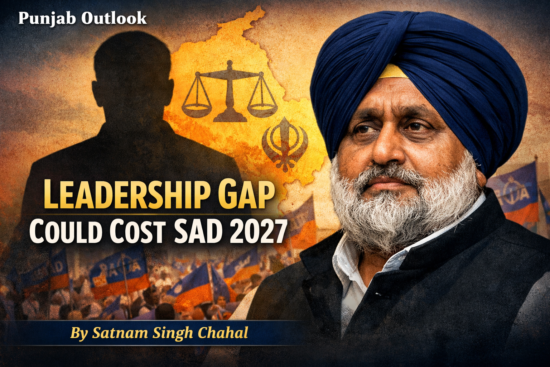
 The Shiromani Akali Dal (SAD), once a dominant force in Punjab politics, is facing an unprecedented leadership challenge ahead of the 2027 Vidhan Sabha elections. The party’s over-reliance on Sukhbir Singh Badal has left it without a credible second-in-command, creating a vacuum that could weaken its organisational strength and electoral prospects.
For decades, SAD’s strategies and decisions have revolved around Badal. Even brief pauses in his leadership exposed the party’s inability to present alternative leadership, highlighting the absence of a strong secondary tier. Political experts warn that such concentration of authority makes the party vulnerable to internal dissent, factionalism, and strategic drift.
Internal divisions have already impacted the party’s performance in recent elections. Local leaders, operating independently, have weakened grassroots campaigns and morale among volunteers. Without a recognised leadership bench, disputes remain unresolved, and the party struggles to coordinate a unified strategy.
Alliance uncertainties further complicate matters. SAD’s previous alliance with the BJP, which expanded its voter base, is unlikely to be revived for 2027. Without a capable second-in-command to manage negotiations and articulate a coherent plan, the party risks sending mixed signals to voters and losing credibility.
Political analysts emphasise that parties lacking leadership depth often struggle with campaign coordination, voter perception, and talent retention. SAD faces similar risks, and unless it develops a broader leadership structure and resolves internal fractures, it could face significant setbacks in the upcoming assembly elections.
The absence of a strong second-in-command not only threatens organisational efficiency but also undermines voter confidence. With 2027 approaching, SAD must address these leadership gaps to avoid further erosion of its influence in Punjab politics.