
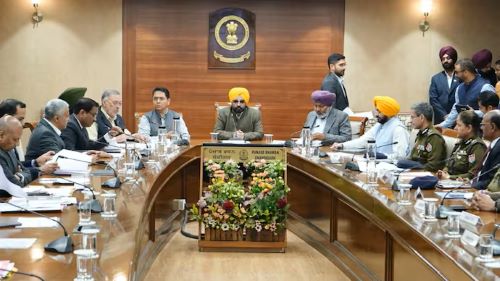
In a parliamentary democracy, the rule of collective responsibility is not optional it is the backbone of cabinet functioning. Every minister, including the Chief Minister, is jointly responsible for the government’s actions. When a policy succeeds, the entire cabinet shares the credit. When a policy fails, the entire cabinet shares the blame. This principle ensures that governance is not reduced to selective accountability or political convenience.
That is why the recent development in Punjab has triggered a wave of questions. The resignation of Transport Minister Laljit Singh Bhullar has been accepted, but the Chief Minister Bhagwant Mann, who heads the same cabinet and is ultimately responsible for every department, has not submitted his resignation to the Governor. This selective acceptance of responsibility raises doubts about whether the constitutional principle is being applied sincerely or strategically.
To understand the contradiction, it helps to look at how collective responsibility has worked in other situations. When the Uttar Pradesh government faced criticism over law‑and‑order issues, several ministers were reshuffled, but the Chief Minister publicly accepted moral responsibility for the lapses. In Maharashtra, when a major irrigation scam surfaced years ago, the Deputy Chief Minister resigned even though the allegations were not directly against him because he headed the department and was accountable for its functioning. These examples show that leadership is expected to take responsibility, not deflect it.
Even at the national level, the principle has been upheld. When the Railway Ministry faced public outrage after a major train accident, the Railway Minister resigned despite not being personally involved in the technical failure. The logic was simple: the minister is responsible for the department, and the government is responsible as a whole. No one argued that only a junior official should be blamed while the leadership remained untouched.
Against this backdrop, Punjab’s situation appears inconsistent. If the government believes that something went wrong serious enough to demand Bhullar’s resignation, then the Chief Minister — who supervises all ministers and approves all major decisions cannot logically remain unaffected. The cabinet is a single unit. If one part collapses, the entire structure is shaken. Accepting one resignation while shielding the top leadership creates the impression that accountability is being selectively applied.
The public deserves clarity. Was Bhullar solely responsible for the issues that led to his resignation? If yes, the government must explain how a cabinet governed by collective responsibility can isolate blame to one individual. If not, then why has the Chief Minister not taken moral responsibility, as expected in parliamentary ethics? Selective accountability weakens democratic norms and raises doubts about transparency in governance.
Ultimately, the principle is straightforward: collective responsibility cannot be used like a switch turned on when convenient, turned off when uncomfortable. Either the cabinet stands together, or it answers together. Anything else undermines the very foundation of parliamentary democracy.