
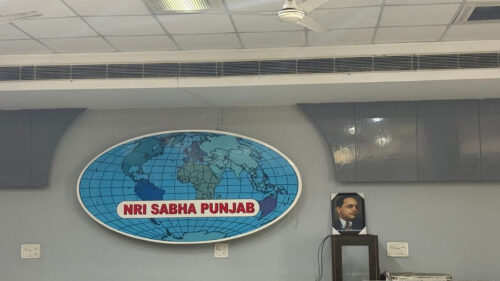
As The Print captioned it, “What really ails Punjab NRI Sabha—it’s a private society pretending to be a State agency.” That formulation captures the article’s central argument with precision. The Sabha’s decline is not merely the result of poor administration, vacant posts, disputed elections, or opaque functioning. Its real weakness is structural.
Why It Fails
The article explains that the Punjab NRI Sabha is not a statutory body or government department, but only a society registered under the Societies Registration Act, 1860. Though politically adorned with ceremonial roles for the Chief Minister and the NRI Affairs Minister, it has no legal authority, no enforcement power, and no binding jurisdiction to secure justice for NRIs facing land disputes, encroachments, or bureaucratic delay.
The Larger Lesson
Administrative tinkering has not solved the problem; it has only shifted bottlenecks from one level to another. The article therefore suggests that only a proper statutory framework, such as an NRI Affairs Act and a legally empowered commission, can provide meaningful relief. Yet that raises a difficult political question: can the state justify creating a privileged redressal structure for absentee landowners when resident citizens suffer similar hardships?
Read it, reflect on it, and respond to its implications. Above all, circulate it among members of the diaspora and other informed readers who may find it useful, for the issues it raises go well beyond one institution and touch the larger question of how Punjab engages with its overseas community through law, policy, and justice.