
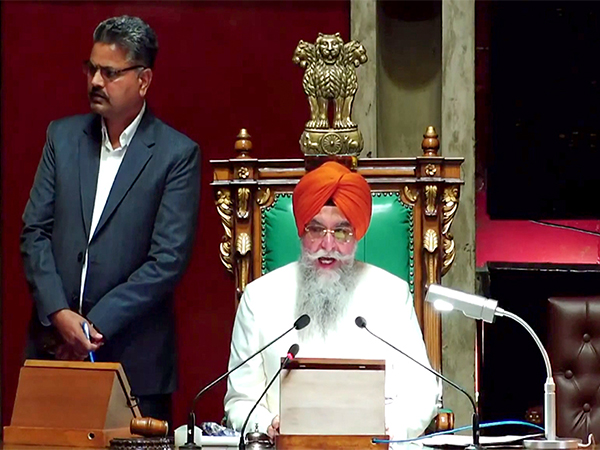
 When the Aam Aadmi Party swept to power in Punjab in March 2022, winning a historic 92 of 117 assembly seats, it arrived with soaring promises of transparent governance, accountable legislature, and longer assembly sessions. The people of Punjab believed them. Three years on, the record of the Punjab Vidhan Sabha tells a very different story — one of rushed sittings, skipped Question Hours, politically-motivated special sessions, and a legislature that meets for less time than it takes to complete a harvest cycle. The facts are on the record. They are damning.
Let us begin with the arithmetic. During their time in opposition, AAP had consistently advocated for longer sessions, yet the current government managed only 39 sittings in its two and a half years falling short of the recommended 40 annual sittings as per legislative norms.
Forty sittings per year is the bare minimum standard for a functioning state legislature. The AAP government which once thundered from the opposition benches demanding more legislative time, longer debates, greater accountability could not even deliver 40 sittings in thirty months combined. The people of Punjab elected 117 representatives to sit in that chamber and speak for them. Those representatives have barely been allowed to sit at all.
The Budget Session of 2024 is perhaps the most shocking single exhibit in this catalogue of failure. The Budget is the most important session of any assembly year it is where the government’s spending plans are scrutinised, where ministers must defend every rupee, where the opposition forces accountability on behalf of the public. Despite initial plans for a 10-day session from March 1 to 15, the session ended prematurely on the seventh day, with Tuesday’s proceedings wrapping up in under two hours. The customary one-hour Question Hour was wound up in less than half an hour. The sole legislative action undertaken by the Government during this truncated session was the passage of the Punjab State Election Commission Amendment Bill, 2024 passed unanimously within a minute. The Pioneer A ten-day session cut to seven days. The Question Hour that sacred instrument of democratic accountability dispatched in twenty-seven minutes. One bill passed in sixty seconds. This is not a legislature. This is a formality in a hurry to go home.
The Question Hour matters enormously and its routine destruction in the Punjab Vidhan Sabha must be understood in full context. The first hour of every parliamentary sitting is slotted for the Question Hour. During this one hour, Members of Parliament and Members of Legislative Assembly ask questions to ministers and hold them accountable for the functioning of their ministries. Drishti IAS It is the one mechanism that forces a minister to stand up, face the House, and answer for what their department has or has not done. When a government consistently truncates it, avoids it, or eliminates it entirely from special sessions, it is not an administrative oversight. It is a deliberate choice to escape accountability.
And the pattern of special sessions without Question Hours is a thread that runs through this government’s entire tenure. As the special session on the BBMB water rights issue resumed, Speaker Kultar Sandhwan plainly declared there would be no Question Hour, adding that since it was a special session there would be no Zero Hour either. The Tribune So in a session about water rights — one of the most existential issues for Punjab’s farmers
MLAs could neither formally question ministers nor raise urgent constituency matters in Zero Hour. The House met. Speeches were made. And the tools of accountability were locked away in a cupboard.The special session on floods in September 2025 followed the exact same template. Scheduled from September 26 to September 29, the session did not include a Question Hour, but a Zero Hour would allow MLAs to raise their issues. A key focus of the discussions was to be post-flood rehabilitation efforts. PTC News Twenty-three districts of Punjab had been ravaged. Fifty-seven people had died. Nearly four lakh people were displaced. And the government called a special session on the catastrophe but made sure ministers would not have to answer a single formal question about it. The floods came and went. The session came and went. The Question Hour stayed home.
By December 2025, a new special session was called this time on the replacement of MGNREGA with the Central Government’s VB-G RAM G scheme. Chief Minister Bhagwant Mann announced that a special session of the Punjab Vidhan Sabha would be convened to raise the voice of Punjabis against what he called the BJP government’s attempt to destroy the livelihoods of the poor. The Tribune The intention sounded noble. But the execution revealed the same disorder that has defined this House under AAP. The session was marked by drama as Congress MLA Sukhpal Singh Khaira was evicted for interrupting Chief Minister Bhagwant Mann’s address, and significant discord broke out among legislators. Devdiscourse A session meant to speak for the rural poor descended into chaos, evictions, and political point-scoring.
The special session on the BBMB and Punjab’s water rights in July 2025 was similarly consumed by political theatre rather than substantive legislative work. Finance Minister Harpal Cheema told the opposition: “We extended the session because you said you wanted to talk. Is this what you want to talk about?” The Tribune It is a revealing question — because it exposes the fundamental contradiction at the heart of this government’s legislative culture. Sessions are called, and then when opposition members attempt to use those sessions to raise the very issues of law, order, agriculture, and governance that their constituents are suffering, they are met with impatience, disruptions, and walkouts.
The gap between AAP in opposition and AAP in government is not merely ironic — it is a betrayal of the mandate the party was given. Leader of Opposition Partap Singh Bajwa criticized the government for convening a mere two-day session, arguing that a state grappling with multiple crises needed more extensive legislative deliberations. “It is disgraceful that after skipping the winter session entirely, the Government has called for this mere formality of a two-day session. This is an insult to the democratic process. Punjab is in a crisis be it illegal mining, lawlessness, or broken promises but this government seems disinterested in governance,” Bajwa said. Daily Pioneer After skipping the winter session entirely, the AAP government offered Punjab a two-day sitting as a consolation. For a province facing illegal mining mafias, a deteriorating law and order situation, farmer distress, school vacancies, and record drug abuse, two days is not governance — it is theatre.
The session which came after the government skipped the winter session saw intense deliberations on crucial matters ranging from education, renewable energy, and health infrastructure to law and order concerns. Amid these discussions, the absence of Chief Minister Bhagwant Mann raised eyebrows, with opposition leaders questioning his non-participation in such a legislative sitting. Daily Pioneer The Chief Minister of Punjab the head of the government that summoned the session was absent from it. There is perhaps no more powerful symbol of how seriously this government takes its own legislature.
Meanwhile, Punjab’s real problems have been compounding outside the walls of the Vidhan Bhavan in Chandigarh. Illegal sand mining continues to plunder river beds. Bajwa targeted the AAP Government for failing to curb illegal mining, which he alleged was flourishing under the administration’s watch, with mafias plundering Punjab’s natural resources with impunity. Daily Pioneer Schools across the state remain without adequate headmasters, a crisis that the opposition raised but the government deflected. Roads in constituencies like Derabassi, already strained by the farmers’ protest at the Shambhu border, crumble under traffic while ministers wait for NABARD loans to begin repairs. Drug abuse continues to consume a generation of young Punjabis. And yet the legislature that exists to address all of this can barely fill a calendar month across a full year of sittings.
The sharpest indictment of all came not from any opposition member but from the government’s own Finance Minister. As the Question Hour wrapped up in just 27 minutes during the Budget Session, Finance Minister Harpal Singh Cheema expressed his discontent over absent and latecomer legislators, especially those whose questions had been listed. He demanded that a panel be constituted to ensure that MLAs whose questions are listed remain present and arrive on time. The Pioneer This is the state of the Punjab Vidhan Sabha under AAP. The Question Hour is so irrelevant, so routinely truncated, and so poorly attended that the Finance Minister himself has to beg his own members to show up for it. The chamber that was promised to be the most accountable legislature in Punjab’s history cannot even keep its own members in their seats.
What has all of this cost? Every session of the Punjab Vidhan Sabha regardless of whether it produces meaningful legislation or merely resolutions and political speeches consumes public money. Security arrangements, staff costs, administrative machinery, transportation, and logistics all run on the taxpayer’s rupee. Special sessions called not to legislate but to pass resolutions against the Central Government, to address floods without allowing questions about the flood response, or to oppose a national employment scheme without a single formal ministerial answer these sessions cost money for ceremonies, and produce very little for citizens.
There is a deeper wound here than wasted money, though. Punjab is a state approaching its assembly elections in 2027 with an accumulating set of crises: agrarian distress, youth emigration, narcotics, deteriorating public institutions, and a law and order environment that opposition members describe in every session as spiralling. The Punjab Vidhan Sabha exists precisely to address these crises to bring the executive to account, to debate solutions, to hear the voices of 117 constituencies and shape them into policy. Instead, it has become a stage where the ruling party performs political opposition to Delhi, passes resolutions that change nothing, convenes special sessions without question hours, and adjourns early when the business of the people is only half done.
The citizens of Punjab deserve better. They deserve a legislature that sits for its full scheduled time. They deserve a Question Hour that lasts its full sixty minutes with ministers present and answering. They deserve special sessions reserved for genuine legislative emergencies, not political messaging exercises. And they deserve a Chief Minister who considers it worthy of his time to be present when his own government has called the House to order. Until that changes, the Punjab Vidhan Sabha — for all its sessions, special and otherwise — will remain a building where Punjab’s problems go to be discussed, but never solved.