
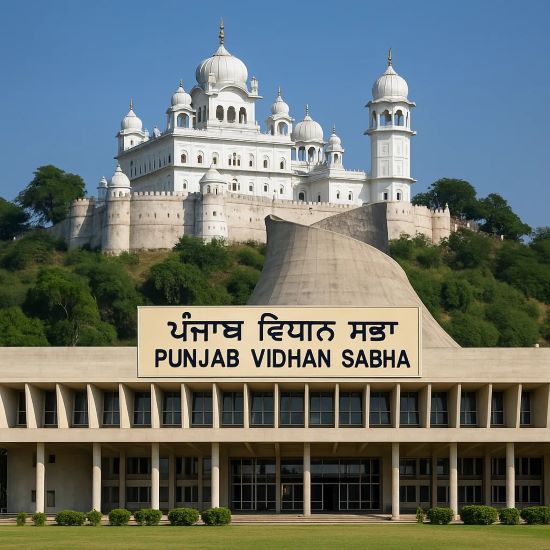
 The Punjab Legislative Assembly has, over the years, witnessed numerous “special sessions” convened with much political urgency and public expectation. These sessions often produce strong-worded resolutions on sensitive and critical issues ranging from sacrilege laws and federal disputes to farmers’ concerns and law-and-order matters. Each time, the ruling establishment projects these resolutions as historic steps, while the opposition either supports them symbolically or criticizes them as political theatrics. Yet, a fundamental question continues to linger in the minds of the people: where do these resolutions go after they are passed?
In a parliamentary democracy, a resolution passed by a state assembly is not always a law. It may be recommendatory, symbolic, or intended to send a political message to higher authorities such as the central government. However, in Punjab, a pattern appears to have emerged where resolutions are passed with great publicity but fade away without visible follow-up, implementation, or even status updates. This raises serious concerns about governance and intent.
Take, for instance, the repeated resolutions on sacrilege incidents or demands for stricter laws. These were presented as decisive moves to deliver justice and restore public faith. Committees were formed, reports were promised, and deadlines were announced. Yet, months and sometimes years pass without clarity on outcomes. The public is left wondering whether these resolutions were genuine attempts at reform or merely tools for political positioning.
Similarly, resolutions opposing central laws or asserting Punjab’s rights over its resources often dominate headlines during these special sessions. While they reflect the sentiments of the state, their impact remains largely symbolic unless backed by sustained legal, administrative, or political action. Without follow-through, such resolutions risk becoming archival documents rather than instruments of change.
Another troubling aspect is the lack of transparency. Once a resolution is passed, there is rarely a structured mechanism to inform the public about its progress. Are committees functioning effectively? Were recommendations implemented? Did the government communicate the resolution to relevant authorities? These questions remain unanswered, creating a disconnect between legislative action and public awareness.
This trend also reflects a deeper issue within political culture. Special sessions, instead of being platforms for decisive governance, are increasingly perceived as stages for optics where announcements matter more than outcomes. The cycle repeats: a crisis emerges, a special session is called, resolutions are passed, and eventually, silence follows.
The people of Punjab deserve more than symbolic gestures. They deserve accountability. Every resolution passed in the Punjab Legislative Assembly should be accompanied by a clear roadmap for implementation, periodic public updates, and measurable outcomes. Without this, the credibility of the institution itself is at stake.
In conclusion, the real issue is not the passing of resolutions but their fate afterward. If resolutions continue to vanish into bureaucratic obscurity, public trust in democratic processes will erode further. It is time for the government regardless of party to answer a simple but powerful question: Are these resolutions meant to solve problems, or merely to manage perceptions?