
 Elections in India are among the largest and most complex democratic exercises in the world, reflecting the country’s vast population, cultural diversity, and political pluralism. Conducted regularly at multiple levels national, state, and local—these elections form the backbone of India’s democratic system and determine how power is distributed and exercised across the country.
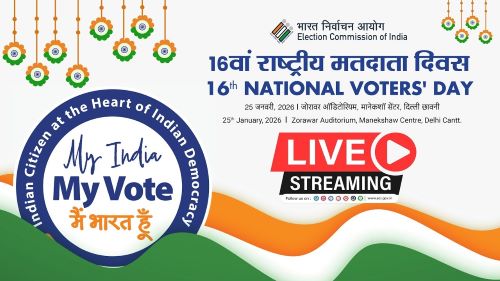
At the heart of India’s electoral process is the Election Commission of India (ECI), an autonomous constitutional body responsible for administering elections in a free and fair manner. Established under the Constitution, the ECI oversees everything from voter registration and scheduling to monitoring campaign conduct and counting votes. Its credibility has played a key role in sustaining democratic stability since India’s first general election in 1951–52.
India follows a parliamentary system, where citizens vote to elect representatives to the Lok Sabha, the lower house of Parliament. The leader of the majority party or coalition becomes the Prime Minister. Elections to the Lok Sabha are held every five years, unless dissolved earlier. In addition, each state conducts elections to its legislative assembly, which determine the Chief Minister and state government. Local body elections at the municipal and panchayat levels further deepen grassroots democracy.
The electoral system in India is based on the “first-past-the-post” principle. In each constituency, the candidate who secures the highest number of votes wins, even if they do not achieve an absolute majority. While this system ensures simplicity and quick results, it has often been debated for not fully reflecting proportional representation.
Political parties play a central role in Indian elections. Major national parties like the Bharatiya Janata Party (BJP) and the Indian National Congress (INC) dominate national politics, while numerous regional parties wield significant influence in states. Coalition politics has been a defining feature, especially since the 1990s, as no single party often secures an overwhelming majority across the country.
Election campaigns in India are vibrant and intense, marked by rallies, roadshows, media outreach, and increasingly, digital campaigning. Leaders travel extensively to connect with voters, addressing issues such as economic development, employment, agriculture, national security, and social welfare. In recent years, social media platforms have become powerful tools for political messaging, influencing voter perceptions and engagement.
One of the most notable aspects of Indian elections is their scale. With over 900 million eligible voters, elections are conducted in multiple phases to ensure security and logistical efficiency. Electronic Voting Machines (EVMs), often paired with Voter Verifiable Paper Audit Trails (VVPATs), are used to enhance transparency and reduce counting time. Despite occasional controversies, these technologies have largely streamlined the process.
However, Indian elections also face several challenges. Issues such as money power, misuse of government machinery, fake news, communal polarization, and low voter awareness in certain areas continue to raise concerns. The ECI enforces a Model Code of Conduct to regulate political behavior during elections, but enforcement remains a complex task given the scale and diversity of the country.
Voter participation has steadily increased over the years, with greater involvement from women, youth, and marginalized communities. Initiatives aimed at voter education and accessibility, including special provisions for senior citizens and persons with disabilities, have strengthened inclusivity. Elections are not just a political process in India—they are often described as a “festival of democracy,” reflecting public enthusiasm and engagement.
Elections in India represent a remarkable democratic achievement, balancing complexity with inclusivity. While challenges persist, the resilience of its electoral institutions and the active participation of its citizens continue to uphold the democratic spirit of the nation.